

The hot climate can complicate concrete pouring considerably. Excessive outdoor temperature, heat transfer from aggregates, lack of humidity, strong winds, and quick hydration can result in difficulty in dealing with wet concrete before it even arrives at the place of use. As a result, ready-mix companies and contractors may face challenges related to pumping, poor density, surface defects, as well as delays.
Table of Contents
Therefore, it is vital to know how to Avoid Slump Loss in Hot Weather Concreting, specifically for long-distance projects or in cases of concrete mix being usable for a long time.
The slump-retaining PCE superplasticizers used in the right way, together with effective batching, transportation, and curing methods, will allow having the required workability in concrete without adding an uncontrolled amount of water to the concrete mix.
Why Does Concrete Lose Slump Faster in Hot Weather?
The previous paragraph describes that concrete tends to become less workable as time passes due to the hydration of the cement that starts immediately when cement gets in contact with water. There are various reasons for the slump loss:
Cement Hydration Process Being Faster
Concrete with higher temperature usually hydrates faster. It causes a decrease in free water, making concrete stiffer.
Water Evaporation
An increase in temperature, humidity, and wind speed can lead to increased evaporation from the new concrete. This is especially true for concrete in transit or in the process of being executed.
Aggregates Are Hot
Aggregates form a significant portion of concrete. The concrete can be heated above the ambient temperature due to hot aggregates.
Compatibility of Admixtures
The performance of water-reducing admixture can be affected by temperature and chemistry of cement.
What Is Acceptable Slump Retention?
Each concrete project has its own slump-retention time. Many parameters determine the need for workability: the design of the concrete mix, the method of accomplishing the placement, transporting distance, type of elements, and specifications of a concrete project.
In the case of ready-mix concrete, the goal is to deliver the required workability for the correct consolidation and placement of concrete. Concrete projects that include long-distance transportation, pumping, congested steel reinforcement, or large volumes of concrete to be poured may need longer retention times.
Rather than applying one-time value, producers need to determine what slump should be achieved at the moment of placement with the help of the real temperature and transport conditions.
Risks of Adding Water On-Site
When the concrete reaches the site with reduced slump, the simplest thing seems to be adding water. This is not a good idea if not expressly allowed and regulated in accordance with the approved mix design.
Adding water uncontrolledly causes an increase in the water-cement ratio, which may lead to:
- Reduction in compressive strength.
- Increase in permeability.
- Augmentation of shrinkage.
- Reduction in durability.
- Larger chances of segregation.
- Unreliable concrete quality.
If more workability is needed, the right solution is to design the mix and the admixture system in a way to achieve the desired slump from the very beginning.
Admixture Solutions for Hot Weather Concreting
A slump-retaining PCE superplasticizer is intended to achieve water reduction with prolonging of workability compared to conventional high-range water reducers. PCE-based compounds, through the dispersion of cement particles, enable concrete to gain mobility. Slump-retaining formulations provide for this dispersion to be sustained over a longer period, making concrete workable during transport and application.
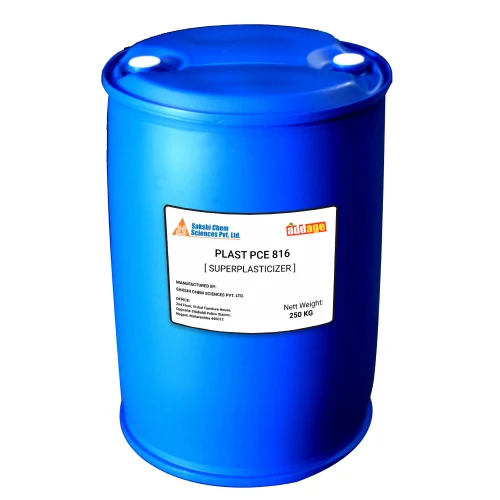

Depending on the formulation used, requirements of the project, and cement system, a slump-retaining admixture can be employed by itself or together with a compatible retarding agent.
Retarding Admixture
Retarding agents can slow down the rate of cement hydration and prolong the setting time. They can be helpful in extreme heat or in cases when concrete has to be transported and placed over a relatively long period.
Nonetheless, retarders and slump-retaining admixtures are not synonymous. Whereas a slump-retaining PCE is focused on preserving workability, a retarder instead aims at postponing the setting process. The two products can sometimes be used in a combined manner, but their compatibility and dosage have to be tested.
Practical Measures Beyond Admixtures
The most effective approach for preventing slump loss during hot weather concrete work involves a combination of admixtures and sound site practices.
Cool the Mixing Water
Chilled water should be used to help lower the fresh concrete’s starting temperature. In more extreme cases, adding ice to the mixing water is an option if the proportions of the concrete mix permit it.
Shade the Aggregate Stockpiles
Keeping aggregates cool via shading will help lower their temperature prior to batching. No direct exposure to sunlight is preferred during hot weather.
Plan for Proper Times for Batching
Concrete mixing and placement should be timed whenever feasible during cooler times of the day such as morning or evening.
Reduce Waiting Times
Perfect coordination between the batching plant, the transport team, and the construction site should eliminate unnecessary waiting time of the concrete in hot weather.
Monitor Concrete Temperature
Regular control of concrete temperature during mixing and placement is essential for making any necessary adjustments to the mix and for identifying potential problems early.
Dosage Adjustment Guide by Temperature
There is no scientifically reliable universal rule that says an admixture dosage should automatically increase by a fixed percentage for every temperature range. Dosage depends on the particular PCE formulation, cement, aggregates, water-cement ratio, and required retention period.
A practical approach is:
| Condition | Recommended Approach |
| Mild weather | Use the manufacturer’s standard dosage range |
| Warm weather | Conduct trial mixes and verify slump retention |
| Hot weather | Evaluate a slump-retaining PCE and optimise dosage |
| Very high temperatures | Combine admixture optimisation with temperature-control measures |
| Extreme conditions | Seek technical guidance and conduct project-specific trials |
The manufacturer’s recommended dosage should always be the starting point. Final dosage should be established through laboratory and field testing.
Standards and Specification Compliance
Choosing an admixture should depend on the relevant specifications of the project and standards. For instance, the ASTM C494/C494M standards classify chemical admixtures based on how they behave based on the kind of performance.
Based on where the concrete is being made and used, different other standards may also apply.
However, it is essential to note that adherence to the standards does not mean that the admixture will hold out the necessary slump in every mix.
Regional Weather Conditions
The hot weather requirements differ, depending on the region.
India and Southeast Asia
In the case of India and Southeast Asia, hot weather, humidity, and rainy seasons can create enormous changes in concrete making. It is important to conduct mix tests to reflect the changes in the season.
The Middle East
Here, extremely hot weather, excessive sunshine, minimal humidity, and strong wind provide very harsh conditions. Cooling aggregate, making water cooler, improving transportation, and choosing the admixture accordingly are crucial conditions for success.
Africa
Conditions vary significantly by location. For long-distance ready-mix transportation and major infrastructure projects, workability retention should be verified under actual site conditions.
Common Mistakes in Hot Weather Concreting
Some common mistakes that are frequently made are mentioned below:
- Water is added without control at the site.
- Aggregates’ temperature is ignored.
- Admixture is used in the same proportions all year round.
- Hot weather trials are not performed.
- Concrete trucks are made to wait for no reason.
- Additives are chosen without checking the compatibility with cement.
- Initial slump is considered, but slump during placement is ignored.
A good concrete mix is well-planned, treating the whole process from batching till placement.
Conclusion
The quality of concrete is not at risk because of hot weather. Preventing slump loss in Hot Weather Concreting means addressing the issue before it reaches the construction site. Certain PCE superplasticizers designed to maintain a certain slump can reduce the amount of water needed when applied together with other techniques such as temperature regulation, protecting aggregates, transportation, dosing, and testing.
At Sakshi Chem Sciences Pvt. Ltd, we have technology in construction chemistry and know-how of production technology to supply successful solutions in different environmental conditions for both contractors and producers.
Frequently Asked Questions
For how long must slump-retaining PCE support workability?
The period of retention will vary depending on the product used, the concrete mix, the temperature, transportation duration, and placing conditions. It is crucial to pick the appropriate product as well as to conduct trials to confirm that this product can meet the expectations in terms of workability.
Is there any difference between a retarder and a slump-retaining additive?
Yes. A retarder works to delay the starting of the cement hardening process, while a slump-retaining PCE is meant to retain workability for a longer period of time. Sometimes both products are combined in one mix.
Can I just add water to solve slump loss problems?
Applying uncontrolled water is practically forbidden because it raises the water-to-cement ratio and may cause problems with the quality and strength of the resultant mixture.

Sagar Telrandhe is a Construction Engineer with a B.Tech in Construction Engineering & Management. Passionate about infrastructure development, project planning, and sustainable construction, he specializes in modern construction techniques, project execution, and quality management, contributing to efficient and innovative building.