

Concrete admixtures have changed construction by significantly enhancing the quality and properties of concrete. Admixtures greatly help the construction industry by reducing water consumption and enhancing curing strength, which extends the lifespan of concrete structures.
Table of Contents
However, admixtures can only be effective in producing quality results when they are properly tested. The type of cement used, the quality of aggregates, the environmental conditions, and the amount of the admixture can affect the performance of admixtures in the concrete mixture. Thus, Performance Testing of Concrete Admixtures is important for achieving the quality and performance of concrete mixtures.
This article discusses the main standards, techniques, and performance criteria for evaluating modern concrete admixtures.
1. Why Performance Testing Matters for Concrete Admixtures
Concrete admixtures are designed in order to change some qualities of both fresh and solidified concrete. If the aim is to have better efficiency, faster curing, lower permeability or better durability, there is a need to be sure that the product works well under all the conditions on the construction site.
- Performing tests helps the producers and contractors.
- check the quality of the product.
- ensure that it matches national and international requirements.
- establish the proper proportion for different types of concrete.
- provide compatibility with various types of cement.
lower the risks of things that may go wrong at the construction site, such as cracking, wrong mixing, and insufficient strength of concrete.
If the tests aren’t conducted, even a good admixture may be considered unsuitable for different materials and environments.
2. Overview of Governing Standards
Concrete additives are assessed based on established testing guidelines that dictate quality specifications, testing methodologies, and performance indicators. These guidelines serve to guarantee uniformity in the production process among various producers as well as in various construction sites.
ASTM C494/C494M
ASTM C494 is one of the most frequently used standards for chemical additives used in concrete production. The standard divides these additives into several groups including water reducers, retardant additives, accelerating additives, and superplasticizers. The standard provides specifications in performance criteria regarding workability, setting time, the timing of strength gain and durability.
EN 934-2
EN 934-2 is the European standard for the evaluation of chemical additives used in concrete or mortar. It provides guidelines about classification, compliance, dosage and performance to make sure that additives are beneficial to concrete without causing negative effects.
ISO 14025
Even though this standard is mainly related to Environmental Product Declarations, it aims at improving construction sustainability by urging producers to disclose information about the environmental impact of their goods. This becomes essential in sustainable construction.
Other Relevant Testing Standards
Depending on the performance being evaluated, additional standards may also be used, including:
- ASTM C143 for slump testing.
- ASTM C39 for compressive strength testing.
- ASTM C157 for shrinkage evaluation.
- ASTM C1202 for permeability testing.
Following these standards helps ensure accurate, repeatable, and reliable test results.
3. Testing the Fresh Concrete Properties
The process of testing fresh concrete involves assessing the influence of admixture on the concrete after mixing. It is very important to ensure that the concrete retains its workability since it would be transported, poured, compacted, and finished while it is still wet.
The various properties evaluated include:
- Workability
- Slump retention
- Setting time
- Air content
- Cohesion
- Resistance to segregation
- Bleeding property
In case of Super-plasticizers, fresh concrete testing will focus on workability improvement without causing an increase in the water-cement ratio. Moreover, keeping an unchanged slump is particularly important in order to ensure effective transportation of the ready-mix concrete.
4. Water Reduction and Dosage Tests
Modern super plasticizers are also aimed at facilitating the process of mixing by decreasing the amount of water used while maintaining very good workability.
The tests that characterize the performance of the super-plasticizers include:
- Water reduction percentage.
- Optimum dosage of super plasticizers.
- Slump retention at different dosages.
- Strength development at lower water in the mixture.
- Consistency in the use of different types of cement.
Another important test concerns the dosage confirmation, as too high a concentration can lead to more time needed for the formation of the concrete
5. Hardened Concrete Performance Testing
The effectiveness of an admixture does not depend only on the properties of fresh concrete. After the concrete hardens, it must still comply with structural and durability requirements throughout the service life.
The hardened concrete tests involve evaluation of various performance characteristics, such as:
Compressive Strength
Compressive strength tests allow evaluating how well the admixture affects load-carrying capacity. Measurements are typically taken after 7, 28 days, and sometimes after 56 days of curing.
Flexural and Tensile Strength
Some admixtures enhance concrete resistance to bending and cracking. The importance of these properties is especially evident in pavement, industrial floors, bridges, etc.
Density and Microstructure
Performance testing also assesses how well the admixture helps reduce internal voids and improve the density of concrete. The denser the concrete matrix is, the better durability, low permeability, and resistance to weathering can be achieved.
Measuring the performance of cured concrete allows confirming whether the admixtures will allow the concrete to ensure long-term structural performance after the construction process is completed.
6. Durability-Related Testing
Concrete materials face constant exposure to moisture, chemicals, temperature variations, and mechanical effects. Durability tests can determine the integration method of an admixture, which will affect the way the concrete can resist these conditions for a specific period of time.
The most frequently used durability tests include:
- Freeze-thaw resistance: which shows how concrete can survive cycles of freezing and thawing.
- Chloride penetration: which measures the ability of concrete to block chloride ions from reaching steel reinforcements and therefore prevent corrosion.
- Chemical resistance, which determines the durability of concrete with respect to sulphates, acids, and other aggressive materials.
- Water permeability, where the effectiveness of the admixture in reducing water absorption and improving the density of concrete is measured.
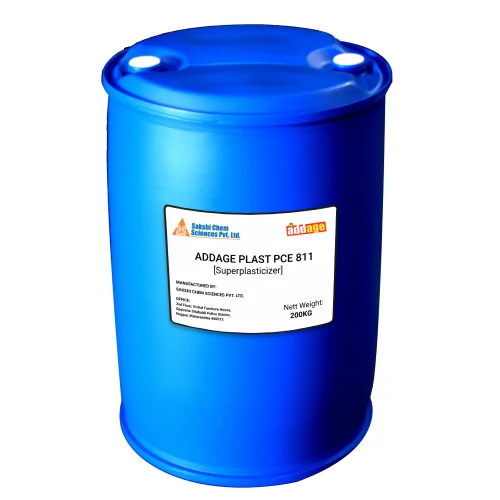
Superplasticizers, with their performance characteristics, help improve durability as they reduce the water-cement ratio and create a denser concrete mixture with virtually no pores.

7. Compatibility and Interaction Testing
Despite how well an admixture performs, its effectiveness can still be impacted if it cannot be harmonized with the various types of cement or any other materials involved in the concrete mix. Compatibility testing provides proof that the admixture can perform well with many kinds of cement, supplementary cementing materials (SCMs), aggregate and different kinds of chemical admixtures.
During the compatibility testing, engineers will assess the following indicators:
– Workability retention.
– Setting time.
– Air content.
– Strength development.
– Risk of segregation or bleeding.
– General concrete consistency.
The compatibility test plays an important role when several admixtures work together, including superplasticizers, retarders, accelerators, and air-entraining agents.
8. Key Performance Indicators (KPIs) for Concrete Admixtures
The performance of an additive is evaluated using many different Key Performance Indicators (KPIs). These indicators are utilized by producers, quality control specialists, and contractors to make sure the product matches the specifications of the project.
Workability
The additive has to facilitate the processes of mixing, transporting, placing, and finishing concrete without raising the amount of water in it.
Water Reducing Ability
A real superplasticizer should greatly lower the amount of water necessary for preparing the concrete while providing a stable slump.
Strength
Testing reveals whether the additive indeed works when it comes to the initial and future strength of concrete.
Durability
Concrete has to be resistant to moisture penetration, chemicals, and environmental impacts.
Shrinkage and Cracking Resistance
Quality additives reduce drying shrinkage and minimize cracking.
Retention of Slump
For ready-mixed concrete, it is vital to keep the same workability properties throughout the whole process of placement and finishing.
9. Methods of Testing Concrete Admixtures
Various laboratory experiments are performed to assess the effectiveness of concrete additives at controlled settings.
9.1 Slump Test
The Slump Test is one of the easiest and most common methods used for measuring the ease of work of fresh concrete.
A slump cone is filled with fresh concrete and lifted. The amount the concrete drops indicates its flowability and viscosity.
The Slump Test is an important method of checking how effective the Superplasticizers are in increasing the workability of concrete with no increase in water.
9.2 Compressive Strength Test
The compressive strength test refers to measuring the maximum load concrete can sustain.
Concrete cubes or cylinders are cured in special conditions and tested in compression testing machines after the 7th and 28th days.
The purpose of this test is to check if the additive has any influence on the structural capacity and durability of concrete.
9.3 Shrinkage Test
Concrete shrinks during curing, which can cause the concrete to crack if it is not controlled properly.
The shrinkage test determines changes in size over time and how effective the additive is in decreasing shrinkage.
This test is important in industrial floors, pavements, and large slabs.
9.4 Permeability Test
Permeability testing determines how resistant concrete is to water and chloride penetration.
Lower permeability indicates a denser concrete structure with improved durability and better protection for reinforcing steel.
This test is commonly used for structures exposed to aggressive environments such as bridges, marine structures, tunnels, and water-retaining facilities.
10. Choosing the Right Test Program for Your Project
Because each construction project is different when it comes to performance requirements, it is vital that the testing program selected corresponds to the actual needs of the specific case.
When preparing for concrete admixture testing, you should pay attention, first of all, to:
- Type of concrete structure.
- Conditions of environmental exposure.
- Property of concrete mix in terms of workability and slump retention.
- Strength specifications.
- Durability requirements.
- Properties of cement and aggregates.
Standards that need to be taken into consideration both on the national and international levels
Conventionally speaking, laboratory tests before full-scale production help in optimizing the amount of the admixture used, reducing construction risks, as well as ensuring compliance in terms of the quality of concrete used throughout the process of construction.
Conclusion
The importance of performance testing of concrete admixtures cannot be overstated where it is involved in the measurement of the quality, safety, and longevity of concrete constructions. It is due to performance testing that construction companies can assess the workability of the admixtures, their water-reduction properties, and the ultimate strength of concrete before they can be put to use in construction.
The benefit of performance testing is that it allows companies to prove that the concrete reacts in a predicted way in accordance with laid-out performance indicators and that it works effectively regardless of the conditions in which it is being used.
The choice of the correct method of testing plays an important role in the success of the use of the concrete admixtures. Namely, it must comply with the characteristics of the admixture being tested, such as whether it is a superplasticizer or a different type of concrete admixture.
Sakshi Chem Sciences Pvt. Ltd. makes use of advanced techniques in order to provide high-quality construction solutions to the construction industry promptly.
Frequently Asked Questions (FAQs)
1. Why is performance testing of concrete admixtures important?
Performance testing ensures that concrete admixtures consistently improve workability, strength, durability, and other desired properties while complying with industry standards.
2. Which standards are commonly used for testing concrete admixtures?
Some of the most widely recognized standards include ASTM C494/C494M, EN 934-2, ASTM C143, ASTM C39, ASTM C157, and ASTM C1202.
3. How do Superplasticizers improve concrete performance?
Superplasticizers significantly reduce the water requirement while maintaining excellent workability, resulting in stronger, denser, and more durable concrete.
4. What is the purpose of the slump test?
The slump test measures the consistency and workability of fresh concrete, helping evaluate whether an admixture provides the required flow without excess water.
5. Why is compatibility testing necessary?
Compatibility testing ensures that an admixture performs effectively with different cement types, aggregates, supplementary cementitious materials, and other admixtures used in the concrete mix.
6. How does permeability testing improve concrete quality?
Permeability testing measures resistance to water and chloride penetration. Lower permeability improves durability, reduces reinforcement corrosion, and extends the service life of concrete structures.

Sagar Telrandhe is a Construction Engineer with a B.Tech in Construction Engineering & Management. Passionate about infrastructure development, project planning, and sustainable construction, he specializes in modern construction techniques, project execution, and quality management, contributing to efficient and innovative building.