

PCE superplasticizers have emerged as a significant factor in today’s concrete technology. By using these superplasticizers, not only does the need for water decrease, but it also enhances operability and provides stronger and more resilient concrete. However, choosing between the powdered and liquid option is not always easy.
Table of Contents
Both liquid and powder forms are derived from Polycarboxylate Ether (PCE) chemistry but differ in concentration, handling, storage, transport, and application. Thus, the comparison between PCE Superplasticizer Powder and Liquid depends on how and where one utilizes the product.
At Sakshi Chem Sciences Pvt. Ltd, we have the finest construction chemical solutions that are tailored and designed for different kinds of production and application.
What Is Powder PCE Superplasticizer?
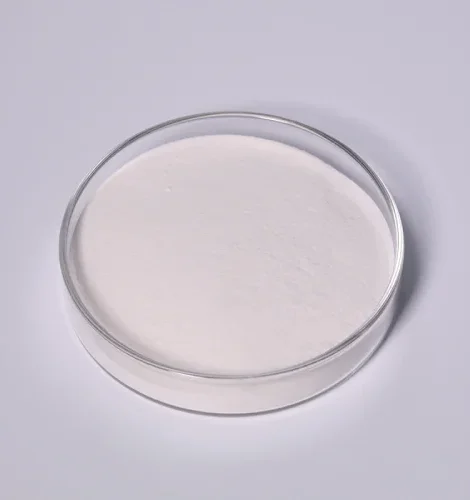
PCE powder is the dry and concentrated version of the PCE superplasticizer. It is usually made by drying a liquid version of the PCE formulation to produce a free-flowing powder.
- Due to the high content of active polymer, the powder can be stored in a smaller place and transported easily.
- Increase in throughput of powder.
- Free-flowing powder.
- High active polymer content.
- Easy incorporation of the powder into dry formulations.
- Easier transportation and storage of PCE powder.
- Suitable for use in dry-mix application.
- With proper dosing, PCE powder provides the same benefits as PCE technology, such as lower water content and higher fluidity.
What is Polycarboxylate Superplasticizer Liquid?
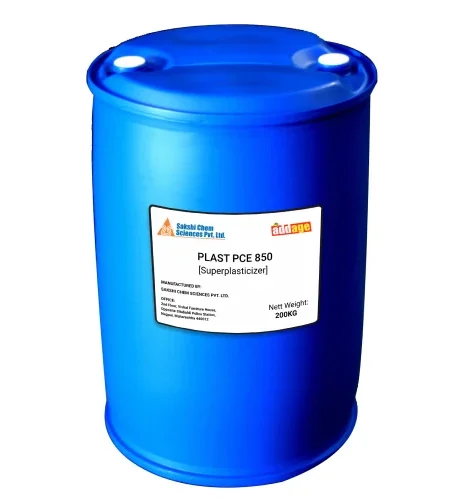
Liquid PCE is provided as a water-based solution and can usually be used directly in a concrete mix. This type of superplasticizer is commonly used in ready-mix concrete batch plants, where automated dosing systems are in use.
The benefits of liquid PCE include:
- Forehand preparation.
- Dosing with ease.
- Easy dispersal in the concrete.
- Consistent batch production.
- Good workability control.
For large scale production of concrete, using the liquid PCE is highly convenient.
Manufacturing Process: Powder Versus Liquid
The main difference between the two exists at the last stage of production of the material.
Liquid PCE retains its water-based form after the polymer is made and formulated. It is already in a dispersed form in the liquid carrier so it can simply be incorporated in the concrete during batching.
The PCE powder goes through a drying step after polymer production. Most of the water is removed from the formulation and it is then packaged for dry mix products or for dissolving process.
PCE Superplasticizer Powder vs Liquid: A Quick Comparison
| Factor | PCE Powder | PCE Liquid |
| Form | Dry powder | Water-based liquid |
| Active concentration | Generally high | Lower due to water content |
| Dosing | Requires weighing/preparation | Easy automated dosing |
| Storage | Requires dry conditions | Requires suitable temperature control |
| Transportation | More efficient for long-distance shipping | Higher weight due to water |
| Dry-mix applications | Excellent | Generally unsuitable |
| Ready-mix concrete | Can be used with proper preparation | Highly convenient |
| Handling | Requires powder handling | Easy pumping and dosing |
The important thing is that neither form is universally better. The right choice depends on your production setup.
When to Choose Powder PCE Superplasticizer?
1. Use in Dry-Mix Mortars
PCE powder is particularly suitable for applications such as tile adhesives, repair mortars, self-leveling products, grouts, and various cement-based dry mixes, as it can be easily blended with other dry components.
2. Application in Global Transport
The powder is much less water-heavy when compared to the liquid version of PCE, making it especially effective for transportation of products over long distances.
3. Where Space Is Limited
The concentrated properties mean that the amount of active material required in solid form is significantly smaller than at the same level of dilution in liquid.
4. Application in Flexible Formulation
The use of powdered forms can enable manufacturers to use it in different dry formulations and then prepare solutions as and when needed.
When To Select Polycarboxylate Superplasticizer Liquid?
1. For Ready-Mixed Concrete Industries
Liquid PCE is very advantageous in ready-mixed concrete since it can simply be pumped and dosed from automated batching units.
2. For High Seasonal Production
The choice of liquid helps in avoiding extra procedures, thus making production easier and saving time when many batches are produced.
3. If Accurate Automated Dosing Is Required
Liquid admixtures can be injected into dosing pumps and balances, making sure that the amount of admixture used is constant for all batches.
Main Things To Think Of Before Choosing
Before deciding in favour of either powder or liquid, you need to take into account the following facts:
Uses: Generally, dry mixing requires powder while ready-mixed production prefers liquid.
Batching: Availability of automated liquid dosing makes liquid PCE a good choice.
Storage: Powder must not be exposed to moisture, while liquid needs to be protected from freezing and having too low a temperature.
Transportation: It is better to use powder since it is easier to transport concentrated material over long distances.
Production: Liquid PCE may have certain benefits for the production of Portland cement.
Storage and Shelf Life
Proper storage is essential for maintaining PCE performance.
Powder PCE should be kept in a cool, dry environment and protected from moisture. Exposure to humidity can cause caking and affect handling.

Liquid PCE should be stored according to the manufacturer’s recommended temperature and handling conditions. It should also be protected from freezing and contamination.
Shelf life varies by formulation, packaging, and storage conditions, so manufacturers should always follow the specific product datasheet rather than relying on a general shelf-life figure.
Application
The application is often the simplest way to make the decision.
- Ready-mix concrete: Liquid PCE is generally more convenient.
- Precast concrete: Either form can be suitable depending on the production setup.
- Dry-mix mortar: Powder PCE is generally the practical choice.
- Export and long-distance supply: Powder can offer logistical advantages.
Cost Comparison
Cost per kg is a part of the entire picture.
Liquid PCE is relatively less complicated to handle but has a significant amount of water in it, which affects its shipping and storage price. The powder is denser than the liquid, leading to reduced shipping and storage, but can potentially need additional preparation depending on use.
Thus, compare the costs of active PCE, transportation, storage, labor, and dosing before deciding to buy.
Why Choose Sakshi Chem Sciences?
With over 20 years of experience, Sakshi Chem Sciences Pvt. Ltd. is one of the prominent manufacturers, suppliers, and exporters of construction chemicals.
We have a broad portfolio of products, which includes concrete and cement admixtures, waterproofing agents, curing agents, grouting products, repair materials, and additives. Having advanced R&D facilities and top manufacturing infrastructure in addition to strict quality control, we develop products that fulfill practical construction needs.
Sakshi Chem Sciences also offers the evaluation services of different forms of admixtures and how they can be utilized for production and the amount of storage needed.
Summary
When one compares PCE Superplasticizer Powder to Liquid form, there is no clear winner. While Powder form has its advantages in dry-mixing processes, compact storage, and transporting cargo over long distances, Liquid form of PCE is very easy to use when it comes to ready mix operations as well as automated dosing.
The choice has to be made based on the conditions for application of the mix, batching system, storage, and logistics aspects, and general production requirements.
At Sakshi Chem Sciences, our main activity is providing construction chemicals enabling our customers to achieve maximal workability, effective utilization of raw materials, and consistent performance of concrete.
FAQs
Can PCE powder be turned into liquid?
Yes. It can be done either by dissolving or dispersing PCE powder in water if the instructions of the manufacturer are followed properly.
Is the performance of PCE powder the same as that of the liquid?
Yes, if the active content of polymer utilized in both forms is equivalent.
What happens to liquid PCE when it freezes?
Some properties of liquid PCE could change when it freezes; therefore, temperature conditions of storage should be strictly followed.
How should PCE powder be stored?
Store PCE powder in a dry, protected environment and prevent exposure to moisture. Follow the product-specific storage instructions for best results.

Sagar Telrandhe is a Construction Engineer with a B.Tech in Construction Engineering & Management. Passionate about infrastructure development, project planning, and sustainable construction, he specializes in modern construction techniques, project execution, and quality management, contributing to efficient and innovative building.