
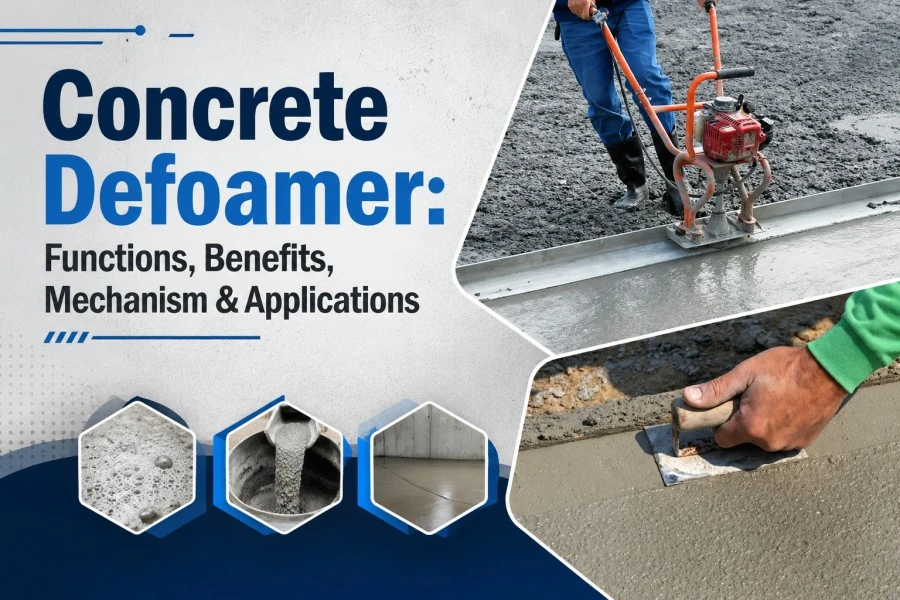
The process of preparing concrete includes the introduction of air, whether intentional or by chance, whether large air bubbles or foams are produced. In some cases, the presence of some air is mandatory, and in some cases requires the addition of a controlled amount of air.
The disbenefit arises when the quantity or the type of air exceeds what is required. The problems of too much air can be various, including the modifier’s behavioral characteristics, visual and appearance characteristics, and density properties, and sometimes the strength and the durability of concrete.
Table of Contents
In this situation, the presence of a concrete defoamer helps to allow the air to leave the material.
It is important to understand how concrete defoamers work because one may think that effective defoaming means eliminating concrete foams.
It is worth introducing the company Sakshi Chem Sciences Pvt. Ltd. because our company works on creating effective solutions in the field of concrete production.
The Hazards of Foams in Concrete
Concretes can form foams for various causes.
The properties of raw materials
Cement particles, fine aggregators, additives of minerals and other constituents may cause air to be trapped in the material. Some finer particles and their properties help small air bubbles to be held in the mixture.
The process of mixing
Mechanical processes cause air ingress, often leading to aerated concrete, with high-speed or prolonged mixing working even better.
Chemical agents and surfactants
Some chemical admixtures contain active ingredients lowering surface tension and increasing the stability of bubbles. Such chemical additives as water-reducing agents, air-entraining agents, along with others, may contribute to an increase in air stability in the concrete mix.
An excess of unwelcome foam could result in:
- More cavities in concrete
- Less density
- Bad appearance
- Pinholes
- Worse mechanical properties
- More permeable concrete if the pores are connected
However, it is worth separating entrapped air from air ledged in the concrete intentionally, since sometimes small uniformly dispersed bubbles are beneficial and may be used when it is necessary to increase the freeze-thaw durability of concrete. Defoamer must be used to eliminate excessive foam without removing the air completely.
Concrete Defoamer Action Mechanism
Defoamer concrete is designed specifically to destabilize the liquid thin film present on the air bubble.
When a defoamer comes into contact with an air bubble, there are three ways in which the defoamer can act as a component.
1. Action on the bubble film
The components of the defoamer will travel to the air-water interface and interfere with the way the bubble film works.
2. Loss of film durability
The use of a defoamer will break the forces holding the bubble together. This will make the bubble film thinner and less able to resist deformation.
3. Collapse of the bubble
If the bubble film is unstable, then the bubble will break, allowing the air trapped in it to be released.
Thus, the operation of a defoamer can lead to the elimination of the undesirable foam during mixing and its processing.
The effectiveness of the defoamer could be affected by its chemistry, dosage, dispersal, temperature, conditions of mixing, and compatibility with the other components.
That is why the selection of the defoamer should be based on the specific cement composition rather than choosing a fixed dosage for every application.
Different Types of Concrete Defoamers and Their Functions
Different types of concrete defoamers exist on the market. The type of defoamer that works best depends on the formulation’s requirements.
Silicone Defoamers
Defoamers made through the formulation of silicone products such as polysiloxanes are able to bring down foams quickly and are generally effective even at low dosages. These defoamers can be useful in cases whereby quick elimination of foams on surfaces is required, but their compatibility with the whole mixture needs to be checked before large-scale use.
Polyether Defoamers
Defoamers that are made of polyether are known for their compatibility and stability. This makes them ideal for various cementitious formulations, particularly when prolonged mixing time is required for the mixtures.
Mineral Oil Defoamers
Formulations made using mineral oils provide another option for different applications for construction chemicals. This option is subject to compatibility and performance tests.
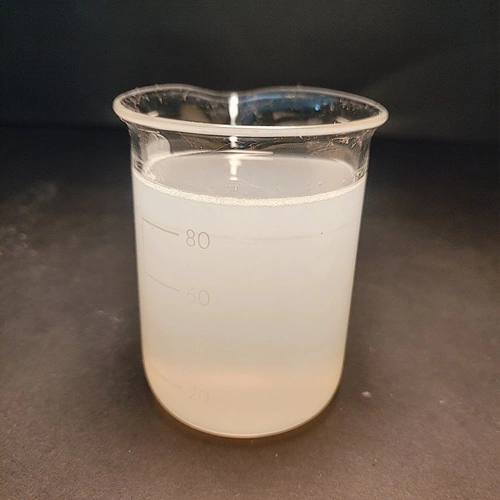
Defoamer Liquid
Several formulations of defoamer liquid exist, which is best for users who already use liquid dosing systems in the production process. These formulations can be introduced in any form of cementitious slurry, admixture formulation, or any other systems given the guidance provided by the manufacturer.
Use of liquid versus other forms depends on the application in question, dosage requirements, mixing equipment, and compatibility with other raw materials.

Advantages of Concrete Defoamers
When chosen and applied correctly, concrete defoamers can produce numerous practical advantages.
1. Enhanced Surface Finish
Excess air can cause pinholes, blow holes, and other imperfections on the surface. By avoiding foam in excess, one can achieve smoother and more consistent concrete surfaces, which is particularly necessary in the case of precast and architectural elements.
2. Increased Density and Consolidation
Elimination of too much entrapped air makes the cement matrix denser. This enables one to make consolidation of the concrete mix more efficient if the mix is designed and placed properly.
3. Enhanced Concrete Uniformity
Uncontrolled content of air can have a negative effect on the link between the proportions of the mix and the properties of the final concrete. Foam control enables manufacturers to obtain higher uniformity of different batches.
4. Improvement of the Precast Product Appearance
Precast products need to have clean surfaces because some products remain visible after their installation. Correct use of defoamer can result in fewer voids and a better look of the products.
5. Enhanced Properties of Cementitious Products
Excessive foam in grouts, repair mortars, self-leveling compounds, and other cementitious materials can prevent proper flow, density, and quality of surfaces.
Notes for Attention
1. There is a need to control the Dosage
Increased amounts of defoamer do not correspond to an increase in performance.
Too high an amount of defoamer may lead to changes in air content, workability, or some other characteristics of concrete.
The right amount should be determined in laboratory conditions, taking into account all formulations.
The trial program should aim at assessing different dosage levels for:
1. Fresh air content
2. Workability
3. Hydration process
4. Surface quality
5. Compressive strength
6. Density of concrete
7. Compatibility with other ingredients.
The manufacturer’s recommendation shall be taken as a benchmark.
2. Check Compatibility with Other Ingredients
Different concrete ingredients can react with a defoamer.
This proves to be important in the case of using PCE-based superplasticizers. The compatibility test will allow determining whether losses of air occurred.
3. Don’t Get Rid of Beneficial Air
Not every bubble is harmful.
Concrete with freeze-thaw resistance requires a controlled air system, and excessive use of a defoamer will lead to its disturbance and loss of necessary air.
The aim is to achieve controlled air rather than minimum air.
4. Consider Mixing Conditions
Mixing speed, mixing duration, temperature, and the order in which ingredients are introduced can all influence foam formation.
A defoamer that performs well under laboratory conditions may behave differently in a full-scale production process. Plant trials are therefore valuable before finalizing a formulation.
5. Follow Product-Specific Handling Instructions
Storage conditions, shelf life, dilution requirements, and recommended addition procedures vary between products. Always follow the technical documentation supplied for the specific defoamer.
Applications of Concrete Defoamers
Concrete defoamers are used across a broad range of construction chemical applications, including:
- Precast concrete
- Ready-mix concrete
- Cementitious grouts
- Repair mortars
- Self-leveling compounds
- Tile adhesives
- Concrete admixture formulations
- Architectural concrete
- Industrial flooring materials
They are particularly useful where surface appearance, density, flow behaviour, or controlled air content is important.
Conclusion
Having knowledge of how Defoamer works is vital for everyone who uses modern cement-based materials. There are negative impacts of foam formation, or air entrapment, in terms of look, density, ability to work efficiently, and properties of concrete itself. By using a suitable defoamer, we can destroy the bubbles and ease the process of concrete making.
It must be noted that successful foam destruction takes certain balancing. The ideal dosage of a defoamer, chemistry of cement, compatibility of additives, mixing process, and type of air void system must be carefully taken into account. In situations when controlled air admixture is required, too much defoamer is as bad as not enough defoaming.
For producers who look for easy-to-use Defoamer Liquid or any other liquid or powder effective solution, making the right selection is very important; laboratory and field tests must be done beforehand.
Sakshi Chem Sciences Pvt Ltd. offers its customers a degassing solution thanks to the combination of R&D experience, production skills, quality control, and technical assistance.
Frequently Asked Questions
1. What is a concrete defoamer?
A concrete defoamer is a chemical additive designed to destabilize and reduce unwanted foam or entrapped air in concrete and cement-based materials.
2. What are the main Concrete Defoamer Functions?
The main functions include controlling unwanted foam, reducing excessive entrapped air, improving surface appearance, supporting better consolidation, and helping maintain consistent properties in cementitious formulations.
3. Is Defoamer Liquid suitable for concrete?
Yes, liquid defoamers can be used in suitable concrete and cementitious applications. However, compatibility with the specific mix and other admixtures should be confirmed before use.
4. Can a concrete defoamer increase concrete strength?
A defoamer does not inherently make concrete stronger. However, when excessive entrapped air is adversely affecting the mix, appropriate foam control can help improve density and support the intended mechanical performance.
5. Can a defoamer be used with a PCE superplasticizer?
Yes, but compatibility should be evaluated. The combination can affect air content and workability, so laboratory trials are recommended before production.
6. What happens if too much defoamer is used?
Overdosing may remove more air than intended and can negatively affect the desired air-void system, workability, or other concrete properties. The optimum dosage should therefore be established through testing.
7. How do I determine the correct defoamer dosage?
Start with the manufacturer’s recommended dosage range and conduct trial mixes using the actual cement, aggregates, admixtures, and production conditions. Evaluate air content, workability, surface finish, strength, and other relevant properties before finalizing the dosage.

Sagar Telrandhe is a Construction Engineer with a B.Tech in Construction Engineering & Management. Passionate about infrastructure development, project planning, and sustainable construction, he specializes in modern construction techniques, project execution, and quality management, contributing to efficient and innovative building.