
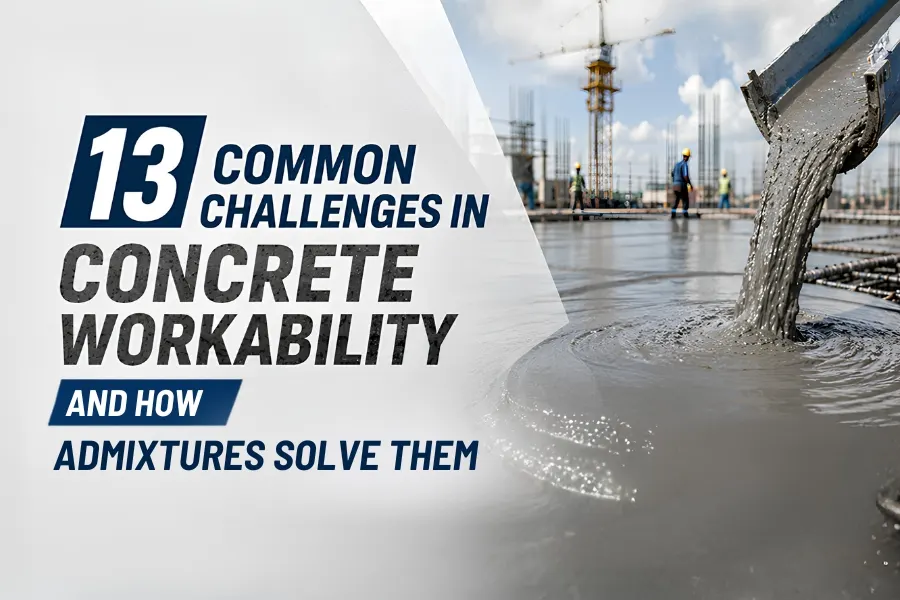
Concrete workability is a vital factor that affects concrete quality, durability, and construction convenience. Even the best concrete mix will underachieve if the mixing, transport, placement, or compaction of concrete is difficult.
Poor workability can cause segregation, honeycombing, excessive bleeding, and other defects resulting in expensive repairs and delays.
Table of Contents
These days, construction requires concrete to be used under extreme conditions, long periods of transportation, heat or cold weather, and low water-cement ratio; thus, concrete admixtures become an integral part of it.
PCE Admixtures and Addage Sodium Lignosulphonate are some examples of products improving the workability of concrete without losing necessary strength and durability.
This article is aimed at discussing the Common Challenges in Concrete Workability and how proper admixtures can help in overcoming them.
Why Workability Matters
Workability is how easily new concrete can be mixed, moved, poured, compacted, and completed without separation or too much bleeding. Good workability improves the effectiveness of work and guarantees that compaction is done properly, resulting in strong and durable concrete. Poor workability increases labour needs, delays works, and affects the performance of the structure in a long term.
Understanding Concrete Workability
There are various factors that have an effect on concrete workability and these include the following:
Water-to-cement ratio
Size of aggregate and grading
What is in cement composition
Ambient temperature
Time taken for mixing and transporting
Type and amount of admixture
Since different projects may have different requirements, the choice of admixture is very important in order to know what kind of consistency and workability is required without using extra water.
Common Challenges in Concrete Workability
1. Low Workability in Stiff, Low-Water-Cement-Ratio Mixes
Low water-to-cement ratios lead to greater concrete strength, but the concrete becomes stiff and difficult to work with. PCE Admixtures make the concrete flow better without the use of more water, thus ensuring that the efficiency of concrete is achieved, while its durability is not affected.
2. Loss of Slump during Transportation
During transportation of concrete, the slump tends to diminish as a result of hydration and evaporation of moisture. Slump-retaining PCE Admixtures assist in maintaining slump; thus allowing for easy placement of concrete even after long transport time.

3. Coarse Aggregate Segregation
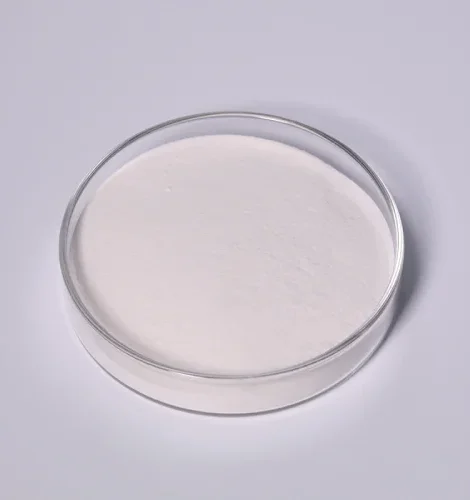
Inadequately mixed concrete may lead to the separation of coarser aggregates from the cement paste and formation of non-uniform concrete. Adequate proportions and use of water-reducing admixtures lead to enhanced cohesiveness of the concrete and reduce chances of segregation.
4. Bleeding of Concrete
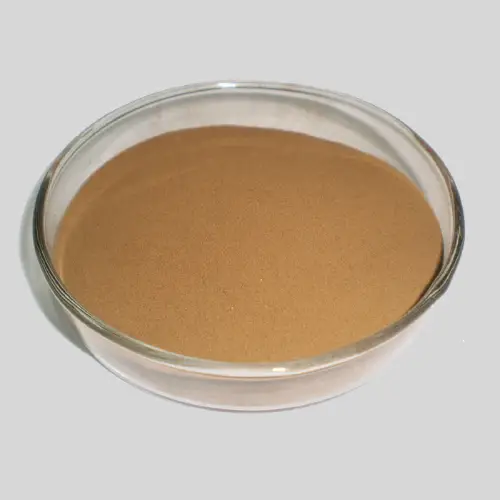
Bleeding of too much water is when excess water rises to the surface of the concrete causing weakening of the final structure. Water-reducing admixtures, such as Addage Sodium Lignosulphonate, help control bleeding and maintain good workability.
5. Sudden Slump Loss and Flash Setting
High temperature accelerates hydration, causing stiffening of concrete and raising the chances of plastic shrinkage. Suitable types of additives make it possible to achieve workability and delay stiffening and have enough time for placement and finishing.
6. Slower Setting and Poor Initial Strengths in Cold Weather
Cold weather causes hydration to slow down thus delaying setting and strength development. Accelerating admixtures give high early strength while keeping the concrete workable.
7. Drawbacks of High-Strength Concrete
High-strength concrete has a low water-cement ratio, which makes it difficult to prepare and place. PCE Admixtures allow good water reduction and keep it flowing.
8. Problems of Pumping Concrete over Long Distances or Heights
When pumping, the concrete should maintain its unity and flow continuously through the pipes. High-performance admixtures increase pumpability and lower blocking.
9. Pumping and Placing Difficulties
Low workability during placing may lead to the formation of honeycomb structure, voids, and uneven compaction. Properly chosen admixtures will improve the consistency of concrete and ease the placement process.
10. Loss of Unity in Self-Compacting Concrete (SCC)
Self-compacting concrete needs a very high fluidity without segregation. A combination of PCE admixtures and viscosity-modifying ones helps to achieve solidness together with fluidity.
11. Insufficient Air Content for Freeze-Thaw Resistance
Concrete exposed to freeze temperatures needs to have sufficient air entrained in order to withstand freezing-thawing effects. Air-entraining admixture increases durability that allows maintaining workability.
12. Durability with Workability
Increasing workability by adding excess water can reduce concrete durability. Modern admixtures improve workability while maintaining a low water-cement ratio, resulting in stronger and denser concrete.
13. High Water Demand Leading to Shrinkage and Cracking
Adding too much water increases drying shrinkage and the likelihood of cracks. Addage Sodium Lignosulphonate and PCE Admixtures reduce water demand, helping minimise shrinkage while maintaining the desired consistency.
Implementation Best Practices
To optimize the use of concrete additives:
- Choose the appropriate additives for the type of project and the climate.
- Use the required amount of the additive that the producer recommends.
- Carry out tests before extensive use of the additive.
- Make sure that the admixtures are mixed properly and stored appropriately.
- Keep track of the performance of concrete.
Economic Value of Admixtures
Admixtures, while contributing to an increase in upfront material costs, can help to reduce the overall costs of construction by increasing production efficiency and improving waste management. Higher workability results in fewer man-hours required and diminishes the risk of rework, increasing pumping efficiency and enabling construction schedules to be followed.
Future Trends in Workability Technology
The field of concrete technology is progressing to satisfy the requirements of sustainable and high-efficiency construction. Advancements that are expected in the future are enhanced PCE additives with better slump retention, environmentally-friendly additives, smart polymers that change based on site conditions, and monitoring technologies that will be able to keep track of the workability of concrete mixes.
Why Choose Sakshi Chem Sciences?
Sakshi Chem Sciences Pvt. Ltd. has been serving the construction industry for over two decades and has carved a niche as the preferred manufacturer and seller of top-grade construction chemicals.
Our offerings include a product range that has some of the most sophisticated adjuvants, water reducers, protection solutions, and repair materials, ensuring that your construction business is future-ready.
Our products, including PCE Admixtures and Addage Sodium Lignosulphonate, enhance the flowability of concrete, decrease the need for water, and ensure good performance across various applications.
Our state-of-the-art technology research, sophisticated manufacturing setup, and systematic quality assurance system help us provide top-notch products.
Conclusion
Identifying Solutions to Concrete Workability Problems has an impact on achieving excellent quality of finished concrete; it is a matter of handling all the issues, which include slump loss, separation, problems with pumping, and shrinkage. All these problems can have a negative effect on the construction process and the durability of future construction.
The choice of the appropriate admixture is important in order to solve these problems. Addage Sodium Lignosulphonate is a good option for typical concrete, while PCE Admixtures show better fluidity and efficiency in terms of water usage for high-performance concrete.
Thus, by selecting the correct admixture, the builders can arrive at good results while taking into consideration the proper recipe and indisputable efficiency of the method.
Frequently Asked Questions
1. What are the factors influencing the workability of concrete?
There are certain aspects affecting the workability of concrete, such as the ratio of water and cement, the grading of the aggregate, the type of cement being utilized, the temperature, the mixing time, and the use of admixtures as well.
2. How do PCE Admixtures enhance the workability of concrete?
PCE Admixtures are capable of dispersing the cement particles more effectively, meaning that they can help save water while obtaining excellent flowability and slump durability.
3. What is the role of Addage Sodium Lignosulphonate?
Addage Sodium Lignosulphonate is classified as a water-reducing admixture, which increases the workability, decreases the amount of water needed, and minimizes segregation and bleeding in the concrete mix.
4. Why is the retention of slump crucial?
Slump must be retained successfully in order for concrete to maintain its workable properties during the process of transporting and placing the concrete, which reduces the risk of segregation as well as improves the quality of the final structure.
5. Are admixtures able to enhance the workability and durability at the same time?
Yes, selected admixtures enhance the workability of the concrete and decrease water consumption, which allows for getting denser concrete and making it stronger and more durable in the long run.

Sagar Telrandhe is a Construction Engineer with a B.Tech in Construction Engineering & Management. Passionate about infrastructure development, project planning, and sustainable construction, he specializes in modern construction techniques, project execution, and quality management, contributing to efficient and innovative building.