
Introduction
The final finish of the external envelope of a commercial building will almost always have greater importance, or at least equal importance, than the strength of the actual structural system when you visit the construction site.
A properly finished wall will improve the appearance of the overall building and provide protection from the outside elements.
Table of Contents
Rendering mortar is the main component in providing smooth, long-lasting surfaces to protect walls. A well-rendered wall contributes a great deal of value to the building, while the absence of a well-rendered wall can result in an unsatisfactory end product due to complications from improperly rendered mortar, such as rapid evaporation of excess water, lack of adhesive qualities, cracking, or inconsistent workability of the actual mortar.
Now is when Hydroxypropyl Methylcellulose will play an important role in Rendering Mortar.
During the application and curing of mortar, Hydroxypropyl Methylcellulose (HPMC) is a very effective additive for improving mortar performance. HPMC increases the water retention of the mortar, provides for better application of the mortar (smoother), and increases the durability of the mortar.
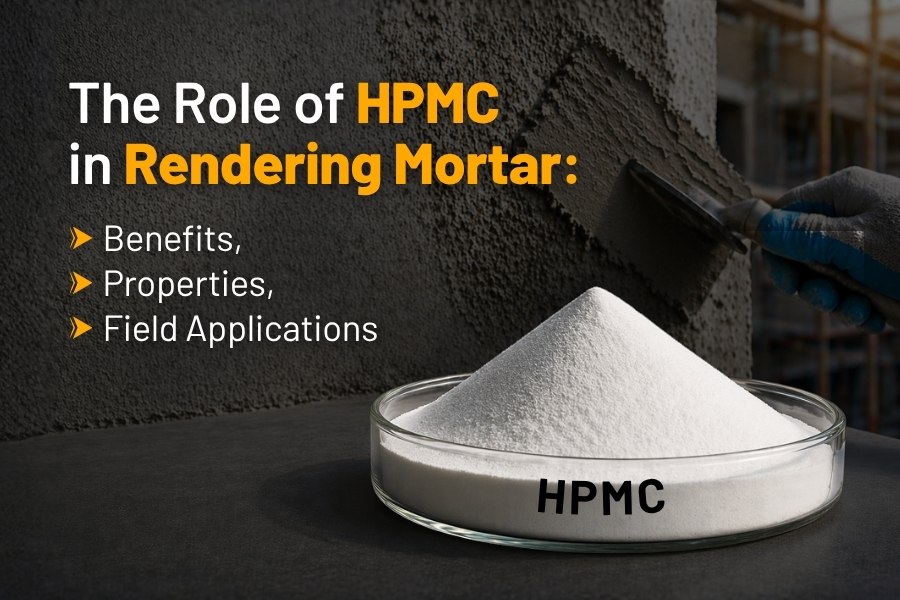
In this blog, we will explore the importance of HPMC in rendering mortar by discussing the properties, advantages, ways of operation, and examples of application of HPMC in the field.
What is HPMC and Why is it Used in Rendering Mortar?
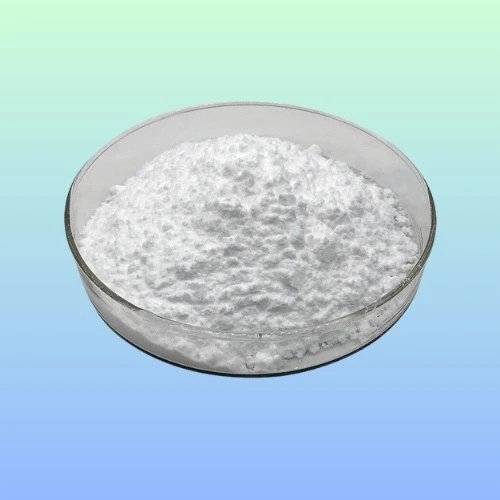
Hydroxypropyl Methylcellulose (HPMC) is an altered cellulose ether created from organic sources like cotton and wood pulp. HPMC is a fine powder that becomes very functional when combined with water.
HPMC becomes a viscous solution after mixing with mortar, making it work with cement, sand, and water. The performance of the entire mortar system greatly improves when HPMC is present.
What Makes HPMC So Important?
Rendering mortars have multiple performance criteria that need to be met:
- Must be easy to use.
- Must bond strongly to surfaces.
- Must not dry too quickly.
- Must resist cracking and shrinkage.
Without incorporating additives into the formulation, achieving these properties consistently can be difficult due to the variability of environmental conditions. HPMC in rendering mortars is, therefore, the solution of choice for the industry (mortars that incorporate HPMC will perform consistently across job sites and conditions in today’s fast-paced construction environment).
In a construction environment where speed and quality are key, HPMC provides assurance that the mortar will behave consistently between different projects and site conditions.
What is Rendering Mortar?
Rendering mortar is a cement-based material used to create a protective and decorative coating on walls. It is commonly applied to both internal and external surfaces to improve durability and appearance.
Because rendering mortar is often applied in thin layers, it is very sensitive to external influences, so without incorporating suitable additives, it may dry out too quickly causing little adhesion and resulting in cracking.
HPMC plays an important role in Rendering Mortar as it helps to stabilise the mix of ingredients, providing consistency and performance.
Core Properties of HPMC in Rendering Mortar
An explanation of how HPMC characteristics assist in the function of cementing mortar will be provided in this section.
1. Water Retention
The water retention capability of the mortar will help ensure that your mortar’s cement will cure correctly; it also minimizes the chance of a rapid dry out of the mortar during curing. It also assists in the higher development of strength and holds moisture as the mortar cures.
In cases of hot and/or windy conditions, the water-retaining ability of HPMC plays an important role in helping to prevent rapid drying of the mortar and thereby reduce the chance of cracks and/or a weak bond that would be generated by rapid drying.
2. Provides consistent thick mortar
The increase in the viscosity of the mortar allows the mortar to have a consistent and thick viscosity which provides a number of benefits in the use of HPMC for mortar:
a) Better control when applying the mortar.
b) Uniform application of the mortar.
c) Less material wasted in the application of the mortar.
Also, the use of HPMC will help to provide a consistent viscosity throughout the entire time that the mortar is being applied so that the mortar will not be too loose or too dry.
3. Forms a moisture barrier
HPMC forms a thin milky barrier in the matrix of the mortar.
The formation of the moisture barrier will produce the following benefits:
a) Increased bonding between particles.
b) Improved surface appearance.
c) Increased strength of the finished product.
Additionally, the moisture barrier will help to allow moisture to migrate slowly to the mortar and allow for a gradual curing of the mortar.
4. Provides micro air spaces within the mortar.
HPMC will produce micro air spaces within the mortar material.
Micro air pockets:
- Increase workability.
- Increase flexibility.
- Increase resistance to environmental stresses.
Micro-air bubbles are especially effective at preventing cracks due to temperature changes and/or structural movement.
5. Key Benefits of HPMC in Rendering Mortar
The use of HPMC in Rendering Mortar offers several practical benefits that directly impact construction quality.
1. Improved Workability
One of the most immediate benefits is improved workability.
The mortar becomes:
- Easier to mix.
- Smoother to spread.
- More comfortable to handle.
This reduces effort for workers and improves efficiency on-site.
2. Extended Open Time
HPMC extends the amount of time that mortar remains workability or workable.
Increasing:
- Time to adjust work when using mortar.
- Finishing of a project.
- Less wastage of product.
This is advantageous since larger scale projects require a more extensive amount of time to perform work.
3. Improved Adhesion
Adhesion is important for the long-term durability of the surface.
HPMC enhances the bond between the mortar and the surface therefore, provides less opportunity for:
- Delaminating.
- Peeling off.
- Structural issues.
4. Reduction of cracks and shrinking
By regulating the moisture evaporating out of the mortar, HPMC reduces the shrinkage.
Thereby providing for:
- Fewer cracks.
- Stronger products.
- Longer product life.
5. Smoother Surface Finishes
HPMC results in a smoother, more even finished surface.
Resulting in:
- Aesthetic appeal.
- Ability to paint.
- Better overall quality.
6. Sag Prevention
In vertical applications, sagging is a significant issue when using mortar. HPMC keeps the mortar from moving, which results in:
- Even thickness.
- Clean application.
- Better overall finish.
Improved Water Retention
HPMC serves as an essential factor for rendering mortar to retain water.
When mortar is installed, the water in the mix can evaporate quickly or become absorbed by the substrate, disrupting cement hydration and causing weakness in the structure.
HPMC creates a microscopic network that traps water in the mix, allowing the water to take longer to evaporate.
Benefits of better water retention:
- A properly hydrated cement.
- Stronger bonds.
- Longer working time.
- Less cracking.
For those that are installing the rendering, HPMC gives them a better level of control during application which translates to more consistent results.
Improved Workable and Performance during Application
Workability is an important factor when it comes to the efficiency of construction.
By adding HPMC to the mortar, it improves the flow and consistency which makes it easier to mix and install.
With HPMC in the mortar:
- It is smooth and easy to spread.
- It remains stable while being applied.
- It is less likely to sag.
This enables those who are installing to create a uniform layer for rendering applications.
Enhanced Adhesion to Substrate
Adhesion is very important for rendering mortar and is critical in the application of the mortar to different surfaces, such as:
- Concrete.
- Masonry.
- Cement boards.
- Insulation panels.
HPMC enhances the ability of the mortar to adhere to the substrate, as well as providing that the mortar contains sufficient moisture and contacts the surface correctly.
In addition, when HPMC is used with polymer additives, it provides an even greater enhancement to bond strength.
Result:
- Stronger attachment.
- Reduced risk of detachment.
- Improved durability.
Rheology Control and Stability
Rheology is the study of how a materials flows and behaves when subjected to stress.
Thixotropic (viscous when undisturbed, less viscous when disturbed) properties of HPMC included in rendering mortar enable:
- Application of mortar to flow easily.
- Mortar will remain stable after it is applied.
This helps prevent:
- Sagging of the mortar.
- Separation of the components of the mortar.
- Inconsistent thickness of the mortar.
This leads to more consistent thickness of mortar across both horizontal and vertical surfaces.
Support of Crack Resistance
A common concern when rendering is cracking. Cracks can develop from:
- Rapid loss of moisture in the mortar due to excessive evaporation.
- Fluctuations in temperature.
- Movement/settling of the structure on which the render is applied.
Adding HPMC to the rendering mortar will help to minimize the potential for cracking by:
- Retaining moisture in the mortar.
- Providing a more uniform cure.
- Improving the consistency of the mortar mix.
- Combined with polymers and fibers, HPMC can contribute to a flexible and durable rendering system.
Typical HPMC Dosage in Rendering Mortars
Although HPMC is used in small amounts, it has a great effect in the application of a rendering mortar.
The dosage of HPMC used in rendering mortars is dependent on the following factors:
- The desired viscosity of the rendering mortar.
- Type of aggregate that is being used.
- Cement composition (including the amount and type of cement).
- The conditions in which the mortar will be applied.
Most manufacturers will carefully alter the amount of HPMC that is used to achieve the optimum level of performance while keeping costs down.
Selecting the Right Grade of HPMC
Each grade of HPMC provides different characteristics toward the performance of a rendering mortar.
Some of the main considerations are:
Viscosity – the higher viscosity provides better thickening and water retention capability.
Water retention – the HPMC must provide a water retention capability that is consistent under a variety of conditions.
Dispersability – the HPMC must have good dispersability so that the rendering mortar can be mixed without lumps.
Compatibility – Must work well with other additives like polymers and fillers.
Selecting the right grade is essential for achieving consistent results.

The Role of HPMC in Modern Dry Mix Mortar Technology
Today more and more construction companies are moving towards Dry Mix Mortars in the building envelope.
The many advantages provided by Specialized Dry Mix Mortars are:
- Consistent Quality.
- Fast Application.
- Reduced Materials Waste.
- Control of Performance.
The use of HPMC (Hydroxypropyl Methylcellulose) allows these Dry Mix Systems to be very effective due to the fact that HPMC provides improved water retention, workability and stability; it converts traditional mortar products into high-performance materials.
Why Sakshi Chem Sciences & Why Choose Us?
At Sakshi Chem Sciences, We are not just selling product, We are creating a contract/commercial relationship. We built our reputation as an innovative product leader through 20 years of experience in the chemical building materials industry.
Some of our strengths include (but are not limited to) our advanced R&D capabilities; our stringent quality control measures; our extensive range of products; and having a global presence.
We also offer technical assistance to help our customers meet their project goals.
Closing Thoughts
HPMC is now a most important component of today’s construction rendering mortar. HPMC is not just an additive, but also a performance-enhancing agent which improves all areas of rendering including: Mixing, Applying, Curing and Finishing.
HPMC has provided significant improvements in workability, adhesion, crack resistance, and smoothness of surface finishes, which lead to results that meet expectations, both functionally and aesthetically.
HPMC has proven to significantly improve the quality, productivity, and durability of a construction project regardless of the size, whether it be a small building or a large civil project.
With a trusted partner like Sakshi Chem Sciences Pvt. Ltd., you gain access to high-quality products, technical expertise, and reliable support, ensuring that every project is completed with confidence.
Because in construction, success isn’t just about building structures, it’s about building them better, smarter, and stronger for the future.
Frequently Asked Questions (FAQs)
1. What do we use HPMC rendering mortar for?
We use HPMC to provide more water retention, workability and adhesion in rendering mortar.
2. Why is water retention significant?
It provides for the correct amount of cement to hydrate and also prevents cracking.
3. Can you use HPMC with polymer additives?
Yes, it is very common to use HPMC in conjunction with redispersible polymer powders.
4. What factors affect HPMC dosage?
The variables that will influence the dosage of HPMC will be the formulation, the environment, and the performance requirements.
5. In dry mix mortars, what role does HPMC play?
The role of HPMC is to provide consistency, stability and good workability for the application.

Sagar Telrandhe is a Construction Engineer with a B.Tech in Construction Engineering & Management. Passionate about infrastructure development, project planning, and sustainable construction, he specializes in modern construction techniques, project execution, and quality management, contributing to efficient and innovative building.