
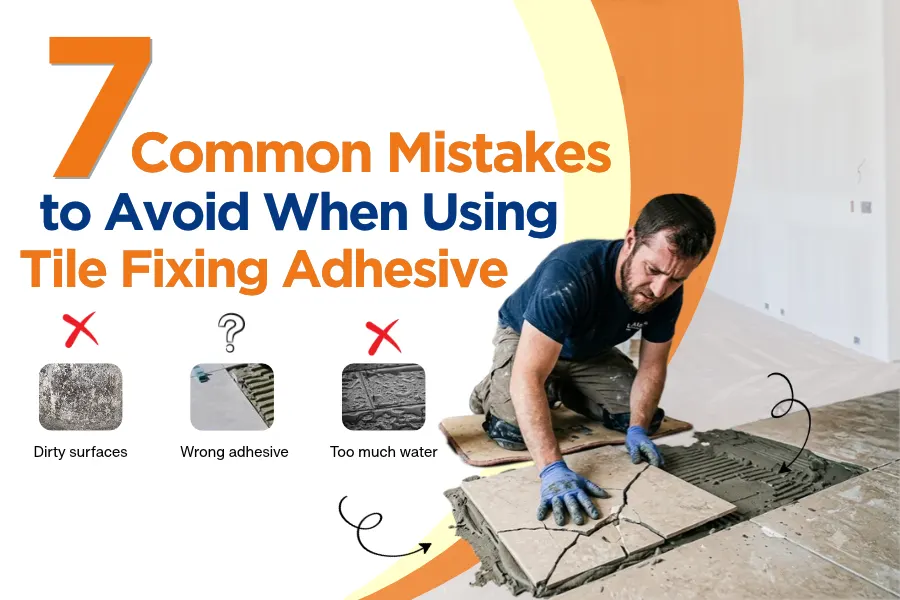
The successful installation of tiles involves many parameters, including adhesive and execution. An appropriate surface preparation process combined with the right mixing of adhesive will result in successful future performance of the finished tiling.
Even the best tile fixing adhesive might cause all sorts of troubles if not used appropriately. Some of the consequences may include hollow tiles, cracked grout, poor bonding, tile debonding, and many other failures which will lead to costly repairs.
Table of Contents
In the present article, we will get acquainted with the Common Mistakes to Avoid When Using Tile Fixing Adhesive and practical ways of avoiding them for a durable tiled surface.
1. Poor Surface Preparation
One of the most essential causes of tile adhesive not adhering properly is the improper preparation of the surface. Dirt, grime, oil, loose lumps, and cement residues will prevent the adhesive from sticking effectively to the substrate.
How to avoid it:
- Make sure to clean the surface thoroughly before installation.
- Remove any loose concrete, dust, or traces of previous glue.
- Make sure that the substrate is clean and suitable.
- Follow the manufacturer’s instructions about moisture.
- A clean and proper substrate enables perfect adhesion of the tile.
2. Wrong Choice of Adhesive
Not every glue works for all types of tiles or surfaces. For instance, large format tiles, porcelain tiles, natural stones, and classic tiles need different glues.
Also, the choice depends on whether the tiles are being installed on walls, floors, balconies, or bathrooms.
How to avoid it:
Use the right glue according to the type of tile, its size, type of substrate, and expected conditions of exposure.
3. Bad Mixing Compounded with Extra Water
Bad mixing has an impact on the adhesive’s properties and the quality of bonding. Too much water results in a weaker binder, but improper mixing might cause some lumps of dry material to remain.
Another common problem is introducing water to the adhesive after it has begun setting.
How to avoid it:
- Follow the prescribed water-to-powder ratio.
- Use a mechanical paddle mixer.
- Let it rest, if needed.
- Never do re-tempering after a period of time has passed.
4. Using Too Much Adhesive
More adhesive does not necessarily contribute to better bonding. Using too much adhesive can cause problems, like uneven curing, shrinkage, and uneven support of tiles.
Most tile adhesives are designed for thin-bed applications.
How to avoid it:
Use the right thickness of adhesive.
5. Forgetting Open Time
There is open time specified for each tile adhesive. What this means is that the user should place the tiles within that time frame to ensure they stick properly.
Adverse conditions such as heat, strong winds, and sunshine can speed up the rate at which an adhesive dries. By the time that tile is placed on top of already dried adhesive, it cannot stick well anymore.
What to do to prevent it:
- Put adhesive on surfaces in moderate-sized portions.
- Monitor how much time has passed since the application of the adhesive.
- Gently touch the adhesive to find out if it reacts.
- Take away adhesive that has already dried.
6. Disregarding Movement Joints
Tiles and other construction materials expand and shrink when subjected to changes in temperature and humidity. If movement joints are neglected, the surface can become tensioned.
This may lead to damage to grouting and tiles coming off.
What to do to prevent it:
Make sure to add movement and expansion joints according to the design. Do not fill these joints with usual adhesive or rigid grout.
7. Using Traditional Fixing Methods for Modern Tiles
To bond modern tiles, especially the large-format and low-absorption porcelain tiles, the regular mortar mix might not be suitable.
Polymer-modified mortars are used to enhance adhesion and flexibility.
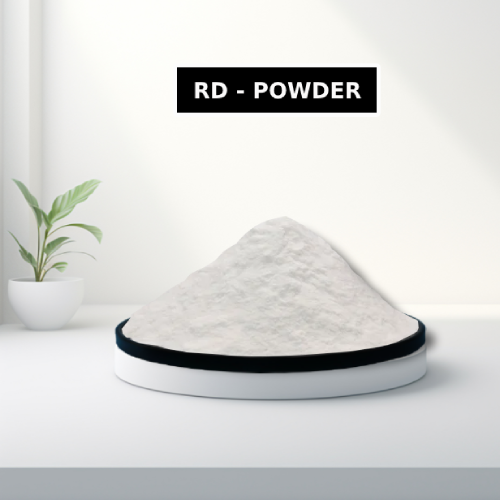
An important part of many dry mix formulations is RD (redispersible polymer powder).
The RD powder contributes to the properties of adhesion, flexibility, cohesion, and workability and creates a dependable bond when added to the right formulation.
How to avoid it:
Instead of regular mortar, use a tile adhesive formulated for certain tile requirements.

Reason to Choose Sakshi Chem Sciences
Sakshi Chem Sciences Pvt. Ltd. is the premium manufacturer, supplier, and exporter of construction chemicals with an experience of over 20 years in the field.
Sakshi Chem Sciences manufactures more than 50 kinds of construction chemical products such as admixtures for cement and concrete, waterproofing agents, grouts ideal for construction, release agents for molds, and repair products.
With sophisticated research and development centers, advanced production facilities, and a thorough quality inspection routine, Sakshi Chem Sciences works on the manufacturing of durable and economical construction chemical products. The experience gained by the company allows us to produce materials for modern dry-mix methods of construction.
Final Words
If you use the right construction materials, you can avoid most problems with tile laying. Improper surface preparation, choosing the wrong mixing techniques, using too much adhesive, and ignoring open time can destroy the tile bonding process.
Knowing the Frequent Mistakes about using tile-laying adhesive will help contractors and users have a better installation process.
Choosing the right adhesive modified by polymers like RD Powder and following the instruction for its utilization will better the quality of tiled surface.
FAQs
1. What causes tiles to loosen after installation?
Loose tiles can occur due to inadequate preparation of the surface, misunderstanding of which adhesive to be used, incorrect mixing, lack of coverage, or exceeding the open time allowed by the adhesive.
2. What is the role of RD Powder in tile adhesive?
RD Powder enables improvement of adhesion, flexibility, cohesion, and workability in dry-mix adhesives.
3. Can tile adhesive be applied directly over old tiles?
Yes, some adhesives are designed specifically for tile-over-tile applications; however, existing tiles must be strongly adhered, clean, and suitable for a specific adhesive.

Sagar Telrandhe is a Construction Engineer with a B.Tech in Construction Engineering & Management. Passionate about infrastructure development, project planning, and sustainable construction, he specializes in modern construction techniques, project execution, and quality management, contributing to efficient and innovative building.