
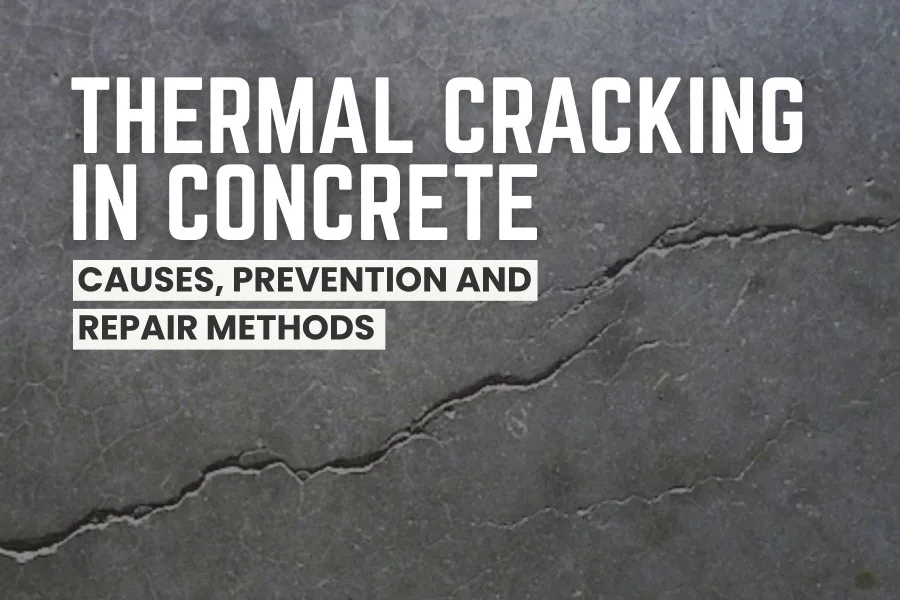
Thermal cracking in concrete occurs when a concrete element has a large temperature difference within it, causing internal stresses. These stresses will exceed the amount that the material can elongate and bend, at which point it goes into a crack.
It can be observed in mass or large concrete structures, where the interior core heats first from the chemical reaction of cement hydration and hardening, while the outer layer cools and contracts. The level of restraint on the interior core creates stress, and the cracking begins to occur.
Table of Contents
When thermal cracking is not capped, it can begin to provide paths for water, chemicals, and degradation materials to seep in. Over time, this will further reduce the internal strength of the concrete and lead to accelerated aging, or in some instances, failure of the structure.
Let’s take a look at where thermal cracks usually occur, why they occur, and why understanding this prevents and repairs thermal cracking to the best effect.
Where Does Thermal Cracking Usually Occur?
Thermal cracking does not randomly occur anywhere. If it’s worth cracking it is developing in an area with differing temperature influences, and that’s most likely occurring during or immediately after construction.
Mass Concrete Structures: Foundations, dams, large columns, and bridge piers often retain heat in the middle of construction while losing heat in the outer layers of construction.
Concrete Pavements: Essentially, pavements are barraged with rapid temperatures from day to night (h82).
Walls and Slabs: Thin or exposed sections cool quicker than areas that have more material and may cause uneven contraction.
Exposed surfaces: The sunshine or cold wind affecting a higher temperature could impact the surface quicker than the solid, inner, and cooler layers.
Freshly poured concrete: Concrete is especially sensitive in its early stages – any temperature change in concrete while it is hydrating will set up stress, which can lead to the potential for cracking.
What Causes Thermal Cracking in Concrete?
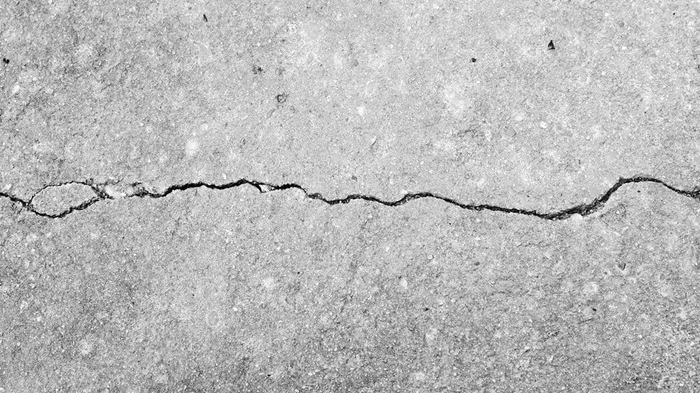
Knowing what causes thermal cracking is useful for avoiding it from the beginning. Thermal cracking usually comes from a few basic causes, including:
Heat from hydration – cement will generate heat when it reacts with water, especially weather a large mass is formed. Unless that heat is controlled, the heat will build up in the center of the mass.
Sudden cooling – sudden drops in temperature, such as precipitation, or the sun going down, can cause the face of the hydrated material to freeze quickly to shrink.
Rapid heating – The amount of sunlight or super high temperatures can cause the surface of the concrete to expand faster than the cooling surface underneath.
Inconsistent curing practices – The concrete is allowed to dry out too quickly, and both the thermal expansion and contraction, along with uneven moisture loss, can cause internal stresses that become cracks.
High cement content – The more cement there is, the more heat that will be generated inside the mix.
Unsuitable aggregate – Aggregates with high thermal expansion properties result in larger temperature-related movement.
Restraints: Reinforcement bars or adjacent structures may inhibit natural movement due to expansion or contraction, and forcing the concrete to accommodate itself explores its ability to crack.
Improper Mix Design: Not incorporating materials such as fly ash or slag would have assisted in controlling the heat of hydration and would likely add to the risk.
Environmental Neglect: Ignoring other variables, such as weather or temperature conditions, during the placement of concrete can lead to thermal behaviour that was not expected.
Types of Thermal Cracks
There are several ways thermal cracking can manifest depending on the timing of the cracks, their structure, and the environment.
Plastic Shrinkage Cracks
These occur a few hours after the evidence has been poured, during the time the top layer has dried faster than the lower layers. These cracks are worse in warm, windy, or dry situations. Although they are shallow, they can seriously impact surface durability.
Thermal Differential Cracks
Thermal Diff. Cracks are common in mass concrete because the offset of heat in the concrete core and cold at the surface of the mass concrete pull in different directions.
If the temperature difference is wide, the internal tug-of-war of the core against the exterior will lead to deep cracks.
Restraint Cracks
Restraint cracks arise when the concrete is not able to expand or contract due to interference by rebar, its foundation, or soil.
Due to the stiffness of the boundaries, the areas of restraint cannot move in the direction of their expansion or contraction forces, so they crack instead!
Surface Cracks from Rapid Cooling
Concrete is vulnerable to sudden changes in temperature, particularly when it experiences a quick drop, as in the case of a sudden rain or a quick chill, cooling the surface too rapidly.
While these will normally not be deep, these cracks have the potential to impact the look and weather resistance of the slab.
Expansion Cracks
Concrete will undergo expansion when the temperatures become extreme. If it has no opportunity to expand, or if it is held back by objects, it simply cracks; more common in hot sunny territories.
Cyclic Thermal Cracks
Concrete experiences a continuous cycle of heating during the day, followed by cooling in the evening. This continuous cycle generates a weathering process, which ultimately increases wear, and in the case of pavements and bridges, these cracks expand over time.
Edge Cracks or Joint Cracks
Edge cracks or joint cracks typically occur in slabs with higher temperature differences near joints or edges. The joint may not permit free movement of the crack, and the differential imbalance creates the crack.
Ways to Prevent Thermal Cracking in Concrete
Any preventive measure is better than a remedial solution. The following are some methods to reduce or completely avoid thermal cracks:
Low Heating Cement: Use blended and/or low heat cement to minimize the heat that gets released during concrete hydration.
Make Sure Concrete Cures Properly: Either maintain moisture as well as temperature (i.e. water curing, wet coverings, and curing compound).
Insulating Concrete: Use insulating blankets or foam to help slow down the rate of cooling at the surface.
Gradual Cooling: Allow the structure to cool off naturally. Do not pour concrete if it is going through an extreme temperature change.
Temperature Controlled Mixing: This has already been discussed, and so, use chilled water, ice, and or cooled aggregates in hot weather.
Choosing Aggregate Wisely: Picking aggregate with low thermal expansion will help reduce the internal stress that the concrete develops.
Expansion Joints: Allow the concrete to expand and contract naturally with the thermal change without forcing it to have stress.
Reduce Thickness: Creating smaller pours means less mass and therefore less heat generation.
Properly Place Reinforcement: Reinforcement is used to control where the cracks occur and to a known depth.
Over-Cementing: More cement means more heat. Make your mix to balance the cement.
Repair Methods for Thermal Cracks in Concrete
Even with the above precautions, thermal cracks may still occur; however, there are several repair options available depending upon the size and severity of the cracks. These options include:
Surface Seal: For small cracks, the surface treatment is a sealant or surface coating to protect the surface from moisture and chemicals that may cause further damage. This is usually a suitable option if the surface will remain exposed to the elements.
Epoxy Injection: Epoxy resin is injected into structural cracks to bond the two sides of the crack together, filling the void and restoring strength.
Routing and Sealing: the crack is slightly opened to accommodate a sealant, to keep the sealant in place, as well as to protect the crack from moisture.
Grouting: Larger cracks require more than just a sealant. Grouting material is a mixture of cement-based or epoxy-based compounds and is injected to fill the voids. It helps restore some of the new stability for deeper areas of the cracks.
Concrete Patching: If the crack has damaged the surface area, you’ll need to remove the loose concrete and place a patch. Patches are generally comprised of cement, sand, and bonding agents.
External Reinforcement: When the crack is of multi-directional structural performance or load bearing, external reinforcement can be applied using steel plates, carbon fiber wraps, or mesh. External support will hold the structure together and minimize cracking.
Carbonation: In some controlled conditions, carbon dioxide may react with the concrete to form calcium carbonate. This process may slightly lessen the crack width, but it is not typically used as a primary repair.
Fiber-Reinforced Polymer (FRP) Wraps: These are applied to concrete surfaces with the intent of increasing strength and crack resistance while having both a repair and strengthening application.
Bonding Agents: Whenever new material is applied over older concrete, such as with a patch or resurfaced job where complete bond is necessary to keep the repair in place, a bonding agent is speculated to promote proper bonding.


Final Thoughts
With careful planning and thoughtful implementation, it is quite possible to manage or eliminate the chances of thermal cracking in many circumstances, & when cracks are often unmanageable, it is nice to know that there are solutions.
Curing time and method, use of appropriate raw materials, and considering the impact from environmental concerns will go a long way toward ensuring that concrete structures meet their goals of strength and durability.
Even if cracking does occur, many of today’s repair options from surface sealing to fiber wraps and bonding agents, are viable options.
So whether you are constructing a building, existing the road for trucking, or paving a bridge, understanding thermal cracking will set you up for success in delivering stronger, longer-lasting structures.

Sandip Agrawal, Polymer Engineer and MD of Sakshi Chem Sciences Pvt. Ltd., leads innovation in construction chemicals, shuttering oils, and industrial lubricants. With expertise in polymer science and eco-friendly solutions, he drives R&D and sustainable advancements, ensuring high-performance products for India and global markets.