
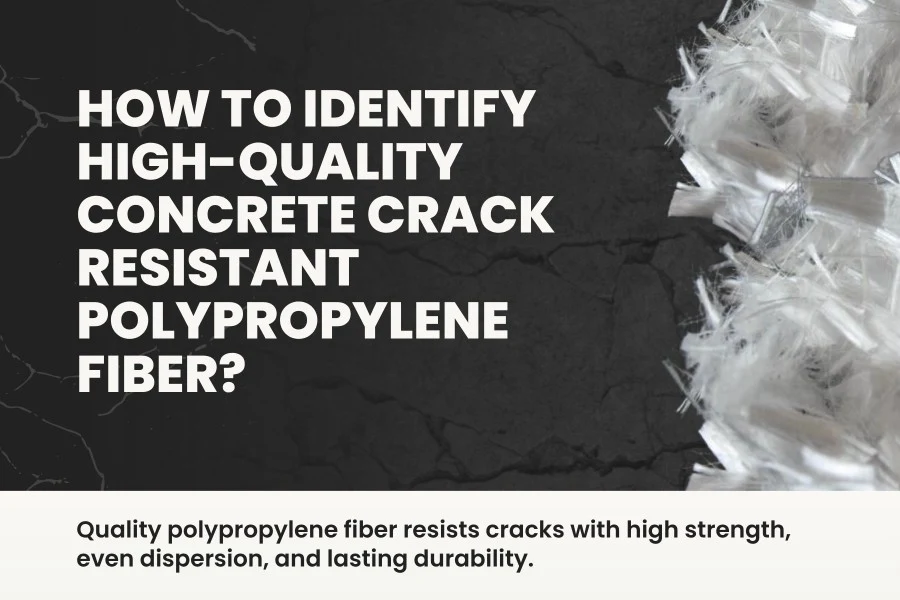
If you work in the construction world, particularly if you work with material science and concrete, it is easy to overlook the microscopic helpers that do the heavy lifting in the concrete.
One of those unsung heroes is the concrete crack resistant polypropylene fiber. These fibers are very small, but they are critical to emerging technologies that ensure our roads, buildings, bridges, and structures will last longer while resisting the stresses of the environment.
Table of Contents
However, not all fibers are created equally.
Let’s take a real look at the fundamental means of determining higher-grade concrete crack resistant polypropylene fiber compared to lower grades.
Know the Basics: What are Polypropylene Fibers?
Before we can begin on identification techniques, we need to know what polypropylene fiber is, and more importantly, in the grand scheme of construction, why it matters.
Polypropylene fiber is a polyfilament fiber composed of high-grade virgin polypropylene resin that is processed using methods that allow its beneficial attributes to be deployed in tandem.
Its inherent properties, like disappearance in concrete, bonding to cement, crack resistance, seepage resistance, freeze resistance, and impact resistance, etc. make it perfect as an additive as we move forward with concrete construction.
The fibers reduce limited-sized shrinkage cracks during both the plastic and early hardening portions of the concrete. When mixed correctly, the fiber produces an invisible net that adds reinforcement to the mix.
1. The Water Removal (Drying) Method
This may seem easy, but this is one of the simplest ways to know if you are dealing with inferior quality fibers. Many inexpensive polypro representatives have a hidden amount of moisture that won’t come off in your touch, but the moisture will distort performance and weight. You can sample by drying the fiber in the sunlight or in an oven.
Let’s say you purchase 1 kg of fiber with 5% moisture. You are getting only 950 grams of fiber that is usable. You may have felt it was a cheap deal, but you are paying a hidden premium. Getting a dry-out test done can save on budgets and protect your investment in quality for the cost.
2. Observation: The Eye Test
Some lab tests can be outdone by a casual glance, especially if you know what to be looking for.
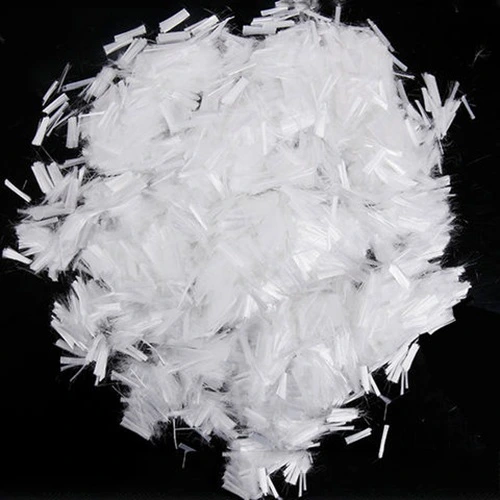
Concrete crack resistant polypropylene fiber of high quality will have:
- Even length and thickness.
- A light white or ivory color.
- No oily areas, doubling over, and coarseness.
- Free from clumps, impurities, and clean.
In contrast low low-quality fibers may be yellowed, oily, clumpy, uneven in size, and uneven in texture. Always ask for a sample before buying in bulk and use this eyeball test as your first checkpoint!
3. Water Bath Dispersion Test
This approach is useful for on-site testing. It only requires two clear cups, some clean water, and a small amount of fiber – 0.4g per cup should be sufficient.
Once you have added the fibers to each clear cup filled with 500 ml of water, give the water a stir for approximately 10 seconds, and then see how well the fiber has dispersed.
The highest quality fibers will disperse evenly and freely suspend in the water; the lower quality fibers will clump together or sink, giving you a visible indication of poor dispersibility and the quality of the manufacturing.
It is a good indication of how this fiber will behave when mixed into the concrete and it is a simple and clear demonstration of quality.
4. Odor Assessment: The Smell Test
You might be surprised to hear, but odor can be a useful indicator of fiber quality.
Premium polypropylene fibre products should be odorless or have a very faint neutral smell. If you can detect a strong or unpleasant, or chemical smell, then it is likely the fibres are made from recycled or poor-quality raw materials.
Contaminants present in poor quality products have the potential to degrade the fiber and compromise your concrete mix at some point in the future.
5. UV Exposure & Weathering Test
In practice, concrete is often subject to sunlight, temperature fluctuations, and moisture. If a fiber breaks down when exposed to UV rays, it will eventually lose strength and will not be useful.
The way to test this is to place your sample(s) in natural sunlight outdoors with moisture for a few weeks, months or longer; if it loses most or all tensile strength and you see the fiber become brittle or discolored, the fiber was not UV stabilized and should not be considered for long-term structural applications.
This is a good method to utilize when examining fiber that will be utilized in outdoor or infrastructure applications!
6. Lab Testing: The Gold Standard
If lab testing to ensure your concrete crack resistant polypropylene fiber is important to you, it is the best way to ensure quality.
Main indicators include:
Tensile Strength: Fibers of good quality should have a tensile strength of greater than 350 MPa.
Elongation Rate: Good elongation, still over 60%, is often observed with recycled or lesser quality fibers.
Alkali Resistance: Concrete has a very high default alkaline setting, resulting in an inferior alkali resistance to the fiber degrading over time in an alkaline environment.
If you’re using a batch of fibers on a large construction site, it’s wise to send a sample to a certified lab. Make sure the sample you send matches the fiber you’re using on-site.

Final Thoughts
As we have seen in this article, the issues of choosing the right concrete crack resistant polypropylene fiber to use are not simply about brand or cost, it is about performance, quality, and what the fiber is doing for your application.
With correctly identified fiber in your concrete, you can rest assured your projects will be built to last, with cracking, seepage, and premature wear.
So next time you are shopping for fibers, take a minute to inspect, test, and validate. Your concrete will appreciate it, and so will your clients!
FAQ’s
Q1: Can recycled polypropylene fiber be used in concrete?
Technically, yes, but it is not advisable. Recycled fibers may not be consistent in tensile strength, alkali resistance, or bonding properties. For structural or important applications, virgin fibers are preferred.
Q2: How much fiber do I use in a concrete mix?
This has to do with the project you are using it for, but typically, you will be using 0.6 to 1.2 kg per m3 of concrete. This is general, but always refer to the manufacturer’s recommendations.
Q3: What is the difference between monofilament and fibrillated fiber?
Monofilament fibers are thin, single-strand strand discrete fibers, so they are excellent for early-age cracking. Fibrillated fibers are net-like fibers that provide multi-dimensional reinforcement. For resistance to cracking, monofilament polypropylene fiber is usually utilized.

Sagar Telrandhe is a Construction Engineer with a B.Tech in Construction Engineering & Management. Passionate about infrastructure development, project planning, and sustainable construction, he specializes in modern construction techniques, project execution, and quality management, contributing to efficient and innovative building.