
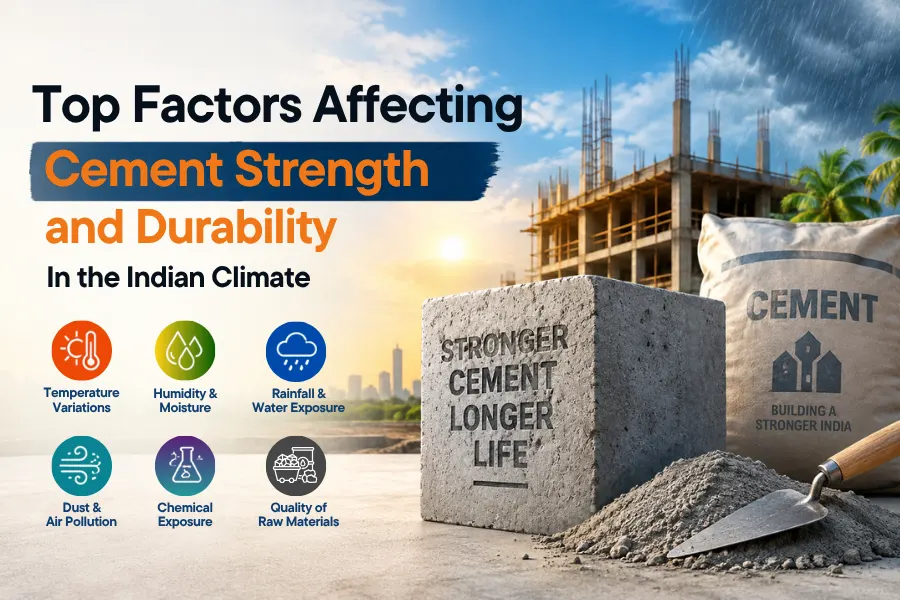
India’s climate varies across different parts of the country and can subject cement and concrete structures to extreme conditions such as high temperatures, dryness, heavy rains, and cold weather. These changes will have an impact on the stability of the cement and concrete structures.
Table of Contents
This article will analyze the major factors influencing cement strength, the influence of Indian climate on cement resistance, and the ways of improving cement and concrete durability.
How Does Climate Affect Cement Performance?
India is characterized by diverse climatic conditions. The process of cement hydration as well as the properties of concrete may be affected by temperature, humidity, and precipitation.
Heat and Dry Weather
High temperatures may promote cement hydration and result in fast evaporation of water from fresh concrete. If curing is not performed successfully, this may lead to the formation of shrinkage cracks and low strength development.
Water must remain on the site during the curing process, especially in hot and dry conditions.
Monsoon Season and High Humidity
Heavy rains and high humidity create other problems. The effect of excess water, poor drainage, or lack of protection may lead to the deterioration of concrete properties.
Proper curing, waterproofing, and drainage control will allow protecting concrete structures during this period.
Cold Weather
Low temperatures may slow down and delay the hydration process and strength development of concrete. Therefore, the construction process may need to be changed according to site-specific conditions and required preparations.
Key Factors Affecting Cement Strength
Many things determine the performance of cement and concrete over time.
1. Water-Cement Ratio
The water-cement ratio is one of the key factors influencing the quality of cement. An excess of water may result in increased porosity of concrete, making it less dense and less strong.
A proper water-cement ratio and good mixing ensure uniformity of results. The correct ratio should be calculated according to the concrete mix design and project specifications.
2. Quality of Raw Materials
Quality and uniformity of cement, aggregates, water, and other raw materials influence the final quality of concrete. The presence of impurities or inappropriate raw materials can disturb hydration and strongly affect strength.
Thus, it is important to use tested and controlled materials for achieving the desired strength.
3. Curing
Curing is essential for ensuring the moisture and conditions necessary for the continuation of the hydration of cement and development of its strength. If curing is inadequate, surface cracking will occur, leading to loss of strength and durability.
Curing is even more important during hot weather conditions due to the possible rapid evaporation of moisture. When conventional water curing methods cannot work properly, the application of a proper curing compound can be taken into account. The method of curing has to be chosen according to the application requirements, weather conditions, and project specifications.


4. Mixing and Workmanship
The existence of good quality cement does not make the shortcomings in workmanship less crucial. Improper mixing or wrong proportions may be caused by a lack of compaction and poor placement, can appear. The proper batching, mixing, placement, and finishing methods are necessary for providing uniform strength and durability.
5. Environmental Exposure
Concrete constructions can face severe environmental conditions depending on where they are located. Constructions in coastal areas can be subjected to a saltwater environment; constructions in industrial areas may endure the influence of harmful substances. Acidic soil and prolonged exposure to moisture can also be detrimental to durability.
Practical Ways to Improve Cement Durability
Several simple practices may have a major impact on long-term results:
- Adapt construction methods to weather: Alter curing and protection practices according to the season.
- Use good materials: Acquire cement, aggregates, admixtures, and other construction chemicals from reputable suppliers.
- Practice good curing: Use effective water curing techniques or appropriate curing compound when required.
- Control moisture: Ensure that proper waterproofing and drainage methods are used, especially in rainy regions.
- Employ good workmanship: Be consistent in batching, mixing, placing, and finishing.
- Inspect structures periodically: Recognize cracks, leaks, and other signs of deterioration before they develop into major issues.
Why Choose Sakshi Chem Sciences?
Sakshi Chem Sciences Pvt. Ltd. is one of the prominent manufacturers, suppliers, and exporters of various construction chemicals that boasts 20 years of experience.
The portfolio of the company includes 50+ products of construction chemicals, including admixtures for concrete and cement, waterproofing solutions, grouts, mould release agents, and products for repairing and rehabilitation purposes. The company uses advanced R&D technology and sophisticated manufacturing techniques.
Sakshi Chem Sciences Pvt. Ltd. specializes in quality products at reasonable prices and is capable of fulfilling construction needs.
Conclusion
Cement strength and durability depend on more than just the quality of cement itself. The Factors Affecting Cement Strength include the water-cement ratio, material quality, curing, workmanship, and environmental exposure.
India’s varied climate makes proper construction practices even more important. By selecting suitable materials, maintaining proper curing, and using appropriate construction chemical solutions, contractors can build structures that perform reliably across different climatic conditions.
FAQs
1. What are the main factors affecting cement strength?
The main factors include the water-cement ratio, quality of raw materials, curing, mixing and workmanship, and exposure to environmental conditions.
2. Why is curing important for cement and concrete?
Curing maintains suitable moisture conditions for cement hydration and strength development. Poor curing can lead to cracking, reduced strength, and lower durability.
3. Can a Curing Compound be used instead of water curing?
A Curing Compound can be considered when conventional water curing is difficult or impractical. The appropriate curing method depends on the project, weather, and application.
4. How does hot weather affect cement strength?
High temperatures can accelerate hydration and cause rapid moisture loss. Without adequate curing and moisture control, this can contribute to shrinkage cracking and affect strength development.
5. How can cement durability be improved in the Indian climate?
Using quality materials, maintaining the right mix proportions, ensuring proper curing, following good workmanship, and providing suitable waterproofing and drainage can help improve long-term durability.

Sagar Telrandhe is a Construction Engineer with a B.Tech in Construction Engineering & Management. Passionate about infrastructure development, project planning, and sustainable construction, he specializes in modern construction techniques, project execution, and quality management, contributing to efficient and innovative building.