

The construction industry is advancing quickly, and plastering is fundamental to ensuring solid, enduring, and consistent flatwork, whether it be on the inside of a residential project, on commercial walls, on large projects, or on second or third coat finishes for an infrastructure project. Plastering is not just a mix of cement, sand, and water anymore.
Table of Contents
Today’s projects are demanding greater strength, workability, efficiency, and longer-term protection, and together these things can only be achieved with Game-Changing Cement Additives!
Cement additives are changing the way plaster is mixed, applied, and performs over time. As one of India’s trusted leaders in construction chemicals, Sakshi Chem Sciences has witnessed firsthand how relying on the right cement additives can help contractors, developers, and masons of plastering projects improve finishing quality, reduce waste, accelerate timing on projects, and guarantee a long-lasting finish.
Before we take a look at the top 10 cement additives, here is a background perspective about what we do and why Sakshi Chem Sciences products are trusted worldwide.
Why Cement Additives Are Important in Plastering?
- Plastering must accomplish multiple conditions.
- Plastering must properly bond to surfaces.
- Plastering must remain workable for the mason’s finish.
- Plaster must resist cracking, shrinkage, or moisture damage.
- Plastering must achieve a consistent finish on the surface being prepared for paint or coating.
Traditional sand-cement mixtures are often insufficient when dealing with real-world challenges on the job site, such as variations in sand quality, temperature changes, and time constraints. That’s why specialized additives and admixtures to improve mixes can be incredibly impactful.
10 Game-Changing Cement Mix Additives Changing Plaster Work
1. Water Reducers
Water-reducing additives can maintain a smooth, workable consistency while also reducing the amount of water present.
Why it matters?
- More water leads to more compressive strength.
- Less water reduces cracks associated with drying and shrinkage.
- More water is a benefit for hot weather because plaster would dry out too quickly.
Practical use on the job:
Water-reducing additives can assist with large exterior walls, where early surface cracking can be prevented.
2. Plasticizers
Plasticizers can improve the flow and spreadability of plaster.
Benefits:
- Less physical energy will be needed to apply the plaster.
- More consistent coating thickness.
- Reduced the risk of plaster falling off when applying it to ceilings.
This is one of the most typical of the Game-Changing Cement Additives when completing a project.
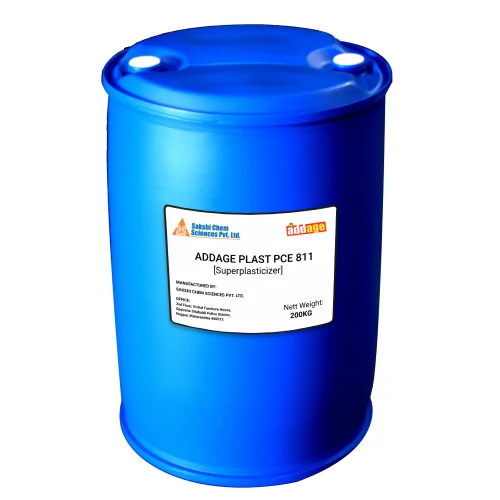
3. Superplasticizers (High Range Water Reducers)
Often classified under advanced concrete admixtures, superplasticizers have great flowability with low amounts of water.

Prerequisites:
- Large projects.
- Revolutionary spray plaster robots.
- Machine tools.
Allows you to work faster with limited surface touch up work needed.
4. Waterproofing Additives
Moisture is one of plaster’s greatest adversaries. Waterproofing additives are a barrier to water entering.
Best used in:
- Bathrooms
- Kitchens
- Basements
- Exterior walls exposed to monsoons
Waterproof coatings ensure the walls’ integrity over time, resulting in fewer callbacks after the project is finished.
5. Bonding Agents
Bonding Agents enhance the bonding of plaster to concrete, AAC block, old plaster, and brick surfaces.
Good bonding will inhibit:
- Peeling.
- Hollow sounding.
- Delaminating.
It is especially important for plastering over pre-cast or smooth RCC surfaces.
6. Accelerators
Accelerators reduce the setting time for the plaster material.
Most useful when:
- You are on a tight schedule.
- Plastering in cooler temperatures.
- You want to apply multiple layers in one day.
- Accelerators allow the wall to be finished and ready for paint sooner.
7. Retarders
Retarders slow down the setting time.
Most applicable for:
- Hot weather.
- Drying large surfaces.
- Complicated designs where the masonry would like some working time.
- Retarders allow for plaster to remain workable before drying too quickly.
8. Microfibers
While some additives can help with durability long-term, microfibers can help increase durability from the very first batch of plaster.
Microfibers increase tensile strength within the plaster matrix to prevent surface cracking caused by:
- Movement.
- Temperature variation.
- Vibration.
Microfibers are particularly useful when plastering the walls and trim around door frames, window corners, and at transition joints.
9. Air-Entraining Additives
Air-entraining additives will also add tiny air bubbles throughout the plaster, which help with workability and freezing and thawing properties.
Air-entraining additives help improve:
- Insulation properties.
- Better and smoother mixing and spreading.
- Improved stabilization for moisture and thermal temperature.
Air-entraining additives are more helpful in coastal regions and/or at higher elevations.
10. Polymers & Latex Modifiers
Polymer-modified plaster has superior strength and flexibility.
Advantages:
- Higher bond strength.
- Improved crack resistance.
- Smooth, dense finish.
- Better paint compatibility.
Polymers help plaster handle temperature and surface stress without weakening.
How These Additives Impact Real Construction Scenarios?
| Benefit Category | Additives Responsible | Impact on Plaster Work |
| Workability | Plasticizers, Retarders | Smooth spreading, less labor |
| Strength & Crack Control | Fibers, Polymers, Water Reducers | Tough, long-lasting plaster |
| Moisture Resistance | Waterproofing Additives | No damp patches or blistering |
| Project Speed | Accelerators, Superplasticizers | Faster completion timelines |
| Durability | Bonding Agents, Air-Entraining Agents | Longer service life & consistent finish |
By using the right combination, plaster transforms from a basic wall covering to a protective, aesthetic, and high-performance layer.
Why Sakshi Chem Sciences Leads in Additive Solutions?
At Sakshi Chem Sciences, we don’t just manufacture additives; we engineer performance.
What Sets Us Apart?
- Largest product portfolio in India.
- Precision manufacturing for stable quality.
- Technical team support for real project conditions.
- Custom additive formulations based on local sand and cement quality.
- Exports to global construction markets.
Our solutions help:
- Contractors reduce rework.
- Builders achieve cost-efficient performance.
- Developers hand over durable, high-quality buildings.
- Masons complete walls smoothly and faster.
We support your project from concept to completion.
Final Thoughts
Plastering has evolved, and so have the materials that make it happen. By using the right Game-Changing Cement Additives, construction teams benefit from:
- Better strength
- Faster work
- Crack-free finishes
- Moisture protection
- Longer wall durability
In short, smarter plaster means better buildings.
Whether you are a contractor, architect, builder, or homeowner, choosing the right plaster additives makes all the difference. And with Sakshi Chem Sciences, you gain high-performance solutions backed by research, quality, and technical expertise.

Sagar Telrandhe is a Construction Engineer with a B.Tech in Construction Engineering & Management. Passionate about infrastructure development, project planning, and sustainable construction, he specializes in modern construction techniques, project execution, and quality management, contributing to efficient and innovative building.