

Concrete is one of the most relied-on materials in the construction industry to create strong, durable structures. Although compressive strength is often touted as the key feature of concrete, flexural strength is another property that is just as important.
Table of Contents
The flexural strength of concrete is the characteristic governing its ability to resist bending or cracking under stress. This article explains flexural strength, why it is important, how it is determined, and how it is tested.
What Is the Flexural Strength of Concrete?
Flexural strength is commonly called the modulus of rupture, which defines concrete’s ability to withstand failure when subjected to bending forces.
Flexural strength is not concerned with how much load the concrete can take before crushing, as is compressive strength. Flexural strength is concerned specifically with performance under tension on the outer fibers.
Flexural strength is especially relevant to structural components whose purpose is to resist bending: beams, slabs, pavements, and bridges. If a structure (bending) exceeds a certain limit, it can convention structural cracking or even structural failure.
In summary, the flexural strength of concrete needs to be understood by civil engineers and contractors.
Why Is Testing Flexural Strength Important?
Flexural strength tests add clarity to the anticipated performance of concrete in reality. Compressive strength gives general strength, but flexural strength adds a more specific application of properties.
Testing is needed when the concrete element is experiencing conditions or movements, e.g., in environments where stresses can develop would include as roadways, industrial floors, and earthquake-prone areas.
Again, all activities can lead to cracking. The flexural strength tests will help you understand whether the concrete can resist these forces as time passes.
In addition, data from these tests are required for determining the requisite mix proportions, slab thickness, and reinforcement configurations.
Applicable Uses of Flexural Strength in Construction
Flexural strength has useful applications for the structural engineer. It is typically used to calculate optimal performance in the structural engineering design of elements such as beams, floor slabs, and pavement panels. When flexural strength data is accessible, you have the ability to:
- Predict or calculate a sufficient slab thickness.
- Answer the question of where to place reinforcement.
- Select or enhance your material choices with admixtures to obtain suitable performance against failure.
- Guide curing and agent requirements that will produce resultant good finishes in slab products and overall quality.
By understanding this kind of property, you can design and construct structures that are not only strong but also rational and safe.
How to Calculate Flexural Strength of Concrete?
Determining flexural strength involves a systematic laboratory protocol, beginning with the preparation of the specimen, followed by a testing protocol.
1. Specimen preparation
Before testing procedures are employed, test specimens must be prepared with accuracy.
Moulding: The concrete is mixed, moulded in a shaped beam, and cast into a perfect shape in compacted moulds (to remove entrapped air, for example).
Curing: The moulds are subjected to temperature and humidity for a period of 28 days for curing.
Demoulding: The moulds are removed from the concrete at an appropriate time with a well-thought-out demoulding preparation to avoid damaging the surface.
2. Materials to Control
In order for a controlled specimen, considerable attention should be devoted to:
- Water-cement ratio.
- Aggregate type and size.
- Adding admixtures, if used (plasticizers, accelerators, retarders)
- Quality of the cement and concrete constituents.
The behavior of the specimen will depend on your control of a reliable and reproducible mix.
3. Testing Procedure
The traditional methods of testing flexural strength are two-point loading and third-point loading. It can all be completed with a universal testing machine (UTM).
The concrete beam is placed on two support points.
Load is progressively applied through one or two centres until the specimen fails.
The load is indicated at the point of failure (perhaps at both loads!) and recorded.
Finally, flexure/flexural strength (f) can then be calculated with the following equation:
f = (PL) / (bd^2)
Where:
- P = Load applied at failure
- L = Span length between the supports
- b = Width of the specimen
- d = Depth of the specimen
This result is measured in MPa (Megapascals).
Benefits of Understanding Flexural Strength
Improved Structural Design
This analysis will allow engineers to make informed decisions regarding the need for reinforcement in structures.
Better Durability
Having the correct flexural strength will ensure that the structures last, especially under repeated dynamic loading.
Improved Economy
Reducing unnecessary field reinforcement as well as optimizing thicknesses will lead to less material use and labour costs.
Safer Structures
No sudden failures in the structure, ensuring that it is not suddenly unsafe for its intended purpose.
Quality Control
Acts as an established performance indicator for different concrete batches.
Factors that Affect Flexural Strength
Many factors can affect the flexural strength of concrete.
Water-Cement Ratio: Generally, increasing the water-cement ratio will increase the flexural strength.
Admixture: Can improve certain strength performance, workability, and setting time.
Curing Time: Longer curing periods generally mean stronger concrete.
Type and Size of Aggregate: Using uniform and well-graded aggregate can improve performance.
Homogeneity of Mix: The Distribution of all cement and aggregates evenly mixed will generally lead to consistent results.
Admixtures and Demoulding Agents: Their Use.
Admixture: Chemical substances that can be added during mixing to improve certain concrete properties such as setting time, workability, or durability of concrete.
In the case of flexural strength, admixtures like superplasticizers, silica fume, or other laboratory mixes can lead to improvements in performance.
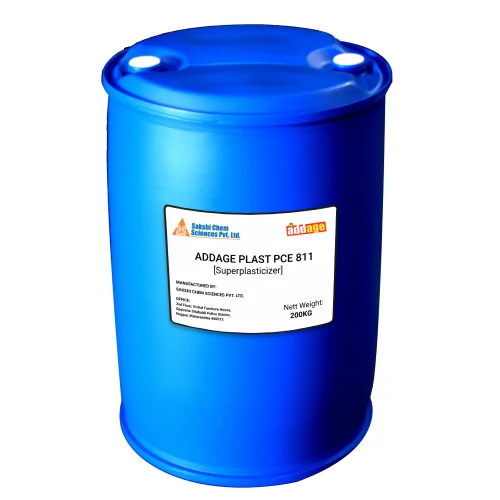

Demoulding Agent: A chemical agent used to coat the moulds so that the cured concrete can be struck without damaging the surface of the concrete.
Selecting a demoulding agent that allows for stripping the test specimen without compromising the integrity of the structure will be the best practice, since all test specimens need to meet certain minimum requirements before testing.
Conclusion
The flexural strength of concrete plays a critical role in structural engineering and construction. It guarantees that concrete can withstand bending stresses while adding safety, durability, and stability to the structure.
Whether it is competent specimen preparation based on the admixtures and demoulding agents, or competent testing and evaluation of the results, every step plays a crucial role.
Knowledge of and good practice concerning flexural strength will help engineers and builders design structures that are strong, stable, durable, and cost-effective.
Where structural performance is required, using high-performance concrete mixes and suitable construction additives is a more reasonable approach.
FAQs
Q1. What is the flexural strength of concrete?
Flexural strength measures a concrete beam’s ability to resist bending without cracking, but it focuses on the tension to which concrete can be put when one is acting on the opposite end.
Q2. Why is flexural strength important in construction?
It is important that flexural strength is important in all applications of concrete subjected to bending, such as pavements, bridges, and floor slabs. It assures the safety and durability of structures.
Q3. What is the standard minimum flexural strength of concrete?
Standard minimum flexural strength typically ranges between 3 MPa to 6 MPa, depending on the concrete grade. In IS 456:2000, it is defined in terms of compressive strength:
Fcr = 0.7 √Fck
where Fck is the characteristic compressive strength after 28 days of specified curing.
Q4. What are some admixtures that improve flexural strength?
Silica fume, fly ash, and superplasticizers are examples of admixtures that are known to enhance the tensile and flexural properties of concrete.
Q5. Does flexural strength depend on curing conditions?
Yes. Curing that is not done properly can result in a significant reduction in flexural strength. Proper curing conditions, such as moisture and temperature, are always more conducive to strength development.
Q6. Why is a demoulding agent important in testing?
Demoulding agents are important for testing in that they allow for safely removing the specimens from metal or plastic moulds without damaging the surface, thus allowing for accurate flexural testing.

Sandip Agrawal, Polymer Engineer and MD of Sakshi Chem Sciences Pvt. Ltd., leads innovation in construction chemicals, shuttering oils, and industrial lubricants. With expertise in polymer science and eco-friendly solutions, he drives R&D and sustainable advancements, ensuring high-performance products for India and global markets.