
Concrete is a useful material used in construction. But did you know that there are over 20 different types of concrete? Each type of concrete has unique qualities and intended uses.
Different types of concrete are designed for different purposes (or applications) depending on their composition, additives, weight, strength, and performance requirements.
Table of Contents
Whether you’re a student, a professional, or just interested in construction materials, this guide is a helpful and simple overview of the most common and specialty types of concrete used today.
What Makes Concrete Different Types?
Concrete can be differentiated/accommodated based on:
- Unit Weight
- Compressive Strength
- Application
- Special Properties
The variety of types of concrete fosters different approaches to the planning, designing, and maintainability of buildings, etc. Let’s go through each of the most frequent and innovative types of concrete one by one.
1. Normal Concrete
This is your typical concrete, used in normal reinforced cement concrete (RCC) construction. This type of concrete is the common mix of cement, water, and aggregates, and works for most building applications in general that need concrete.
2. Lightweight Concrete
To make this type of concrete lighter, lightweight aggregates (expanded clay, pumice, etc.) would be added after mixing cement and water. Results in concrete that is lighter and easier to handle, with a better insulation value, but not as strong as normal concrete.
3. Aerated Concrete
This type is also a lightweight concrete, but it contains air bubbles as a result of a chemical reaction. It’s a great insulator and is easy to cut or form, making it ideal for walls and blocks in modern buildings.
4. Heavy Concrete
Heavy concrete uses heavy or dense aggregates, which include some variety of barite, magnetite, or iron particles. Heavy concrete is typical in nuclear plants or medical labs and is used to shield against radiation.
5. Ultra-High Performance Concrete (UHPC)
UHPC uses a special furnace cement rather than typical Portland cement. A major benefit of UHPC is its strength and durability, which allows for thinner pieces, saving materials and money.
6. Water-Impermeable Concrete
This type protects against water penetration. Water-impermeable concrete is used to construct below-ground structures such as basements or tunnels to keep them dry.
7. Waterproof Concrete
Waterproof concrete is essentially the same as water-impermeable concrete made with waterproofing additives and barriers for added resistance against moisture.
8. Self-Compacting Concrete
This type has been developed in the last couple of decades for modern construction. Self-compacting concrete uses superplasticizers, making this formulation very fluid, so vibration or compacting isn’t needed. Self-compacting will flow and fill complex molds, providing smooth finishes and fewer pores.
9. Translucent Concrete
This type of concrete incorporates embedded optical glass fibers that allow light to pass through. In some applications, depending on the arrangement of the fibers, it can either produce patterns, or louvers, or simply transmit soft light, great for artistic or decorative architecture.
10. Refractory Concrete
Refractory concrete is formulated to withstand very high temperatures, ranging from 500°C to 2000°C. It is typically used in kilns, furnaces, and to protect combustible structures.
11. Recycled Concrete
A growing trend in environmentally conscious construction is to use crushed rubble from demolished old buildings as aggregate. This process reduces waste and also contributes to the supply of new raw material.
12. Concrete Screed
Concrete screeds employ smaller-sized aggregates, providing a smoother finish. Screeds are often used for floors, providing thin, even applications.
13. Prestressed Concrete
The prestressed concrete technique creates pre-tension in the embedded steel reinforcements by stretching it before the concrete is poured.
After the concrete has hardened, the internal compressive forces within the steel reinforcements are transferred to compress the concrete as a whole.
This increases the strength of the entire structure. Prestressed concrete usually provides enough increase in tensile strength that can be used carefree for long-span bridge applications, and tall or large buildings.
14. Textile Concrete
Textile concrete is a hybrid of concrete and textile reinforcements such as carbon or glass fiber nets. Textile concrete has a lot of versatility due to its flexibility and also allows for very thin and curved structures while maintaining exceptional strength.
15. Fiber-Reinforced Concrete
With fiber-reinforced concrete, the fibers can take the form of glass, synthetic, or natural materials that can be dispersed throughout the concrete mix. Fiber-reinforced concrete can increase the tensile strength of concrete and eliminate cracking potential at its surface.
16. Self-Cleaning Concrete
This concrete utilizes special metal oxides (such as titanium dioxide) which break down contaminants when exposed to sunlight, and has a water-attractive surface or water-repellent surface, that then washes away dirt on its own as it dries.
17. Exposed or Fair-Faced Concrete
This is all about appearance. Fair-faced concrete is made in smooth mold applications and often utilised in modern designed structures where the built design is not covered up and allows for the aesthetics of the concreteto dominate with regard to architectural features.
18. Tamped or Compressed Concrete
This is the oldest method of concrete, basically, adding layers of concrete and tamping them down in a manual process. It is older school concrete that is dense, low shrinkage, and accepted in some heritage restoration.
19. Spun Concrete
Good for poles or pipes, spun concrete is created into density using fast rotation of a mold to form strong, lightweight hollow forms.
20. Sprayed Concrete (Shotcrete)
It is mixed and then is applied with a high-pressure nozzle that quickly hardens and is ideal for tunnel linings, pools, or repairing structures.
21. Vacuum Concrete
This type uses suction to remove excess water after pouring. A dense surface with fewer cracks because of the evaporation through the suction method. Often used in industrial/heavy-duty floors or similar uses.
The Role of Superplasticizers in Modern Concrete
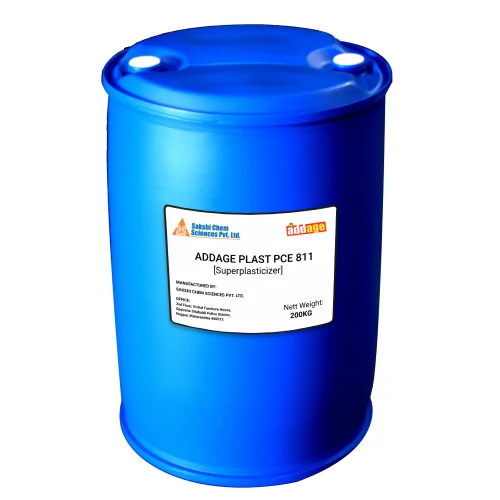
While not a kind of concrete itself, superplasticizers assist many of the above types. Superplasticizers are a category of chemical admixtures that make concrete flow better without adding more water.
These are extremely important in certain concrete mixes such as self-compacting concrete, ultra-high-performance concrete, and sprayed concrete.
Superplasticizers allow for:
- Increased workability
- Lower water-cement ratio
- Improved strength and finish
Without superplasticizers, many of the modern types of concrete could not be made, or the effort would be very inefficient.

Conclusion: Picking the right type of concrete
Concrete is not a one-size-fits-all. Depending on the project, whether it is a high-rise building, a basement, a decorative wall, or a nuclear reactor, there is a specific type of concrete that is designed to work best in the circumstance.
This is useful knowledge for engineers, engineers, and designers so we can make better material choices to create stronger, safer, and sustainable structures.
So if you have a project or you are just learning about construction, knowing your types of concrete is a good place to start!

Sagar Telrandhe is a Construction Engineer with a B.Tech in Construction Engineering & Management. Passionate about infrastructure development, project planning, and sustainable construction, he specializes in modern construction techniques, project execution, and quality management, contributing to efficient and innovative building.