
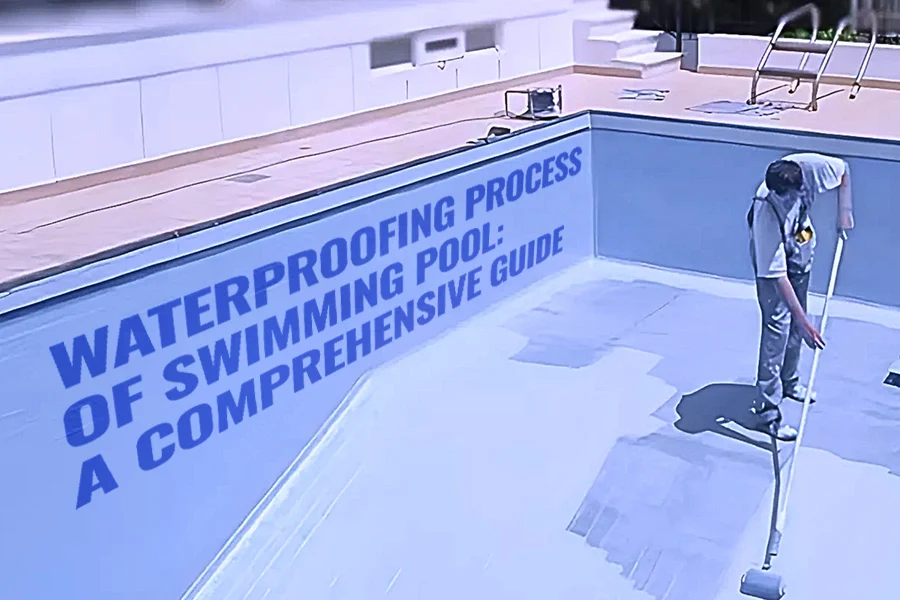
A swimming pool is more than an indulgence; it’s a location for relaxation, entertainment, and family time. But beneath the facade of luscious blue water is a structure that is continually under siege by one of its greatest enemies: water.
When not properly shielded, the pool shell is vulnerable to seepage, cracks, and chemical damage. Therefore, any builder, architect, or homeowner needs to understand the process of waterproofing swimming pools.
Table of Contents
Here at Sakshi Chem Sciences Pvt. Ltd., our philosophy is that durable construction with chemicals begins with the proper chemical products. With over 20 years of experience, we manufacture advanced crystalline waterproofing admixtures and develop other quality products that will help make sure swimming pools are watertight, beautiful, and long-lasting.
In this blog, we will dive into why waterproofing is important, the factors to consider, and an overview of the process of creating a pool that is built to last.
Why is Swimming Pool Waterproofing Important?
Concrete, while durable, is inherently porous. The constant presence of water and the chemical products used to sanitize swimming pools (like chlorine) will lead to the potential for leakage, surface failure, and structural failure over time. Here are the reasons waterproofing is imperative:
Prevents Water Damage: Protects the walls and floor of the pool from leaking, cracking, and flaking due to water saturation.
Preserves Visually Appealing Look – The smooth surface of the pool will remain clean, with no stains, cracks, or peeling destroying its appearance.
Enhances Longevity – With the appropriate waterproofing, a pool can properly function for many years, with significant savings on repairs or replacements.
Prevent Groundwater pressure – Protects against aggressive groundwater from infiltrating through the pool structure and contaminating the pool water.
Improves Cost Effectiveness – Decreases frequent maintenance costs and provides savings over the long run.
Things to Consider in a Pool Waterproofing Plan
In preparing for waterproofing, it is valuable to recognize that a pool’s structure is in constant contact with two variables of water.
Pool Water – Water is treated with chlorine or cleaning agents, which, if left unprotected, can weaken the concrete or cement used when constructing the pool.
Groundwater- The hydrostatic pressure of water underneath will seep through the pool walls if not properly sealed.
A holistic waterproofing package will be initiated with both the pool water and the groundwater in mind, preventing deterioration of the pool structure and keeping the water inside clean and safe.
The Crystalline Waterproofing Admixture
One of the most efficient packages for pools at Sakshi Chem Sciences is the crystalline waterproofing admixture. The chemical admixture interacts with water and any unhydrated cement particles to create insoluble crystals that block the pores and capillaries of the concrete.
In contrast to surface coatings, the crystalline technology becomes part of the concrete matrix, resulting in permanent waterproofing protection.
Benefits include:
- Self-seals minor cracks (up to 0.4 mm).
- Resistance to hydrostatic water pressure.
- Durability in aggressive chemical environments.
- Lower maintenance and life-cycle costs.
In this regard, crystalline admixtures are a great option for a new swimming pool.
A Step-by-Step Waterproofing Process of a Swimming Pool
A proper waterproofing process allows a pool to be watertight, safe, and long-lasting. The following is a comprehensive guide:
Step 1: Smooth the substrate
The first step is to prepare the base surface. Any areas that are not uniform on a wall or floor in a pool space must be remedied prior to ensuring the waterproofing method will adhere. Make sure to take care of any cracks, holes, or level the substrate.
Step 2 – Clean the substrate
A clean surface is critical to adhesion. Make sure that the substrate is free of grease, oil, dust, and laitance. You may use pressure washing, sandblasting, or the grinding method, followed by vacuuming or sponging, or wiping; either method will eliminate tiny dust on the surface.
Step 3: Applying the Waterproofing System
There are two typical methods, depending on the process:
Liquid Membrane Systems: These systems are applied with rollers, brushes, or spray machines and form a continuous barrier. One or more coats of waterproofing material is used in the application, allowing a drying interval in between coats.
Crystalline Waterproofing Admixtures: Added directly into the concrete mix at the time of construction, the waterproofing is integrated into the concrete structure.
Recommended Products to Treat Problems: For corners, seams, and joints, a waterproofing mesh or tape is installed to alleviate weak spots.
Step 4: Curing and Layering
After a waterproof layer has cured, for crystalline systems, hydrate adds water to promote crystal formation in the concrete. It takes time for the bond and flexibility to engage with membranes.
Step 5: Leak Testing
Once cured, the pool goes through a flood test for leaks. Water fills a defined section of the pool. The area is observed over a 7-10 day timeframe for any seepage. If any seepage occurs, repairs are done before moving on to Step 6.
Step 6: Tile Installation
Once full breed integrity is confirmed, tiling and finishing can begin. Adhesives and grout that are compatible with sealing chemicals are used in construction to keep the products from compromising the effect of the waterproofing material.
Benefits of Proper Pool Waterproofing
Durability: Outlasting your pool’s lifespan, the colour.
Safety: Cracks and seepage, water won’t attain the safety factor of concrete.
Aesthetics: No water will surface, deteriorate, or keep the pool looking immaculate.
Low Maintenance: Minimizes costly repairs and ensures smooth functioning.
Sustainability: Reduces material wastage and water contamination, aligning with eco-friendly practices.
Why Choose Sakshi Chem Sciences for Pool Waterproofing?
With over two decades in the business, Sakshi Chem Sciences has become a trusted name in construction chemicals. Here’s why we are your best choice to be waterproofing.
Deep and Broad Product Mix: We provide 50+ products, everything from admixtures to waterproofing agents, to support all of your construction needs.
Leading R&D: Our advanced R&D lab produces cutting-edge, innovative, and high-performance products, including crystalline waterproofing admixtures.
Global Supply and Delivery: We deliver to the Middle East, Africa, Europe, and Southeast Asia.
Customer First: We provide you support from the time you select a product through the application process.
Trust Performance: Each product is tested independently for quality and safety standards used throughout the world.

In Conclusion
Waterproofing your swimming pool is not merely a technical consideration; it is an important, durable force multiplier and a relationship based on trust.
Whether a small residential pool or a large commercial product, waterproofing your pool properly prevents costly damages, ensures pool longevity, and provides the overall experience of pool ownership.
By selecting the advanced products produced and selected by Sakshi Chem Sciences, particularly our crystalline waterproofing admixtures, builders and homeowners can complete a pool project that is not only safe and aesthetically pleasing but also durable and watertight.
At Sakshi Chem Sciences, our mission is to create smarter, safer, stronger structures. Choose us and let our structural waterproofing solutions meet your next project.

Sagar Telrandhe is a Construction Engineer with a B.Tech in Construction Engineering & Management. Passionate about infrastructure development, project planning, and sustainable construction, he specializes in modern construction techniques, project execution, and quality management, contributing to efficient and innovative building.