
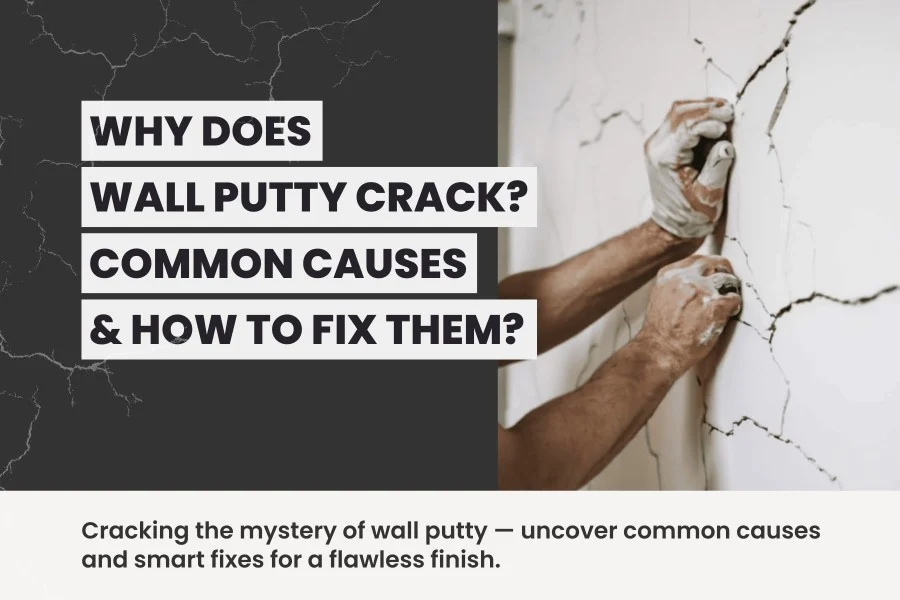
Wall putty is an important material in modern construction, and it is often used to prepare surfaces prior to painting. It is used to smooth out surfaces in order to create a clean finish.
A very typical and frustrating issue that homeowners and builders face is that the wall putty cracks.
Table of Contents
If you have seen wall putty cracks appear in your walls shortly after finishing a renovation or painting your walls, you’re not alone! Understanding the reasons why wall putty cracks – and perhaps more importantly, how to prevent or fix those cracks – is extremely important for homeowners looking to maintain a beautiful, positioned rate finish.
Let’s have a quick look at some common causes for wall putty cracks, what you can do to prevent wall putty cracks, and how trusted industry suppliers such as Sakshi Chem Sciences can be at hand to make sure your surfaces are perfect for years to come.
1. Poor Construction
In the majority of the cases, wall putty cracks happen due to construction mistakes and not in totality due to environmental conditions. The finest quality of wall putty will fail if it was badly installed.
1.1 Scraping Too Thick
One of the most common operational mistakes that can be made during application is putting the wall putty in vertical layers that are too thick. If wall putty is applied at a thickness greater than recommended, it will not dry out at the same rate.
Although the exterior of the material is set, the inner material remains wet, which results in internal tension and possible cracking. A putty layer is usually best kept between 1.0-1.5 mm per coat.
1.2 Not Allowing Sufficient Drying Time
Wall putty requires time to dry between coats. The prior coat needs to be dry before the next coat can be applied. If moisture is trapped in between layers due to applying a coat too soon, this can create pressure as the moisture attempts to escape over the lifespan of the wall. Being patient during the drying process helps prevent wall putty cracks.
1.3 Mixing With Other Products
Mixing wall putty with cement, sand, or any other binding product is also a dangerous practice. Some people think that mixing a few products will help improve the consistency of the putty or the bonding power of the putty.
However, in reality, this disrupts the chemical ratio in the wall putty, weakening it. Always follow the manufacturer’s instructions and never deviate from the formula.
2. Environmental factors
Sometimes, environmental factors can add to wall putty cracks. Sudden changes in temperature and humidity can cause expansion and contraction in walls. This shifting can, over time, crack a well-applied layer of wall putty.
In humid areas or areas exposed to direct sunlight, one risk is uneven drying and/or drying too fast, leading to increased cracking. The putty used locally must be suitable for climatic conditions, and make sure there is good ventilation while you apply the putty.
3. Product Quality
Even if applied using the correct techniques, poor-quality putty can impact the final result. Poor quality wall putty generally doesn’t have enough binding strength and flexibility for the natural movement of walls, and will lead to surface failure.
Choose brands you can trust that practice manufacturing standards, and are producing products that have been tested in a real application. This is simply part of the investment and will save you money in terms of future maintenance costs.
4. Basic Treatments that can Reduce the Risk of the Wall Putty Cracking
The good news is that wall putty cracks are not automatic. Following a few basic practices with preparations and application can significantly reduce the chances it will crack.
4.1 Substrate Treatment
You must have a clean substrate and stable base for the putty. If the surface of the wall is covered with dust, grease, and sending dirt, then remove these loose particulates from the wall surface before applying putty.
If the base is unstable or very dry, there will not be a proper bond with the putty layer, providing a greater chance of cracking.
4.2 Interface Agent Thickness
An interface agent is frequently used between the wall and the putty, primarily to improve adhesion; and if the interface layer is too thin or too sporadic, then the idea is lost. Ensure your interface agent is uniformly distributed, especially in most porous or uneven areas.
4.3 Control putty thickness
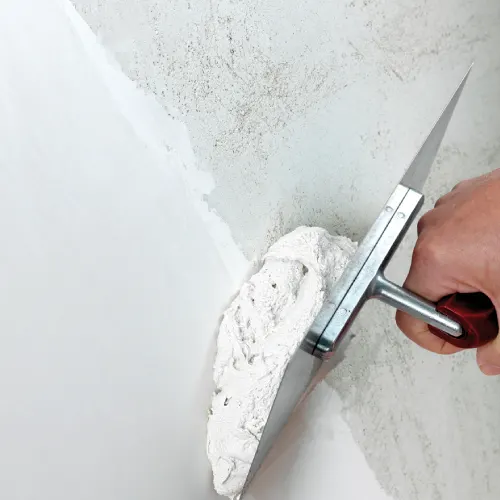
As stated earlier, a thick application can have an adverse effect. Apply the putty in thinner coats, evenly and systematically, allowing time for drying between coats. Use smooth-surfaced tools, like the steel trowel, or other utilities, to create a smooth and even surface.
4.4 Drying treatment
Let nature run its course, and don’t hurry the drying. Use of fans and/or exposing the surface to sunlight will not speed up the drying process. Let the putty cure in a well-ventilated shade. In humid conditions, it is best to wait 6-8 hours between applications.
4.5 Accurate ratios of material
Always follow the directions that are given with the package. Adding more water to speed up application will dilute the pot/post, substantially weakening the final structure, and/or losing strength characteristics.
As a general rule of thumb, use a ratio of about 2.5 parts putty to 1 (one) part water– but this may vary with each brand, so check the label.
5. How Sakshi Chem Sciences Can Help Prevent Cracks?
Sakshi Chem Sciences has many years of experience in the construction chemicals business, and with that experience comes high-performance wall putty products developed to help resist cracking and provide a fantastic finish and durability.
Here’s how they are different:
Quality materials: Because Sakshi Chem Sciences wall putty is formulated using high-quality polymers and minerals, you can be assured of performance regarding flexibility and bonding.
Extensive R & D: But what does it matter if it does not last long term? The R & D team is constantly testing product performance in varying climate conditions with standard practices.
Onsite application support: Their difference is that they provide technical support for application and they are not just a paint company. There are too many brands that just sell you the product and do not help you in building the right information to help the contractor/ painter use the product as intended.
Low VOC: Their wall putty has low VOC and is much safer for use indoors to repair and finish your walls, and with children or someone more vulnerable.
Anything from a new build to renovating an older property, using Sakshi Chem Sciences wall putty can give you the peace of mind that you are using the best product available and incredibly well-performing surfaces.

Final Words
Wall putty cracks can be very annoying, and costly at times, but are nearly always preventable with the right approach. Making sure about proper application, environmental considerations as well as the right product, can make a difference every step of the way.
Knowing the causes, such as overly thick application, poor surface preparation, or substandard materials, will help you manage your time as effectively as your money.
And if you choose reputable manufacturers such as Sakshi Chem Sciences, you can ensure that your walls in your project will remain flat, strong, and aesthetically pleasing for a long time to come.
Whether you have chronic wall putty cracks or are planning your next project, do not simply patch up the problem; fix your problem from the ground up.

Sagar Telrandhe is a Construction Engineer with a B.Tech in Construction Engineering & Management. Passionate about infrastructure development, project planning, and sustainable construction, he specializes in modern construction techniques, project execution, and quality management, contributing to efficient and innovative building.