

Construction chemicals are the basic components of all types of building projects. Good-quality construction compounds provide durability and strength to the structure. In essence, construction chemicals are the base for the construction industry.
Construction methods and techniques have evolved greatly over the past centuries, all over the world. Previously, the materials and methods for construction were basic, such as simple brick/stone and mortar of some kind.
However, as construction technology evolved, the trend of construction additives became more prominent and prevailing. Thanks to this, today we have numerous types of construction chemicals.
Construction chemicals are special additives that enhance the concrete performance, waterproofing, bonding durability, and overall building quality.
Construction Chemicals play a crucial role in modern construction across the commercial, industrial, and residential sectors. These chemicals are high-performance building materials that enhance the concrete workability, durability, and structural strength in the long term.
With the acceleration of urbanisation and growing demand for public infrastructure, the global construction chemical market is expanding steadily. With growing needs for high-quality buildings, roads, tunnels, bridges & dams, the adoption of advanced concrete additives and protective coatings is required.
Leading manufacturers are offering diverse solutions that are specifically designed to
- Uplift the performance,
- Prevent structural damage,
- Extend the structure’s lifespan.
Below are the fundamental types of construction chemicals included
- Concrete Hardeners are used to harden concrete.
- Surface treatments,
- Targeted repair material,
- Specialized coatings.
- Specialised additives.
These advanced innovative products help support sustainable construction practices & attain superior results across challenging project conditions worldwide today.
Table of Contents
Though every construction project needs concrete, sand, cement, brick, stones and other materials their properties are enhanced by using construction chemicals. Chemicals used in construction are specially crafted compounds that improve the overall strength and stability of buildings.
In this blog, we will learn about the different types of construction chemicals and their advantages.
Types Of Construction Chemicals
These are the various types of construction chemicals commonly used in the construction industry worldwide –
Concrete Curing Compounds
Natural and synthetic resins, solvents, and waxes which are highly volatile at room temperature are mostly used as curing compounds for concrete. When curing compounds are sprayed on concrete surfaces the chemical reaction creates a moisture-resistant coating. Usually, white or grey pigments are added to the curing compound to reflect heat. It also helps enhance compound visibility for examining the surface.


However, concrete curing compounds are not suitable for use on surfaces that will have extra layers of paint and concrete, or tiles that need a positive bond. This is true, unless the curing compound’s layer serves as a sufficient base for the extra application.
These enhanced products create a moisture-retentive film immediately after application on fresh concrete, providing proper support for hydration and enhancing durability.
Pigmented Concrete Curing Compound for Heat Control
Gray, white pigments are included to boost heat reflectance and increase visibility for quality inspection.
However, application of curing compounds should be avoided on surfaces intended for additional concrete, paint, or tile unless it is proven as removable or compatible as a bonding base.
Benefits of Concrete Curing Compounds in Construction
- By ensuring the correct selection and proper application of concrete curing compound, you can attain long-lasting performance, superior surface protection, and a more reliable structural result in diverse construction projects.
- These compositions support efficiency, minimise cracking, and improve overall construction quality, mainly in a range of applications.
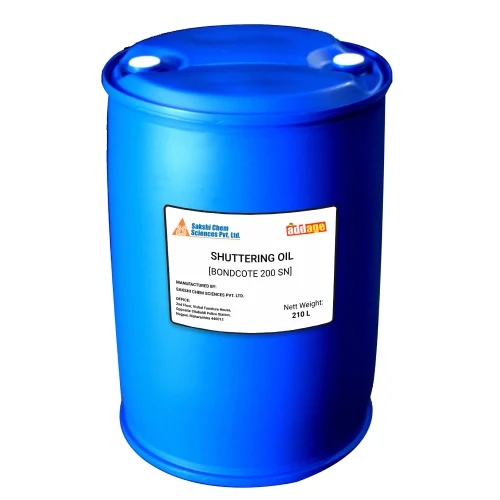
Mold Releasing Agents
When you have materials that are shaped and constructed in molds Mold-releasing agents comes in handy. Your Molds are at risk of damage or even breaking at the time of release without the application of a mold-releasing agent.
Mold releasing agents are available in a wide variety, where the most commonly used being oil-based. There are other categories like emulsion base, which are basically ready to use, also water-based mold releasing agent, which can be used after water dilution.
If you have never experienced the use of mold release oil, it is just like using an oil or butter on the bottom of a dish to remove your final baking product.
Benefits
- Prevent damage and breakage of moulds.
- Smooth & easy release.
- Flawless finish.
- Extends Mold’s life.
Waterproofing Agents
Waterproofing agents, as the name suggests, are incredibly useful to enhance a concrete structure’s water-resistant properties. This is especially important for buildings that are frequently exposed to liquids, or rain.
Some of the most common waterproofing compounds are –
- Liquid acrylic elastomeric waterproofing chemicals
- Crystalline waterproofing chemicals
- Cementitious waterproofing chemicals
- Polymer-modified waterproofing chemicals

Most waterproofing chemicals create thin films on the concrete surface and prevent water from penetrating under the surface.
These chemicals improve structures’ water resistance capacity, protecting concrete with crystalline, polymer-modified, acrylic & cementitious compounds for a durable & efficient protection from moisture and liquid.
Benefits
- Long-lasting waterproofing.
- Protects the surface by keeping water at bay.
- Advanced Durability.
Concrete Floor Hardeners
Floor hardeners are construction additives that are mixed with concrete flooring to make the surface dense and more durable. Apart from this, floor hardeners also help reduce dusting, and improve the surface’s chemical resistance properties. Besides, floor hardeners also make concrete floors more resistant to impact and abrasion.
High quality floor hardeners also have excellent waterproofing properties, which are extremely essential for floors in manufacturing, commercial and industrial buildings. Additionally, floor hardeners significantly lower repair and maintenance costs by making the floor surfaces stronger and more durable.
There are different types of concrete floor hardeners available in the market, such as –
- Metallic, non-metallic, solid and liquid floor hardeners
- Metallic solid floor hardeners are high grade ferrous aggregates
- Liquid floor hardeners contain water, silicate and other chemical solutions
- Pigmented floor hardeners improve the aesthetics of floor surfaces significantly

Concrete Floor Hardeners are high-performance construction chemicals designed for strengthening and densifying concrete surfaces.
Benefits
- They significantly enhance the durability by upgrading chemical resistance, impact strength, the waterproofing &abrasion resistance by eradicating surface dusting, making them essential for commercial, industrial, heavy-duty duty and factory flooring.
- With enhanced surface performance, there are fewer repair works, lower maintenance costs, and an extended life span of the concrete floor. Which means long-term cost effectiveness.
- Delivers strong resistance to petroleum solvents & alkalis, although they are less efficient against strong acids. So, the crus is concrete floor hardeners offer durable, visually attractive, and reliable flooring solutions.
- The pigments also help improve floor aesthetics when applied as per the manufacturer’s guidelines. These products can increase the abrasion resistance of dusty or poorly cured concrete by up to three times.
- These concrete floor hardeners are available in both solid and liquid forms and can be classified as metallic and non-metallic. The metallic variant consists of well-graded ferrous aggregates for a denser toughness, while the liquid ones are typically silicate or water-based for a deeper absorption.
Polymer Bonding Agents
Polymer bonding agents are aqueous emulsions that contain a special polymer and a chemical additive. This is commonly used as a bonding agent with cement and concrete-based products and for application on interior and exterior surfaces. Polymer bonding agents are also used as a polymer modifier in dry-mix mortars and concretes. This enhances the overall tensile, bonding and flexural strengths.

This bonding compound is highly useful to lay bricks and other masonry blocks. It is also used to cover buildings with skim coats and renders and even adheres to tiles. Additionally, polymer bonding agents in concrete also help improve resistance to chloride and de-icing salt penetration.
Polymer bonding agent is a next-generation aqueous emulsion of polymers and chemical admixtures. It is crafted for concrete, cement & mortar applications. It plays the role of a bonding agent and a polymer modifier.
Benefits
All these together add up to a long-lasting high performance, reliable construction.
These agents are responsible for optimising tensile strength, flexural strength in interior and exterior constructions.
By applying polymer bonding agents in concrete and shotcrete, one can increase the durability, crack resistance, and protection against chlorides and de-icing salts.
Epoxy Anchoring Grouts
Epoxy anchoring grouts have significant advantages over conventional tile grouts. For instance, epoxy grouts are more useful in extreme environments, such as excessive temperatures. They are also highly resistant to spillage and stains, such as from grease, oil, acid and chemicals. Additionally, epoxy anchoring agents are also more durable, and hence more resistant to impact, stain and abrasion as compared to conventional grouts.
Though epoxy grouts are more expensive they are most suitable for use as grouting for machine foundations and industrial equipment, thanks to their strong vibration dampening properties.
Epoxy grouts deliver excellent durability, vibration damping &chemical resistance, outperforming ordinary grouts in harsh conditions while supporting a rebar coating system for a lasting industrial concrete performance.
Benefits
- Improved durability & chemical resistance.
- Reduced vibration with long-lasting performance.
Epoxy Coating
Epoxy coating can be solvent-free, oil-based, or water-based. Dual-component epoxy coating can be easily mixed on-site by following the easy instructions provided by the manufacturer. These coatings have excellent thermal and chemical resistance, which makes them well-suited for use in factories and industrial environments.
Epoxy coatings are also extremely hard, durable and have excellent waterproofing capabilities. These coatings do not contain solvents and are commonly used for decorative coatings on floor surfaces.
These coatings are available in water or oil-based, which ensures higher chemical resistance, waterproofing, durability, and decorative flooring solutions. Perfect for commercial, industrial & factory applications.
Benefits
- Enhances chemical resistance, durability, waterproofing, hardening, and eye-catching visibility.
Surface Retarders
Also known as surface deactivators, these are chemical construction additives that are mixed with fresh concrete to prolong the duration of hardening of surface mortar. As compared to concrete set retarders, these allow the concrete to cure completely without affecting the setting pace or level of strength.
Surface retarders slow down the hydration process to a specific depth, which allows the underlying concrete to harden. It also lets you remove the surface paste afterwards more easily. After exposing the aggregate with high-pressure washing or hosing, you will get a highly consistent depth of aggregate, with lower pop-outs. Once the finishing process is complete and the bleed water is dried, you should immediately apply a surface retarder.
Surface retarders are also known as surface deactivators, are advanced concrete surface treatment chemicals designed to postpone the setting of the top mortar layer without impacting the internal curing or strength development of concrete.
Benefits
- By putting a pause on hydration to a controlled depth, these high-performance surface retarders permit the underlying concrete to harden naturally while allowing effortless removal of surface paste to achieve a uniform, clean exposed aggregate finish.
- Best for architectural concrete, pavements, and decorative surfaces, they assure consistent depth, minimal pop-outs, and supreme aesthetic outcomes.
It is recommended to apply retarders immediately after finishing operations once the bleed water has fully dissipated, for premium results.
Bonding Aid For Plastering
Bonding aid construction chemicals are usually compounds derived from polyvinyl acetate emulsions. These are non-toxic, non-flammable and non-hazardous water-based compounds that are VOC compliant. The bonding aid for plastering is mostly applied to surfaces before coating with paint to ensure strong and durable coats.
Protective and Decorative Coatings
Protective and decorative coatings play a significant role in improving concrete surfaces by enhancing the durability while keeping corrosion & environmental damage at bay.
Usually, these coating comprises metallic or non-metallic materials and have various application techniques based on the performance needs. Non-metallic categories include polymer, epoxy, a polyurethane that offers supreme chemical resistance and long-lasting protection. Metallic that are made from aluminium, zinc, or chromium deliver excellent corrosion control and structural longevity.
In finishing and construction applications, specialised material coatings are applied over plaster surfaces to attain added benefits like aesthetic appeals, fire resistance, sound and heat insulation, with higher strength & faster completion of projects.
Benefits
- Together, these innovative coatings ensure safer, stronger, and visually appealing surfaces across architectural & industrial projects.
Non-Shrink High-strength Grout
This grout is specially custom-built hydraulic cement grout crafted to maintain or exceed its original volume after the curing process, promising zero shrinkage and reliable load transfer in structural applications.
This exceptionally high-quality grout is widely used across industrial construction where durability, precision, and top-class compressive strength are a must.
Benefits
- Engineered with advanced additives, non-shrink grout provides extended working time even in high ambient weather.
- Ensuring easy mixing & placement at any recommended consistency.
- A best-in-class construction chemical solution that ensures long-lasting structural integrity and consistent output in complex environments.
- It is an ideal pick for machine bases, anchor bolts, precast elements, and other critical load-bearing areas due to its outstanding strength, stability, and no shrinkage performance.
Ready Mix Plaster
Ready mix plaster is an advanced, factory-produced cement-sand mix engineered for superior consistency. It is manufactured in a controlled environment. Improved sand gradation, zero variation in batches, and high-quality performance with added polymer & fly ash.
This plaster promises excellent workability, faster & smoother application, and long-lasting durability for walls, structural projects, and homes. Because of its stronger bonding capacity, flawless finish & reduced labour on site, it is a must pick for modern construction.
Ready mix plaster promotes creative uses like model making, ensuring reliable precision and strength.
Benefits
- It offers consistent quality.
- Stronger bonding.
- Smoother finish.
Faster application and lasting durability
Polymer-Modified Mortar for Repair and Maintenance
Polymer-modified mortars boost traditional cement quality by adding polymers, enhancing adhesion, flexural strength & toughness.
It provides higher workability, with reduced water, minimal pores, and improves resistance to chemicals, salts, and water ingress.
It is a ready-to-use formulation that guarantees consistent quality, due to which it is the most relied on durable, long-lasting repair & maintenance solution.
Benefits
- It uplifts the strength, durability, workability, chemical resistance, efficiency & adhesion.
Tile Fixing
Tile fixing products & adhesives create a solid, seamless foundation for your home, bonding tiles into a smoother, eye-catching surface. Perfect for floors, kitchen tops, bathrooms & more, they perfectly pair with ready mix plaster & PMM offering reliable repair & finishing,
Benefits
- Stronger adhesion, with durable long long-lasting floor installation.
- Waterproof tile fixing safeguards bathrooms and kitchen surfaces effectively.
- Ready mix plaster offers a smooth, quick & professional wall finish.
- PMM provides higher repair strength and surface binding.
- Top-grade tile adhesives enhance tile alignment & overall aesthetics.
Cementious Pumping Aid
Pumping aid strengthens and restores damaged concrete by applying a high-pressure cement–sand mix that forms a dense, impervious layer. This precise guniting process enhances durability, boosts surface protection, and ensures long-lasting structural performance for repair and maintenance projects.
Benefits
- Elevate concrete strength.
- Amplifies durability
- Minimizes damages
- Extend service life
Water Repellent Chemical
Water repellents protect concrete and masonry by making a durable moisture barrier backed up with advanced acrylic and silane siloxane.
Benefits
- Safe Garage surface from water damage
- Greater durability with proper masonry integrity.
Swelling Water Stops
Swelling water blocks effectively, sealing construction joints by expanding when coming in contact with water, providing cost-effectiveness, which is a perfect pick for cracks, joints, and leakages, restricting the use of PU foams and grouts.
Benefits
- Seals Joint.
- Prevent leakages
- Expands with water and gives a durable seal.
Adhesives
Adhesives & waterproofing chemicals deliver greater adhesion, elasticity, and durability for residential, commercial, and industrial construction. With PU, silicone, acrylic, and UV adhesives, you get weatherproofing and reliable waterproofing performance across diverse applications.
Benefits
- Offers a stronger bond
- Waterproofing, elasticity, durability, and reliable construction.
Rebar Coatings
Rebar coatings provide durable corrosion protection, especially during long outdoor storage. The fusion-bonded epoxy coatings & the galvanized coatings prevent rust, minimizing surface cleaning. Works very well for waterproofing chemicals, adhesives, and reinforcement steel durability.
Benefits
- Helps prevent corrosion.
- Enhances durability.
- Lowers maintenance cost.
- Extent structural lifespan.
Chemicals for High-Performance Concrete
Construction chemicals comprising epoxy grouts, coatings, and high-grade performance in concrete boost strength, durability, and meet structural and harsh environmental conditions.
Sakshi Chem Sciences Pvt Ltd, Nagpur, delivers high-quality construction chemicals, including curing compounds, PVA bonding agents, RDP, waterproofing solutions, tile adhesive and tile adhesive additives, PP fiber, Floor hardeners, grouting materials, with VOC-compliant agents and advanced epoxy coatings. Sakshi offers durable, quality, reliable performance, cost-effective, professional construction results.
Conclusion
Construction chemicals are specially manufactured chemical compounds that are mixed with concrete, mortar and other construction components to improve certain properties. The different types of construction chemicals help enhance strength, durability, surface finish and resistance to undesirable weather conditions of cement, such as extreme weather and temperatures. In addition, using construction chemicals also helps to lower the overall quantity of water and cement required for construction projects.
The huge variety of construction additives used worldwide is also driving the growth of the construction industry. These chemicals help to improve the overall quality of construction using affordable and reliable chemical products. Make sure to buy construction chemicals from renowned manufacturers, such as Sakshi Chem Sciences Pvt. Ltd. for the best results.
FAQS
What are the types of construction chemicals?
It consists of waterproofing solutions, admixtures, adhesives, protective and decorative coatings, sealants, grouts, repair material & flooring compounds.
What is the role of construction chemicals?
Theses chemicals accelerate the strength, durability, and add value to the construction materials.
What Chemicals are best for construction?
Polyurethane sealants, silicone sealants, construction adhesives & epoxy adhesives.
What chemicals are used in concrete?
Concrete comprises basic sand, cement, water & aggregates, but for better performance and early completion of construction work, chemicals like admixtures, accelerators, retarders, and air-entraining agents can work wonders.
What is the biggest problem with concrete?
Major challenges faced by concrete are cracking, spalling, settlement or shrinking, heaving, and discoloration, which can be completely fixed with the right construction chemicals.

Sandip Agrawal, Polymer Engineer and MD of Sakshi Chem Sciences Pvt. Ltd., leads innovation in construction chemicals, shuttering oils, and industrial lubricants. With expertise in polymer science and eco-friendly solutions, he drives R&D and sustainable advancements, ensuring high-performance products for India and global markets.