
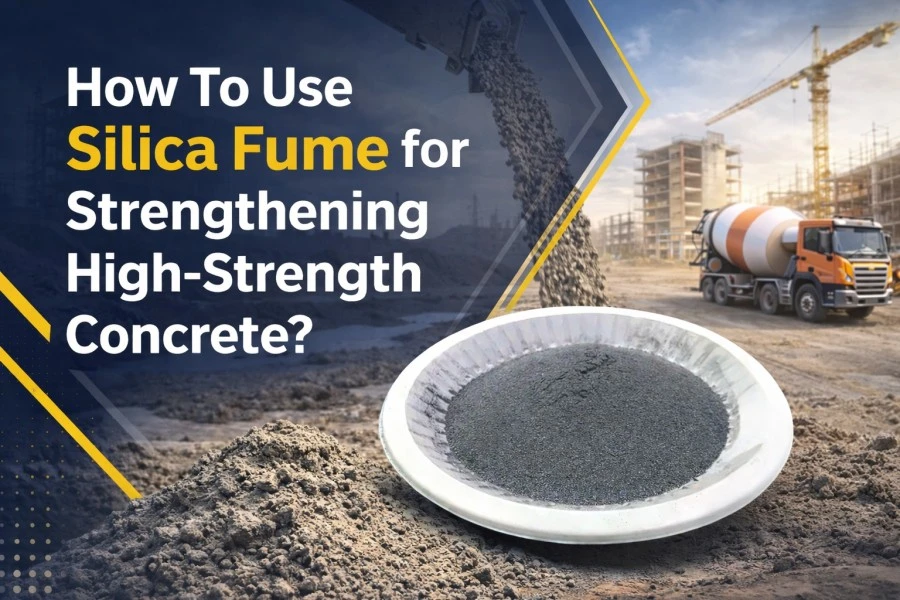
Strength and durability have become essential components of modern construction projects. Conventional concrete alone is frequently inadequate for the demands placed on taller/bigger structures and for the more aggressive loading or exposure conditions encountered in today’s environment. Silica fume serves a vital purpose as an active mineral additive for increasing the strength of high-strength concrete.
Table of Contents
Silica fume, commonly referred to as Micro Silica, has established itself as one of the most effective mineral additives utilized to enhance the performance of concrete.
At Sakshi Chem Sciences, our objective has always been to provide high-quality construction chemical solutions for engineers and contractors who are focused on constructing stronger, longer-lasting buildings.
A clear understanding of how Silica fume works and proper use of silica fume can have a substantial impact on the overall quality of concrete.
What is Silica Fume?
Silica fume is an ultra-fine pozzolanic material that is a by-product of the production of silicon and ferrosilicon alloys. The particles are extremely fine, approximately 100 times finer than cement, allowing for the filling of very small voids in the concrete matrix.
Due to this fineness and high silica content, Micro Silica reacts with calcium hydroxide that is released during the hydration of cement very quickly, thus producing additional calcium silicate hydrate (C-S-H), which is the primary binding material that provides concrete with its strength.
Why Silica Fume Is Essential for High-Strength Concrete?
Using Silica Fume to Strengthen High-Strength Concrete is not just a way to increase compressive strength. The advantages provided have structural, chemical, and long-term implications.
1. Major Strength Enhancements
Silica fume does provide major enhancements in compressive strength, tensile strength, and flexural strength by increasing the amount of C-S-H gel produced and reducing weak areas in the concrete, providing a denser and stronger internal structure for the concrete.
2. Low Permeability
Micro Silica concrete has very low permeability; the small particles fill capillary voids and reduce the potential for water, chlorides, or other aggressive chemicals to penetrate through the concrete.
3. Increased Durability
Silica fume increases abrasion resistance, chemical resistance, sulfate resistance, and freeze-thaw cycle resistance, which provides excellent performance in harsh environments, including industrial floors, bridges, and marine structures.
4. Improved Bonding
Silica fume provides added bond strength when new concrete is being placed on existing concrete to provide lasting repairs to existing structures.
Recommended Dosage of Silica Fume
The typical dosage of silica fume ranges from 5% to 15% by weight of cementitious material.
- 5–8%: Used for durability enhancement and moderate strength improvement.
- 8–12%: Common for high-strength structural concrete.
- 12–15%: Applied in ultra-high-performance concrete where maximum strength and density are required.
The exact dosage depends on project requirements, exposure conditions, and overall mix design.
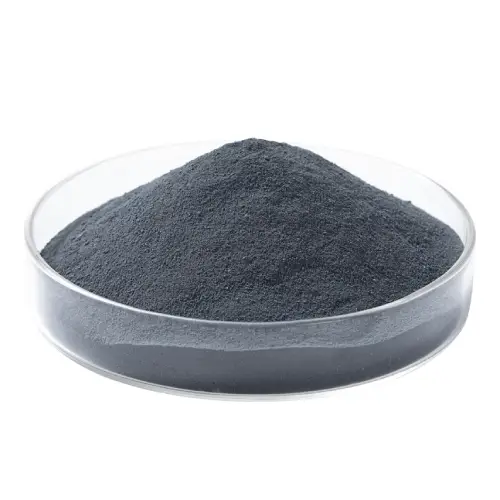

How to Use Silica Fume in Concrete Mix Design?
Using Micro Silica correctly is just as important as selecting it.
Mix Design Adjustments
Because silica fume has a very high surface area, it increases water demand. To maintain workability without increasing water content, high-range water reducers or superplasticizers are typically required.
Mixing Procedure
- Silica fume should be evenly dispersed to avoid clumping.
- It can be added as a dry powder or in slurry form.
- Pre-blending silica fume with cement improves uniformity.
Best Practices
- Use proper batching controls.
- Avoid adding silica fume directly into dry aggregates.
- Ensure sufficient mixing time for complete dispersion.
Curing Requirements
Concrete containing silica fume gains strength rapidly, especially at early ages. However, this also makes it more sensitive to improper curing.
Proper curing is essential to:
- Prevent plastic shrinkage cracking.
- Ensure full pozzolanic reaction.
- Achieve maximum strength and durability.
Moist curing, curing compounds, or protective coverings should be used immediately after placement.
Common Applications of Silica Fume
Silica fume has many advantages in regard to performance; therefore, silica fume finds many applications such as:
- High-rise buildings and structural columns.
- Bridges, flyovers, and tunnels.
- Marine and coastal structures.
- Industrial floors and pavements.
- Shotcrete for tunnels and slope stabilization.
- Pre-stressed and precast concrete elements.
In all of these applications, the use of silica fume for strengthening high-strength concrete can provide reliable performance under heavy loading and harsh environments.
Safety and Handling
Because silica fume is a very fine powder, it is very important to handle it with care.
- Wear proper personal protective equipment (PPE) such as masks, gloves, and safety glasses.
- Avoid generating dust when handling or mixing silica fume.
- Store silica fume in dry, air-tight containers to prevent moisture absorption.
Sakshi Chem Sciences uses strict quality control and safety standards to ensure the safety and consistency of the materials used at Sakshi Chem Sciences.
Conclusion
The creation of high-strength concrete has changed the design and construction of concrete as we know it today. If used correctly, Silica Fume for Strengthening High-Strength Concrete will provide your concrete with superior strength, durability, and resistance to environmental damage.
Through the utilization of innovative material science through the application of precise mix design and proper curing processes, builders are now able to build and maintain concrete structures that meet the demands of today’s construction industry and will last for many decades.
With its commitment to quality, innovation, and reliability, Sakshi Chem Sciences continues to support the construction industry with solutions that enhance structural integrity and long-term value.

Sagar Telrandhe is a Construction Engineer with a B.Tech in Construction Engineering & Management. Passionate about infrastructure development, project planning, and sustainable construction, he specializes in modern construction techniques, project execution, and quality management, contributing to efficient and innovative building.