
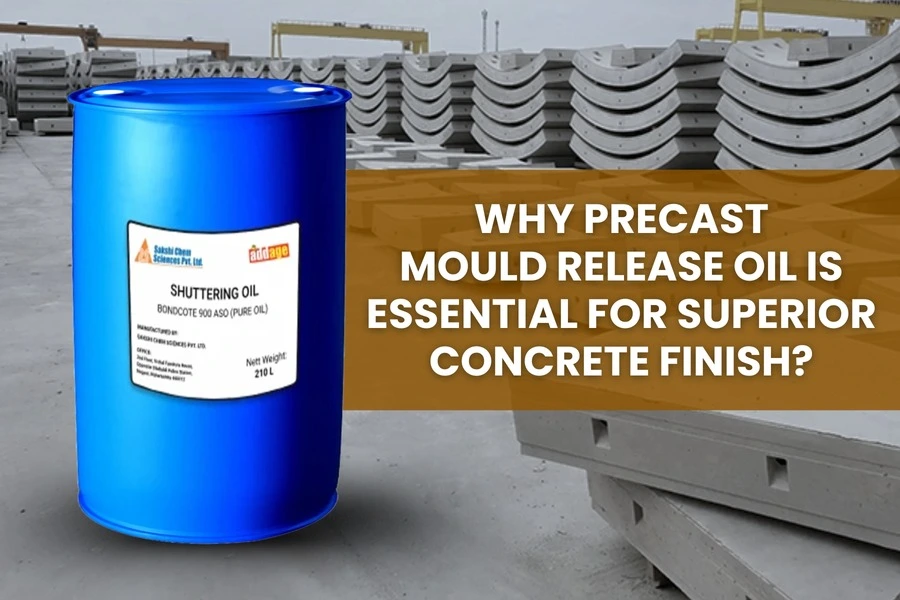
When evaluating precast concrete products, strength and dimensions are only two aspects where quality is assessed. Moreover, appearance, consistency, durability and surface finish are also included when assessing quality for precast concrete products.
Precast concrete components (e.g., beams, columns, panels, pipes, sleepers, architectural components) should be removed from their respective moulds without any defects, free from debris, with a smooth surface and clean.
Therefore, Precast Mould Release Oil has become an important unspoken member of the precast concrete production process.
Table of Contents
Precast mould release oils are usually words of support for precast concrete manufacturers; however, they influence many of the imperfections found on precast concrete surfaces, the working lifespan of the moulds, the efficiency of the moulding process and the manufacturing costs.
There can be a substantial financial impact caused by selecting the right type of precast mould release oil and the proper application technique; either a flawless surface or an expensive repair may occur.
This blogging series will review the significance of precast mould release oil for producing outstanding precast concrete surfaces, and further describe how Sakshi Chem Sciences supports precast concrete manufacturers by providing reliable performance products.
What Is Precast Mould Release Oil?
Precast mould release oil is a chemical liquid that is applied uniformly to the inner surface of moulds before casting fresh concrete.
Precast mould release oil’s primary function is to establish a smooth, even coat of is an effective barrier to prevent the cured concrete from bonding to the mould when removed from the mould.
This allows the precast element to easily separate cleanly from the mould without experiencing any of the adverse effects associated with a bond forming between the curing concrete and the mould.
Unlike conventional oils or site-made alternatives, high-quality precast mould release oil is engineered to:
- Provide clean demoulding.
- Protect mould surfaces from corrosion and wear.
- Improve concrete surface finish.
- Reduce cleaning and maintenance effort.
In precast factories where moulds are reused repeatedly, releasing oil becomes a critical process material rather than a consumable afterthought.
Why Release Oil Quality Matters in Precast Manufacturing
When it comes to producing precast products, uniformity is essential. Precast manufacturers typically create many hundreds or thousands of identical elements by using the same moulds. Any tiny defect on the surface of an element can cause it to be rejected, require grinding, or cause a patch repair or complaint from the customer.
The quality of precast mould release oil will have a direct impact on the following areas:
1) The appearance of the Concrete surface finish
If the mould release oil is of low quality, it may lead to surface staining, air trapped in the surface, blowholes, and patchy surfaces. When using premium mould release oils, a consistent, stable film is used, allowing the concrete to cure naturally against the mould face.
2) The life of the moulds
The use of poor quality mould release oils may lead to damage of rubber seals, corrosion of steel moulds and/or build-up over time. Premium mould release oils protect the mould surfaces and considerably reduce the amount of abrasive wear when moulds are used repeatedly.
3) The speed of production
If concrete sticks to the mould at demoulding, the production process will slow down and be interrupted due to additional time and material being spent to clean and/or repair the mould. Good quality mould release oil will facilitate rapid, trouble-free demoulding.
4) Cost control
Even though inferior-quality mould release oils may appear to be cheaper at first glance, the actual hidden costs associated with repairing damaged moulds and labour, as well as the excessive rate of elements being rejected, far exceed any initial savings.
Types of Precast Mould Release Oils
Available mould release oils for precasting. Each precast plant will have different mould materials, production cycles, climatic conditions, etc. Knowing about the available mould release oils, it will make it easier to select the appropriate product for the manufacturer.
1. Water-Based Precast Mould Release Oil
Water-based release oils are emulsions where oil particles are dispersed in water.
Key Characteristics:
- Low oil consumption.
- Cleaner working environment.
- Reduced staining risk.
Advantages:
- Environment-friendly.
- Easier application through spraying.
- Minimal residue on moulds and concrete.
These oils are ideal for plants prioritising cleanliness and sustainability without compromising surface finish.
2. Solvent-Based Precast Mould Release Oil
High-speed production processes are made possible by the use of solvent-based oils. Solvent-based oils create a thin release film through the use of rapidly evaporating carrier solvents. These oils offer several unique benefits, such as:
- Quick-drying time
- Fast release
- Ability to release from complex sizes and shapes
Mineral oils have the following characteristics:
- Petroleum-based
- Good lubricating properties
- Compatible with steel moulds
3. Mineral-Based Precast Mould Release Oil
Mineral oils are frequently used in production because they consistently allow for reliable demoulding.
Key Characteristics:
- Petroleum-based formulation.
- Good lubricating properties.
- Compatible with steel moulds.
Advantages:
- Reliable demoulding.
- Protection against corrosion.
- Suitable for heavy-duty moulds.
Mineral-based oils remain a dependable choice for many precast applications.
4. Semi-Synthetic Precast Mould Release Oil
Semi-synthetic oils are a combination of mineral oils and performance-enhancing additives. These oils have:
- Improved thermal stability
- Increased film strength
- Reduced build-up
However, semi-synthetic oils provide the following benefits:
- Better, more consistent release over multiple cycles
- Lower oil consumption than mineral oils
- Balanced performance and cost
Key Benefits of Using Premium Release Oils
By choosing premium-grade release oils, precast manufacturers can achieve many other benefits besides just effective demoulding.
Superior Concrete Finish
Premium oils help produce smooth, blemish-free surfaces, reducing the need for surface repairs or grinding.
Reduced Blowholes and Air Pockets
Consistent density and improved aesthetics are achieved by using uniform thicknesses of an oil film and efficient use of the oil through elimination of trapped air.
Longer Mould Service Life
Quality oils can help protect mould surfaces against corrosion, wear and tear, and chemical hazards.
Faster Demoulding
Mould separation is quicker and easier when using a high-quality release oil.
Less Maintenance Cost
Fewer mould cleanings, less repair work, and longer mould service life equate to true savings.
Problems Associated with Using Low-Quality Release Oils
The use of inferior or unsuitable release oils will create many problems for precast producers:
- Concrete will stick to the mould and damage the surface.
- Finished products will be discoloured or stained from oils being present.
- A build-up of oils will occur on the mould surfaces and require constant cleaning.
- Moulds will have a reduced service life due to chemical attack or corrosion.
There will be inconsistencies in the surface texture of the products, which will impact the visual quality of the finished product.
Choosing the Best Mould Release Oil for Your Plant
Many factors will contribute to the selection of the best precast mould release oil for your specific operation:
Mould Type
The type of mould used (steel, aluminium, rubber-lined, or plastic) will influence which type of oil to choose, based on the application.
Production Time
For the high-speed plant, quick-drying oil may be the best choice, while for the slower operation, longer-lasting oil films may be more appropriate.
Concrete Mix Design
Certain concrete mixes with high cement content and/or special additives may react differently with the release oil than other concrete mixes.
Environmental Conditions
Temperature, humidity, and ventilation affect oil performance and application behaviour.
Surface Finish Requirements
Architectural precast demands higher surface quality than structural elements.
Sakshi Chem Sciences works closely with precast manufacturers to recommend solutions tailored to these variables.


Best Practices for Applying Mould Release Oil
Even the best precast mould release oil will underperform if applied incorrectly.
Clean the Mould First
Remove dust, concrete residue, and old oil build-up before application.
Apply a Thin, Uniform Film
Excess oil can cause staining or surface defects. Less is more.
Use Proper Application Tools
Sprayers provide better uniformity than brushes or rollers for large moulds.
Apply Before Each Pour
Always oil the mould just before concreting, not hours in advance.
Avoid Over-Application
Excessive oil may mix with concrete paste and weaken surface layers.
Environmental & Safety Considerations
Following these procedures will permit you to achieve more consistent results and maximise the mould release oil’s performance.
1) Reduce VOC emissions.
2) Minimise worker exposure to VOCs and other harmful vapours.
3) Improve the housekeeping standards of precast plants.
4) Support a company’s commitment to environmental compliance.
Water-based and low-odour product formulations create safer working environments, while providing the same level of performance.
Sakshi Chem Sciences Mould Release Oils Are Trusted by Precast Manufacturers
Precast manufacturers trust the products of Sakshi Chem Sciences not only for the mould release oils, but also because of the reliability and level of technical expertise.
What Makes Sakshi Chem Sciences Different From Other Manufacturers?
1) The experience of decades in the area of construction chemical formulation.
2) Advanced research and product development, and quality control technologies.
3) Consistency in product quality from batch to batch.
4) A broad product portfolio of mould release agents.
5) Strong export presence across global market.
6) Technical support tailored to plant conditions.
Every precast mould release oil developed by Sakshi Chem Sciences is tested for real-world manufacturing demands, ensuring dependable performance at scale.
Conclusion
In precast concrete manufacturing, achieving a superior concrete finish is not accidental, it’s the result of the right materials, processes, and expertise. Precast Mould Release Oil plays a vital role in ensuring clean demoulding, smooth surfaces, extended mould life, and efficient production cycles.
From preventing surface defects to reducing maintenance costs, the right release oil delivers long-term value far beyond its immediate function. By selecting high-performance solutions and following best application practices, precast manufacturers can consistently meet quality expectations and improve operational efficiency.
With its deep industry knowledge and advanced product range, Sakshi Chem Sciences continues to support precast manufacturers with reliable, efficient, and future-ready mould release solutions, helping plants produce concrete elements that meet the highest standards of quality and durability.

Sagar Telrandhe is a Construction Engineer with a B.Tech in Construction Engineering & Management. Passionate about infrastructure development, project planning, and sustainable construction, he specializes in modern construction techniques, project execution, and quality management, contributing to efficient and innovative building.