
In this modern world, materials science and synthetic fiber are key in transforming a number of industries, from construction to textiles.
Polypropylene Staple Fiber, otherwise known as PP Fiber, is the best-known of many synthetic fibers. It is lightweight, moisture resistant, and flexible.
Most people see PP Fiber as a key component or by-product in an industrial or consumer product. But what is Polypropylene Staple Fiber, and why is it becoming a more recognized material in so many different sectors?
Table of Contents
This article will take a closer look at what Polypropylene Staple Fiber is, how it is manufactured, key properties of PP Fiber, applications for PP Fiber, and why it is becoming a material of choice for many manufacturers and industries worldwide.
Examining Polypropylene Staple Fiber
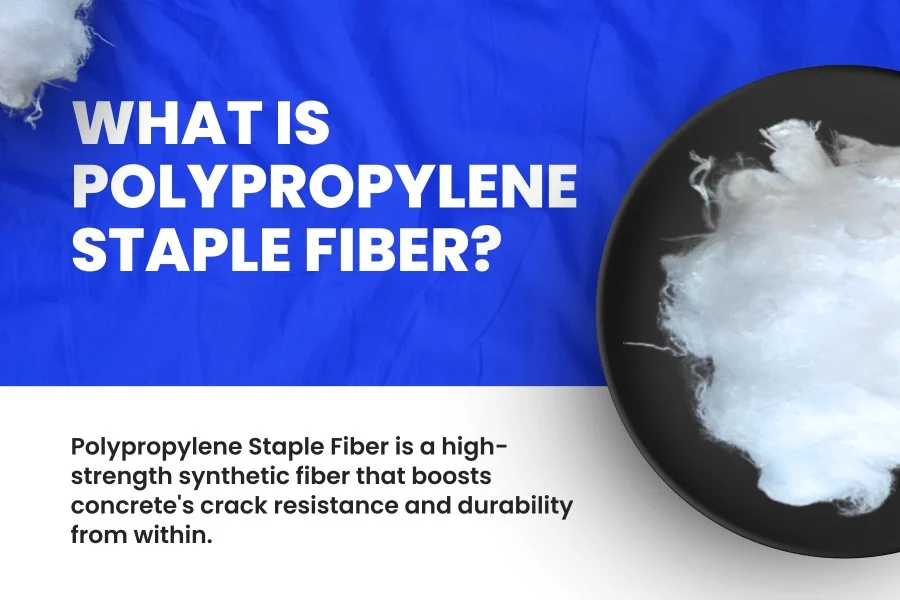
Polypropylene Staple Fiber (PP Fiber) is a synthetic fiber consisting of polypropylene, a thermoplastic polymer material. Polypropylene is used widely because of its strength and lightweight attributes.
In staple fiber form, polypropylene is produced in short discrete lengths. After which the fibers are spun to additional processing into yarns or may be added to other fibers to create other material properties.
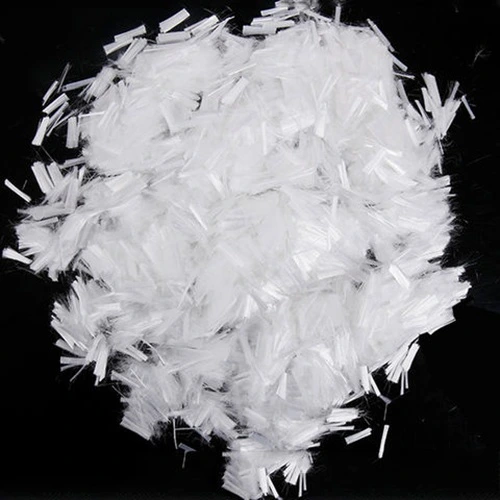
Staple fibers are different than continuous filament fibers, which come as one long piece. Staple fibers are cut at certain lengths, generally a few millimeters to a few centimeters.
This type of configuration allows PP Fiber to be blended easily with other materials and/or stand alone by itself for many reasons.
A Brief Overview of Polypropylene
Before we look further into staple fiber form, let’s understand what the base material – polypropylene – is. Polypropylene is a common plastic discovered in the 1950s; it’s a thermoplastic in the polyolefin family and produced by polymerizing propylene gas (a C3 building block) using a catalyst (either Ziegler-Natta or metallocene).
Polypropylene has many desired properties such as:
- Resistance to chemicals.
- Low moisture absorption.
- Very lightweight and very durable.
- Cost efficient.
- Some (with stabilizers) resistance to UV degradation.
- Due to its versatility, polypropylene staple fibers can be used for many applications including packaging, automotive parts, and fibers/textiles.
The Steps to Making Polypropylene Staple Fiber
To make Polypropylene Staple Fiber there are a few steps to follow:
1. Melt the Polymer
The polymer is in the form of pellets which are melted at extreme temperatures and turned into a viscous liquid.
2. Extrude the Polymer
After the polymer is completely melted, the now liquid polymer is extruded through spinnerets to make thin fibers, or filaments. Immediately after extrusion, the filaments are cooled to solidify.
3. Drawing
The filaments are stretched (or drawn) to orient the polymer chains for improved strength and flexibility of the fiber.
4. Cutting
After drawing, the continuous filaments undergo cutting into smaller sections of staple fibers. The lengths of these staple fibers will vary depending on the final use but will usually be in the range of 38mm to 110mm.
5. Finishing and Packaging
The fibers could be given a finishing treatment with oils or coatings that would improve compatibility with other materials. Lastly, they are baled and packaged for shipment.
Key Properties of Polypropylene Staple Fiber
What makes PP Fiber valuable to so many industries is its specific combination of properties. Let’s discuss some of the major properties:
1. Light Weight
Polypropylene has one of the lowest densities among synthetic fibers (approximately 0.91 g/cm³); therefore, PP Fiber has an extremely low weight.
2. Hydrophobic
PP Fiber has a moisture management feature since it does not absorb water; making it great for applications with the potential for moisture or where dry performance is better.
3. Resistance to Chemicals
PP Fiber has a resistance to many chemicals including acids, alkalines, and solvents, making it ideal for industrial and construction applications.
4. Non-Toxic and Eco-Friendly
Polypropylene is non-toxic, can be recycled, making it better environmentally than some synthetic fibers.
5. Thermal Insulation
PP Fiber has a low thermal conductivity, thus bestowing useful insulation characteristics to clothing and construction materials.
6. UV and Heat Protection
PP Fiber, after stabilization, offers resistance to both high heat and UV degradation, which may be important for durability of the products made to last.
Applications of Polypropylene Staple Fiber
The versatility of Polypropylene Staple Fiber has allowed it to find applications in a plethora of industries, from common household consumer items, to heavy-duty construction work. Here are some of the major sectors where PP Fiber is being used:
1. Construction and Civil Engineering
PP Fiber is widely used in concrete reinforcement material. When introduced in concrete mixtures, PP fiber is used to provide tensile strength, prevent cracking and bulb up durability. PP fiber improves concrete in highway’s, roads, bridges, tunnel and industrial floors.
2. Automotive Industry
Since PP Fiber is a lightweight fiber, direct applications are made in vehicle components to lower vehicle weight and improve efficiency. PP Fiber can be found in carpets, seat fabrics, or insulating materials.
3. Nonwoven Fabrics
A major use of PP Fiber is in the production of nonwoven fabrics. Many products made of nonwoven fabrics are used for personal hygiene products, like diapers, sanitary pads, and medical related masks.
The gentleness of PP Fiber, along with the moisture resistibility of PP Fiber, is ideal for many hygiene products.
4. Textiles and Apparel
While not as prevalent in sportswear, underwear, and socks as polyester or nylon, PP Fiber has been used in this area due to features of breathability, minimal moisture absorption, and skin-friendliness.
5. Agriculture
PP Fiber is being used in agriculture, too. PP Fiber is used in products such as geotextiles, crop covers, shade nets, and also provides considerable benefits related to environmental protection, soil stabilization, and protection against environmental stressors.
6. Filtration
PP Fiber, because of its chemical resistance, fine structure and ability to be readily formed into wide rolls, are used in air, water, and industrial filtration.
7. Furniture and Home Furnishings
PP Fiber is used for upholstery, carpet, curtains, and other home furnishings due to its pleasing aesthetic and performance-related features.
Advantages in Comparison to Other Fibers
When comparing Polypropylene Staple Fiber to other synthetic fibers, such as polyester or nylon, the following benefits can be identified:
Cost Benefits – PP Fiber is generally less expensive to produce than nylon or polyester.
Light Weight / Low Density – The low density makes it lighter and thus beneficial for transport and wearables.
Hydrophobicity – PP Fiber has the ability not to hold any water where is holds none as compared to cotton, even polyester.
Recycled Content – Polypropylene is easier to be recycled compared to other synthetic fibers making it ‘more environmental friendly’ in this regard.
There is, however, a disadvantage for PP Fiber in many applications.
For reference, it has a low melting point (~160°C), which limits many of its applications in high-temperature scenarios. It may lack dye affinity from nature and therefore requires special processes to effectively dye it.

Conclusion
Polypropylene Staple Fiber (PP Fiber) may not be the most familiar name, like cotton or polyester, but its breadth of influence is extensive.
We use PP Fiber every day, from reinforcing the infrastructure of roads and bridges to improving the functionality of our clothing. It is a brand-new material that is underappreciated.
This lightweight, durable, moisture-resistant, and inexpensive fiber covers many of the things that many industries look for in a stable material. Sustainability is changing from a fad to a requirement, and PP Fiber is ready to meet the challenges of the world of tomorrow.
Whether you are a manufacturer looking for dependable materials, an engineer evaluating how to get reinforcing properties from concrete, or a curious person tracking the building blocks of the modern world, an appreciation of Polypropylene Staple Fiber allows you to understand one of the essential and influential materials in our modern lives.

Sagar Telrandhe is a Construction Engineer with a B.Tech in Construction Engineering & Management. Passionate about infrastructure development, project planning, and sustainable construction, he specializes in modern construction techniques, project execution, and quality management, contributing to efficient and innovative building.