
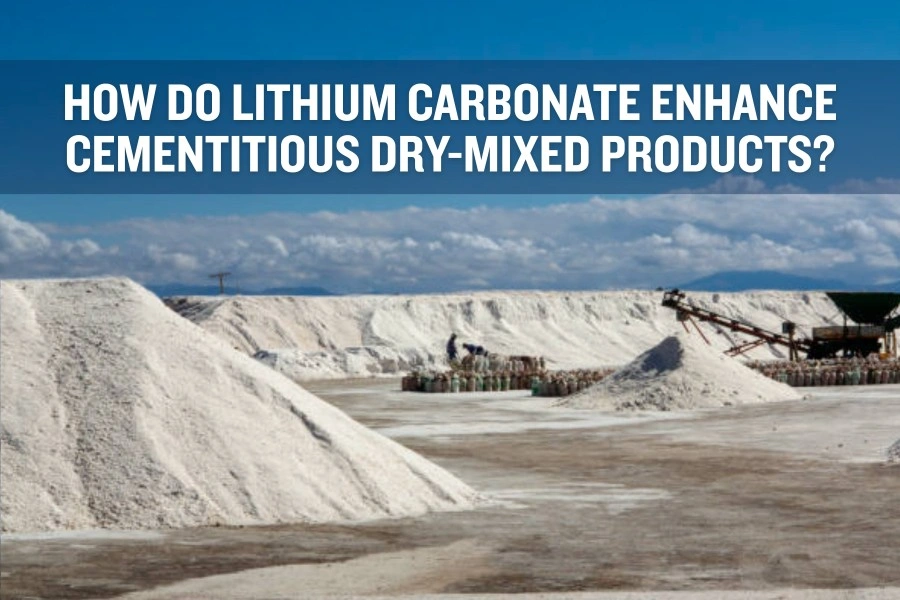
Speed, precision and performance are key parameters to consider in Construction today, especially when it comes to flooring, tile fixing, grouting and industrial repair systems. Speed and durability are expected from modern Construction systems.
Underneath this is Lithium Carbonate, which is quietly but tremendously changing how we make these materials, providing Contractors (contractor) with (give) high-performance additives to enhance the properties of cement-based products.
Table of Contents
Lithium Carbonate is one of the many additives offered by Sakshi Chem Sciences, the leading manufacturer of Construction Chemical Solutions.
By providing a controlled reaction range, Lithium Carbonate will allow the Manufacturer to fine-tune the setting characteristics (length of time), the initial strength (early strength) of its Dry Mixed Products and the overall performance of these products.
The following blog provides examples of how Lithium Carbonate may be utilized to improve the overall performance of Dry Mixed Products, how it functions as a catalyst and highlights its key advantages and common applications.
For example, the most important aspect of reducing the “waiting period” associated with the use of Dry Mixed Products is their ability to provide a “Self-Levelling” surface.
What Is Lithium Carbonate?
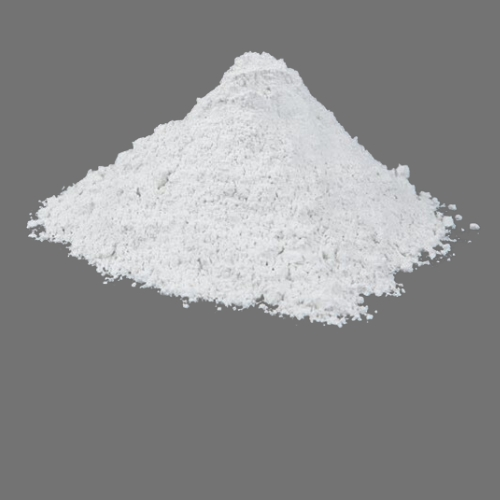
Lithium Carbonate (Li2CO3) is a very fine White powder that is commonly used in fast-setting cementitious formulations as a type of catalyst to accelerate Hydration Reactions. Its ability to accelerate these reactions provides a significant benefit to Dry Mixed Systems such as:
- Rapid-Setting Tile Adhesives.
- High-Performance Grouts.
- Rapid-Curing Screeds.
- Repair Mortars.
- Self-Levelling Compounds.
When used properly, Lithium Carbonate’s controlled particle size, physical properties and reactivity allow a contractor to manage the setting characteristics of a Dry Mixed System and to increase both the initial and long-term strength of the system.
How Lithium Carbonate Works in Cementitious Systems?
To comprehend why lithium carbonate is a highly effective product, we can analyse how lithium carbonate interacts with the chemistry of cement.
The chemical composition of cement is created through cement hydration, an exothermic chemical process which produces strength after completing this reaction on the surface of concrete and mortar.
Rapid set formulations of cement (ie; high-alumina cement and calcium sulfoaluminate cements) will set and cure much quicker than other formulations. Lithium carbonate works as a precision catalyst, accelerating the cement hydration process by:
1. Accelerating Early Hydration
Lithium ions facilitate the rapid formation of ettringite and other initial hydration products and therefore result in faster transition from the stiffening to the initial hardening state of a concrete product.
2. Improving Predictability of Set Times
Manufacturers demand consistent, repeatable set times for their dry-mixed products. Lithium carbonate greatly improves the certainty that the set time will remain consistent (i.e.; 1-2 hours) regardless of the environmental conditions that the product has been subjected to (temperature).
3. Enhancing Early Strength Development
Dry-mixed products that have been modified with the addition of lithium carbonate will develop greater strength at all stages of their life cycle; therefore, these products allow for the following: early access/foot-traffic, overlay applications and next phase construction operations.
4. Supporting Fast Curing in Thin Sections
Products like tile adhesives or self-levelling compounds are typically installed in thin layers; the addition of lithium carbonate ensures that thinly applied products will cure uniformly (i.e.; grey cement will cure fluffy-white, against whiteness), consistently by providing uniform density throughout the applied layer.

Why Use Lithium Carbonate in Dry-Mixed Construction Products?
Below are the key advantages of incorporating Lithium Carbonate in dry-mix formulations.
1. Faster Setting and Curing
Contractors most frequently are on a fast pace of production with little time to incorporate an extensive amount of material. The faster a product sets and cures creates an opportunity to:
- Earlier installation of tiles.
- Quick return to service on floors.
- Reduced waiting time between application stages.
Lithium Carbonate ensures both the initial set and the final set occur more quickly, without compromising strength.
2. Early Strength Boost
High Strength at Early Ages.
For many uses, especially on floors or as a repair mortar, early-age support is critical.
Lithium carbonate contributes to:
- Higher compressive strength at an early age.
- Faster curing rates, even at ambient/low temperatures.
- Improved mechanical stability within hours of placing the product.
Because of these qualities, lithium carbonate is a must-have for high-performance flooring and repair systems.
3. Better Control Over Reaction Times
When it comes to producing dry-mix products, consistency is key. The fine particle size of lithium carbonate provides a predictable reaction profile, making it easy for producers to consistently produce dry-mix products with similar performance characteristics.
Producers who use lithium carbonate benefit from:
- Stable reaction profiles.
- Reduced inconsistency.
- Improved quality and reliability.
4. Improved Performance in Specialized Applications
There are certain types of newer materials that require the use of precision additives. For example:
Self-levelling compounds (SLCs)
depend on the fast, even setting and smooth flowability of the product. Using lithium carbonate allows SLCs to:
- Set levels more quickly.
- Reduce the potential for cracking.
- Accept foot traffic sooner.
Tile adhesive and grout require:
- High early grab strength.
- Excellent bond strength.
- Fast cure time regardless of moisture conditions.
Waterproofing slurries and screeds
By using lithium carbonate to speed up setting times, flooring contractors can be more productive with large installations.
Applications of Lithium Carbonate in Cementitious Dry Mixes
Lithium Carbonate is used widely across the construction chemicals landscape, especially in products requiring fast-setting properties.
✔ Self-leveling compounds
Self leveling compounds ensures consistent flow, fast hardening, and early load-bearing capacity.
✔ Tile adhesives
Speeds up open time and setting, allowing quicker tile installation.
✔ Grouts
Improves early strength to support rapid-use environments.
✔ Screeds and repair mortars
Helpful when the job site needs a fast return to service.
✔ Shotcrete and sprayed mortars
Supports controlled yet rapid setting and layering.
Across all these applications, Lithium Carbonate allows formulators to create reliable, high-performance systems suited to modern construction demands.
Benefits of Lithium Carbonate for Construction Projects
While all construction parties, including manufacturers, contractors and project owners, are impacted positively by the use of Lithium Carbonate in their products. The following are six specific benefits of Lithium Carbonate and its uses to benefit all users of dry-mixed products.
1. Decreased Construction Time: The fast-setting nature of dry-mixed products due to the presence of Lithium Carbonate contributes to an increased turnover of projects.
2. Increased Productivity: By using Lithium Carbonate with dry-mixed products, crews can complete work significantly quicker than before.
3. Predictable Scheduling: The consistent nature of Lithium Carbonate’s curing pattern will create less uncertainty about when an installed product can be occupied.
4. Increased Strength and Durability: Rapid-set products with Lithium Carbonate will retain the strength characteristics of slow-set dry-mixed products.
5. Increased Safety On-Site: Using rapid-hardened products will reduce the amount of time that just-poured products will be exposed to personnel and possible injury.
6. Cost Savings: Project time and labour requirements will frequently be reduced due to the use of Lithium Carbonate in dry-mixes, resulting in a reduction in total costs of the project.
How Sakshi Chem Sciences Supports Dry-Mix Manufacturers?
With 20 years of experience in the manufacturing business, Sakshi Chem Sciences develops and manufactures high-performance additives through intensive research and testing and advanced manufacturing operations. Our Lithium-based additives are:
- Engineered with a controlled particle distribution.
- Proven to possess stable catalytic performance.
- Tested for batch-to-batch consistency.
- Compatible with multiple cement chemistries.
In addition, our technical team will assist manufacturers in developing and optimising formulations to attain the greatest amount of efficiency and performance for their products.
Conclusion
As the construction industry continues moving towards the development of fast-track and performance-driven materials, the importance of Lithium Carbonate is increasing.
The ability of Lithium Carbonate to improve many of the cementitious dry-mixed products that are sold today, particularly those products that are rapidly set or self-levelling, is a major reason to use lithium additives as construction chemicals.
By improving setting time, boosting early strength, and delivering predictable curing behaviour, Lithium Carbonate helps manufacturers create advanced products that meet today’s demanding construction requirements.
Sakshi Chem Sciences remains committed to supplying high-performance additives that support innovation, efficiency, and durability across the construction sector.

Sagar Telrandhe is a Construction Engineer with a B.Tech in Construction Engineering & Management. Passionate about infrastructure development, project planning, and sustainable construction, he specializes in modern construction techniques, project execution, and quality management, contributing to efficient and innovative building.