
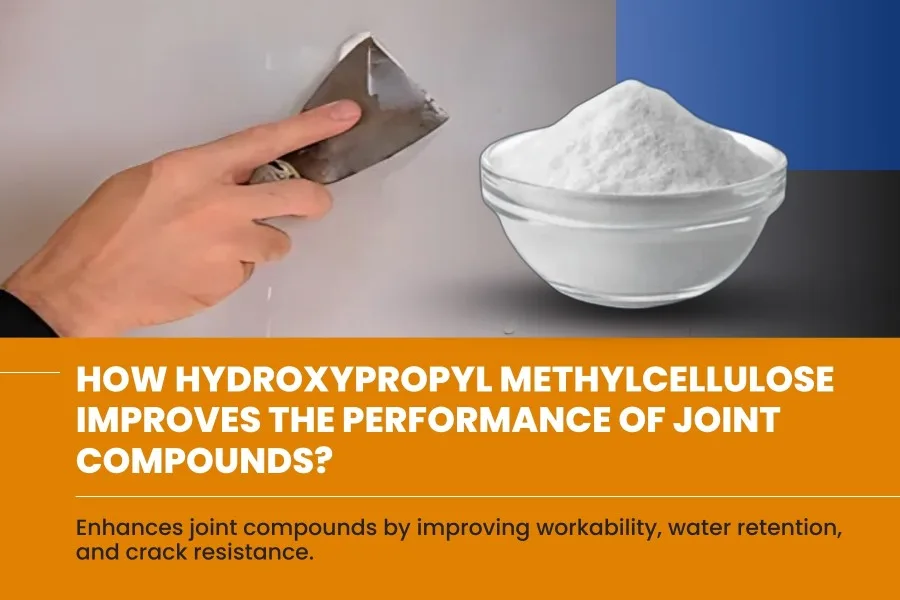
In the construction world, joint compounds or “drywall mud” serve a major function in construction and interior finishing applications. Axiz number of terms can be used interchangeably such as to tape drywall joints, cover screw holes or just to create a smooth wall finish, joint compounds and how they perform are paramount to success.
The average consumer doesn’t pay much attention to what goes into a bucket of joint compound or learn what is performing the work. In contrast, professionals in the drywall industry know only one ingredient matters: Hydroxypropyl Methylcellulose, or abbreviated HPMC.
Table of Contents
In this blog, we will observe how Hydroxypropyl Methylcellulose improves adhesive joint compounds, and we will explain and define accordingly, as simply as we can, and without the need for a degree in chemical engineering.
It does not matter if you are a construction trade user, material supplier, or just curious about the working of modern construction material products; we have compiled the ultimate guide to why you should care so much about Hydroxypropyl Methylcellulose.
What Is Hydroxypropyl Methylcellulose (HPMC)?
Let’s start with the basics. Hydroxypropyl Methylcellulose (HPMC) is a non-ionic cellulose ether originating from natural plant fibers (cotton or wood pulp); through a series of chemical processes, cellulose is modified to give it functional properties, which keep it biodegradable and safe.
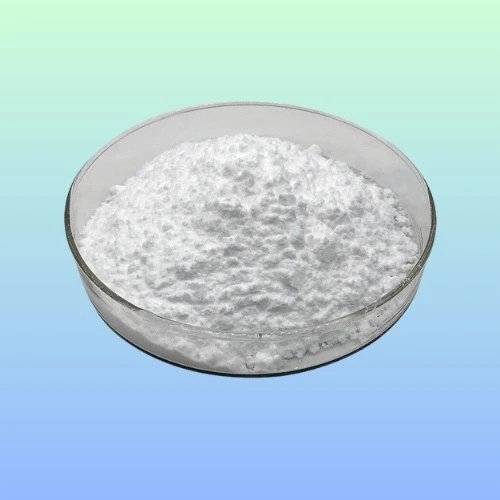
Said differently, HPMC is a white, odorless powder that turns into a thick, gel-like material when placed in water. HPMC is used in many industries, including food, pharmaceuticals, paints, personal care, and, most applicable to us, construction materials.
In construction, HPMC is most highly regarded for three main properties: water retention, thickening, and workability.
Why Joint Compounds Need Performance Enhancement
Joint compounds serve a multitude of wall-finishing purposes. For professionals, product performance is always a primary consideration. They need a product that:
- It is easy to mix
- It is smooth to apply
- Stays up on the wall
- Will resist cracking
- It is easy to sand when dry
In the real world of job sites, joint compound also has to deal with changing temperatures, changing humidity, and changing conditions of the substrate.
It is a tall task for a simple paste. This is where the additives like Hydroxypropyl Methylcellulose are applied to ensure consistency and performance under all these variables.
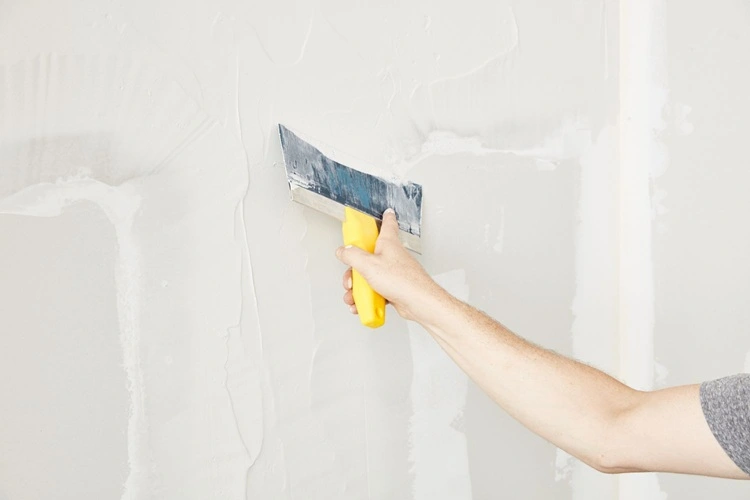
Key Ways Hydroxypropyl Methylcellulose Improves Joint Compounds
Let’s get straight to the point: How does Hydroxypropyl Methylcellulose improve Joint Compounds? Here are the key characteristics of how it improves performance.
1. Superior Water Holding Capability
Water holding capability is maybe the most unique aspect of HPMC. When blended into joint compounds, HPMC holds moisture for a longer timeframe.
Why does this matter?
- Prevents the mix from drying out too quickly, especially on hot or dry days.
- This provides better adhesion to the wall or surface.
- Users have more open time to work with the compound before it sets up.
Having this open time aids professionals as they can apply the material without rushing and allows for adjustments on the fly.
2. Workability
Joint compound isn’t just pushed on the wall—it is applied with skill and finesse. HPMC is a rheology modifier, meaning it has the ability to change the viscosity of the compound while maintaining a flowable feel.
Potential effects of a better workability include:
- Smoother application and reduced drag
- Easier feathering at the edges
- Less splatter when applying compound via troweling or knife work
The workability of the joint compounds is especially important when applying multiple layers. When many layers of joint compound are applied, the ability to apply uniformly and consistently is crucial for achieving a uniform, significant finished look.
3. Enhanced Adhesion
Although joint compounds are not adhesives, they must still adhere to surfaces—specifically, drywall sheets, tape, and even previous layers of compound. HPMC improves binding characteristics.
Why it matters?
- Less chance of cracking or separation over time
- Increases the bond strength between layers
- Prevents tape from bubbling or coming loose
A joint compound that stays in place will allow for a better, longer-lasting finish and a more professional finish.
4. Thickening and Anti-Sag
A joint compound needs to be thick enough so that it doesn’t run, and not so thick it won’t spread. HPMC acts as a thickener to help you get the right viscosity.
The benefit:
- It won’t run after athe pplication
- It won’t sag or slump, even overhead
- It maintains shape, which is critical on ceilings and corners
This is especially helpful when working overhead, or creating texture or pattern.
5. Freeze-Thaw Improved Stability
In many regions, work happens in various climates, but materials are often stored in warm, cold, wet, or dry conditions. In these instances, it is important for products to excel under extreme conditions. HPMC will improve the freeze-thaw resistance of joint compounds, allowing it to not degrade or degrade, even after being exposed to freezing and thawing.
How it helps:
- Will have less waste
- Longer shelf life of the product
- Doesn’t change over time
No professional wants to use (high-quality product) and then find that, after a month of storing or transporting it, it no longer performs the same way.
6. Better Sandability
Once the joint compound dries, you will typically need to sand it down for a super smooth finish. If the compound is of poor quality, it may be hard to sand, or it may sand unevenly when you try.
HPMC produces a compound that dries evenly and sands evenly, resulting in the least amount of effort when trying to achieve a fine surface.
7. Crack Resistance
HPMC helps hold moisture, gives you better adhesion, which results in improved crack resistance in a dry compound. If a compound dries too quickly or does not bond well, this can lead to surface cracks, and this is something every homeowner or contractor wants to avoid.


Application Specific Benefits in Joint Compound Types
Joint compounds are available as ready-mixed (pre-mixed in buckets) or powdered (to be mixed at the job site). They can also be setting-type or drying-type. HPMC benefits all parent formulations.
For Ready-Mix Compounds:
- Keeps viscosity consistent in the bucket
- Prevents separation or settlement
- Increases shelf life
- For Powdered Compounds:
- Facilitates easier and quicker mixing
- Minimizes lumpy mixing
- Provides consistency after mixing
- For Fast-Setting Compounds:
- Provides better water control despite faster curing
- Still provides workability with time constraints
HPMC improves performance and experience with every formulation type.
Environmental & Safety
HPMC is non-toxic, non-allergenic, and biodegradable. Safe to handle – HPMC is favored by brands and companies conducting eco-friendly practices in an effort to reduce their environmental burden.
HPMC is a natural cellulose derivative product and allows for an increasing customer base asking for green building products, without sacrificing quality.
Selecting the Right HPMC for Joint Compounds
The various grades of HPMC are not all alike. They differ in viscosity, levels of substitution, and particle sizes. As manufacturers are choosing an HPMC for joint compound applications, they must consider the following:
Viscosity Range: higher viscosity equals thicker and creamier compounds.
Setting Time: An appropriate HPMC will increase or stabilize setting times.
Compatibility: should work well with the other raw materials such as binders, fillers, and preservatives.
A reliable supplier may offer customized casing of HPMC based on its formulations and regional perspectives.
Real Life Examples and Use Cases
Let’s explore some of the applications of Hydroxypropyl Methylcellulose in real life contexts:
Residential Construction
These contractors working on new homes were covering miles of drywall seams with joint compound. In brightly lit and hot climates, water retention can be critical.
HPMC ensures enough longevity to work for a longer period of time on the same joint, thus minimizing touch-up work resulting from the material drying out too quickly.
Commercial Interiors
Often in larger office interior projects, there can be many different ceiling designs and anti-sagging becomes a major priority. HPMC will hold the compound in place, allowing proper time to finish ceilings or vertical surfaces without having to go back to rework those areas.
DIY and Retail Products
Many ready-mix joint compounds sold in hardware stores use HPMC to ensure they remain stable in buckets for consumption several months after purchase. Obviously, these products need the HPMC to maintain their stability and workability.

Conclusion: Why HPMC Is Indispensable in Joint Compound Formulations
When you see a smooth, finished wall, it can be easy to forget about the science and chemistry behind it. For manufacturers, contractors, and professionals in the business, the ingredients used are the difference.
Hydroxypropyl Methylcellulose isn’t just a filler – it’s a performance enhancer and affects nearly every area of usability when it comes to a joint compound. Workability, water retention, adhesion, preventing sagging. HPMC is the most overlooked ingredient in today’s drywall finishing approach.
With construction demanding quicker, cleaner, and better methods, the quality of HPMC will rise in importance.
The process of constructing or applying joint compound on a job site, you always need to get passionate about what’s inside, especially why it works, because it can definitely allow you to achieve better, longer-lasting performance and results.

Sagar Telrandhe is a Construction Engineer with a B.Tech in Construction Engineering & Management. Passionate about infrastructure development, project planning, and sustainable construction, he specializes in modern construction techniques, project execution, and quality management, contributing to efficient and innovative building.