
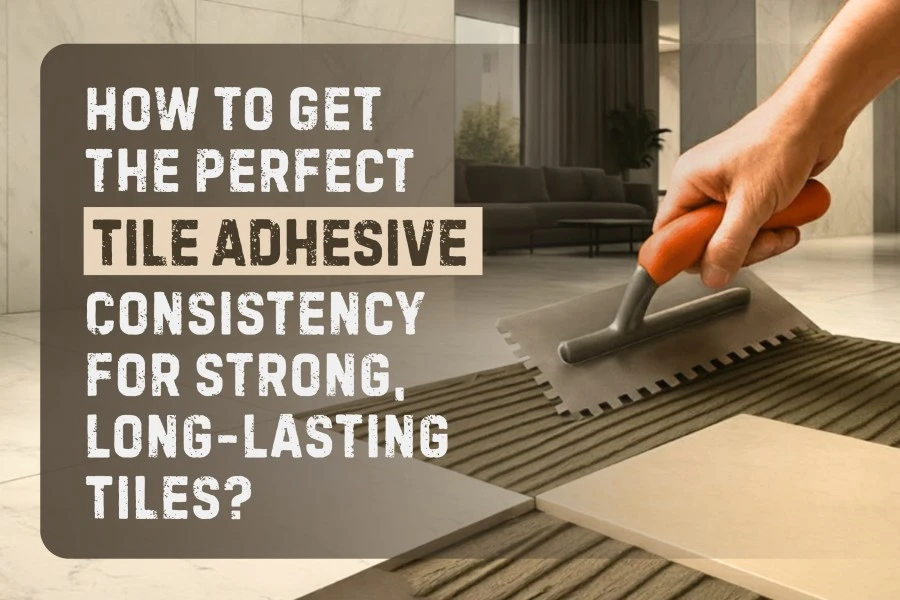
When thinking of tile installation, most people envision stunning floors, glitzy bathroom walls, or finished kitchens. But, what truly determines whether or not a tile lasts 2 years vs. 20 years is not the random tile, it’s the adhesive cartel that it is extended with.
Table of Contents
And yet, the consistency of the adhesive mixture is even more important.
If your adhesive is too loose, the tiles may slip or become etched out in hollow pockets.
If it is too thick, it will not adhere correctly.
The perfect tile adhesive consistency is the basis of tile installation success.
Sakshi Chem Sciences Pvt. Ltd., a proven manufacturer of advanced construction chemicals, has supported builders, contractors, and applicators with high-performance tile adhesives and tile enhancing additives for all adhesive applications, making sure tile installations are sound, durable, and an aesthetic pleaser.
In this guide, we will assist you in understanding how to get the perfect tile adhesive consistency, why it matters, how to test it on-site, and how to fix it when it’s not correct.
Why Tile Adhesive Consistency Matters?
For tile adhesive consistency, this is more than just about texture, consistency has a direct impact on:
- The bond strength of the tiles
- The adhesive coverage
- The workability during installations
- The open time for adjustment
- Tile leveling and alignments
- The durability long-term of the installation
When consistency is correct:
- Tiles stay put.
- No hollow spots under tiles.
- No sudden debond of tiles in wet areas.
- No cracking later due to poor adhesion.
Bottom Line
More consistent = stronger adhesion + longer lasting tiles.
What influences tile adhesive consistency?
There is not one formula; many issues affect consistency.
Here are the most significant issues:
1. Water-to-powder ratio
Tile adhesive always starts as dry powder.
Water activates a tile adhesive.
If you put in:
- Too much water → the adhesive runs.
- Too little water → the adhesive is stiff.
- Usually the correct ratio is written on the product.
- Professionals always measure the water, they NEVER guess and “eyeball” the water.
- A small change in ratio makes a big difference.
2. Tile type
Different tiles require a different thickness of adhesive.
- Ceramic Tiles – Absorb water quickly and need a slightly denser adhesive.
- Porcelain / Vitrified – Low absorption and need slightly smoother adhesive.
- Heavy Tiles (Granite, marble, stone) – Require a high stability adhesive—thicker and stronger consistency.
3. The condition of the surface
You want to apply different consistencies for different surfaces.
- Walls – Thicker mix is needed to keep the tile from slipping.
- Floor – Smoother mix is needed to spread easy.
- Rough/Uneven surfaces – Need a little thicker adhesive to fill gaps.
4. Weather and Climate
Heat accelerates evaporation.
Humidity delays drying or curing.
Meaning:
Hot Weather → adhesive thickens quicker.
Cold Weather → adhesive stays wet longer.
Your consistency must change in relation to that.
How To Have The Perfect Tile Adhesive Consistency (Step-By-Step)
This is where most applicators get it wrong so pay attention and follow along.
STEP 1: Add water FIRST
Pour clean water into the mixing bucket.
Do NOT add water into powder, as that will create lumps.
STEP 2: Add powder slowly
Add some adhesive powder a little at a time. Mix as you go.
STEP 3: Mix with a LOW-speed electrical mixer.
When mixing by hand, you can create air pockets. Electric mixers will give you consistency.
STEP 4: Let the mix rest
The mix should rest for 5 – 7 minutes. This will activate the polymers and binders.
STEP 5: Remix it
This will help to ensure smoothness and consistency without air pockets.
Now check the consistency…
How To Check Tile Adhesive Consistency On-Site?
Visual Check
When observing your blend, it should look:
- Smooth.
- Creamy.
- Crack free.
- No water separation.
Trowel Test
Pick up some adhesive with your trowel.
Does it stick and stay without sliding off? Good.
Did it drip off? Too thin.
Did it break off chunks? Too thick.
Ridge Check
Using your notched trowel, draw lines with the adhesive.
If your consistency is good, your ridges should stand straight up without falling over.
If your ridges melt flat and become non-existent → too runny.
If they break → too stiff
Common Mistakes That Ruin Adhesive Consistency
- Adding water haphazardly.
- Adding water in the middle of a job.
- Re-mixing old glue.
- Skipping resting time.
- Not using an electrical mixer.
- Overmixing at high speed while minimizing air incorporation.
- Allowing unused adhesive to be exposed.
Properly using product knowledge saves your customers’ money and protects installation companies’ reputations.
How to Correct the Consistency of Adhesive When It Just “Feels Wrong”?
When it is too thick:
- Add water slowly, a cup at a time.
- Never pour a larger quantity (potentially risking consistency).
When it is too thin:
Add powder to adhesive.
Little by little is the only safe-method to do so.
When adhesive starts to dry:
- Do NOT add water!
- Do NOT try to rectify it.
- Discard and mix a fresh batch.
Functionality of RD Powder in Adhesive Performance
Today, many goof-proof additive formulations exist that help improve the consistency of the adhesive and add functional performance properties.
One of the most notable functional performance additives is RD Powder (Redispersable Polymer Powder).
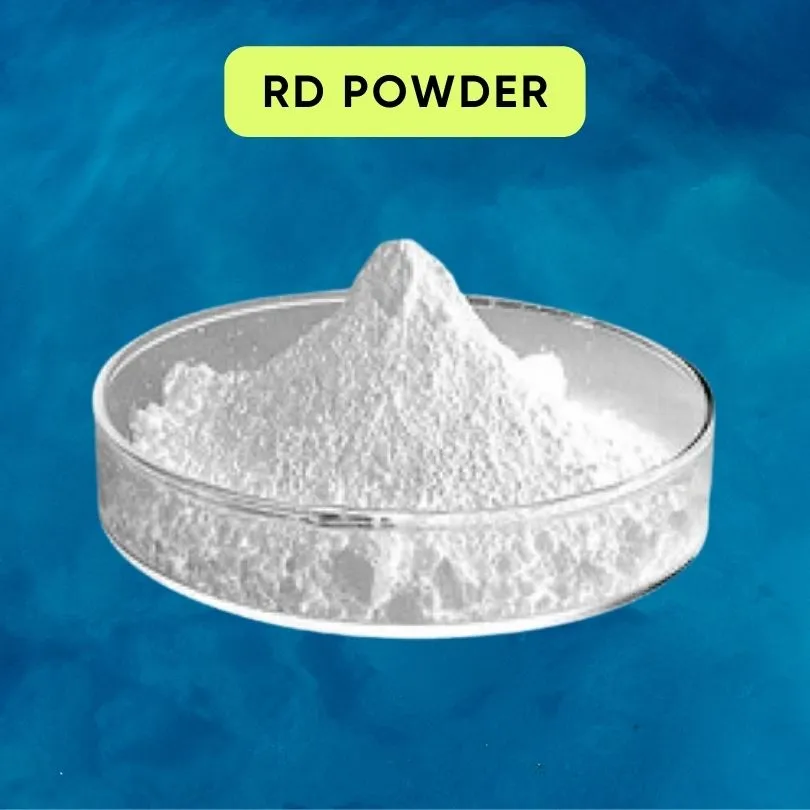

RD Powder adds:
- Flexibility.
- Bonding strength.
- Crack resistance.
- Adhesion to low-absorbency tile.
Resistance of adhesive to thermal dynamics.
This helps to make tile installation more reliable across various conditions – especially:
- large format tile installations.
- exterior cladding applications.
- wet area tiling applications.
- stone tile installation projects.
Sakshi Chem Sciences manufactures chemically advanced additives that strengthen tile adhesive formulations for reliable and consistent results across difficult locations.
Pro Tips From Professionals
- Create only as much as can be used within 1–2 hours.
- Stir before every batch.
- Don’t expose adhesive to direct sunlight.
- Always keep powder stored in dry, sealed pouches.
- Clean the bucket before mixing again.
- Mix at a low speed to avoid air flots.
Signs of Perfect Adhesive Consistency
This is the time when installers LOVE it.
The adhesive:
- Spreads smoothly.
- Holds tile firmly.
- Creates clean ridges.
- Does not sag.
- Has a good open time.
- Allows some adjustment to the tile.
- Bonds tightly.
That’s how strong installations come to life.
How Sakshi Chem Sciences Helps To Obtain Perfect Tile Adhesion Despite the Environment?
Sakshi Chem Sciences has been in business for 20+ years and understands how to provide:
- State-of-the-art tile adhesives.
- High performance polymer-modified binders.
- Concrete admixtures & construction additives.
- Enhanced adhesive solutions with RD Powder.
- Technical support for installations.
- Absolute quality manufacturing.
In America and internationally, every adhesive formula we manufacture will work reliably in:
- Hot climates,
- Humidity,
- Heavy tile loads,
- High-traffic flooring.
Outside of working in tile that lasts, for long-term chemistry that lasts.
In Conclusion
To install tile that stands firm and flawless for decades, you must first, stop for just that one critical step – Get the Perfect Tile Adhesive Consistency.
The right blend will:
- spread smoothly.
- bond strongly.
- but no slip and move and
- increases longevity.
Consistency is not just a compound preparation step; it is the foundation of the final finish.
Mastering adhesive consistency means fewer failures, fewer callbacks, fewer hollow sounds, and more satisfied clients.
And with Sakshi Chem Sciences supporting your work with advanced adhesive technology and chemical innovation, lasting results become effortless.

Sagar Telrandhe is a Construction Engineer with a B.Tech in Construction Engineering & Management. Passionate about infrastructure development, project planning, and sustainable construction, he specializes in modern construction techniques, project execution, and quality management, contributing to efficient and innovative building.