

Introduction
Concrete is the bedrock of modern developments; however, its applications have limitations. In order to resolve issues with cracking, workability, durability, and corrosion, many engineers and designers either add to or use something or a substance with concrete to help make better concrete performance. These materials are generally referred to as admixtures.
Table of Contents
Admixtures are any material, other than cement, water, and aggregate, that is used in the concrete mix before or during the mixing process. These materials are used to modify the properties of concrete to meet the desired expectations.
There are many admixtures available today, however, fly ash is particularly interesting because of its advantages and versatility. If designed as an admixture (not merely a partial cement replacement), fly ash can enhance the quality and durability of a concrete mix.
This article provides at least ten good reasons to consider fly ash as an admixture in concrete, especially its properties, advantages, and enhancing the sustainability of concrete.
What Is Fly Ash?
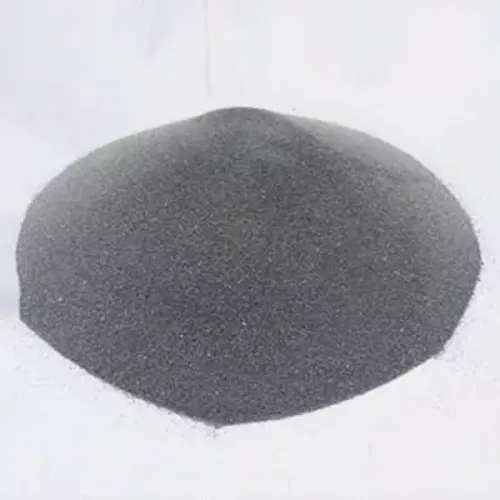
Fly ash is a fine, powdered material formed during the combustion of coal in thermal power plants. It is made up of a finite combination of chemical compounds, with the main components being silica (SiO2), alumina (Al2O3), ferric oxide (Fe2O3), and calcium oxide (CaO).
Fly ash, can be divided into two types:
1. Class F (Siliceous Fly Ash):
Class F fly ash is generated during the combustion of anthracite or bituminous coal. It has a variety of siliceous and aluminious materials that yield unique pozzolanic characteristics in whatever material it is added to.
In combination with water, it will react with calcium hydroxide to generate additional cementitious materials that can improve the performance of concrete.
2. Class C (Calcareous Fly Ash):
Class C fly ash is generated from the combustion of lignite or sub-bituminous coal. Class C fly ash has pozzolanic characteristics as well as hydraulic properties due to its high-calcium content.
Therefore, Class C fly ash does not only aid in the hydration of cement, but also acts as a binding agent for concrete.
Using pozzolanic materials, like fly ash, are very beneficial to the strength integrity of the final product. The pozzolanic chemistries that are readily activated by the reactive nature when combined with calcium hydroxide (lime), produce additional cementitious materials in the hydration process.
This enhancement results in a stronger and more durable concrete material, increasing its durability and longevity – thus providing added value to the material use in construction practices.
1. Lowers Heat of Hydration
When large quantities of concrete are transferred, the heat generated from hydration of cement can cause very high thermal gradients in the mass.
These temperature gradients can generate internal stresses that can produce small micro-cracking that will diminish the performance of the structure. Additionally, the use of fly ash will provide significant benefits that will overall improve performance.
2. Guarantees Strength and will reduce heat
The simple addition of fly ash will induce a chemical reaction with lime released during hydration that will create compounds that strengthen concrete, as well as reduce the heat internally produced.
Instead of the sole chemical benefits provided, the fly ash also contains unreactive spherical particles that act like tiny micro-fillers in the mix. This will create a denser concrete matrix with better stability and resistance characteristics.
3. Will Provide Better Workability
An important consideration when producing concrete in construction is its workability, the ease with which concrete can be mixed, transported and poured once it is placed in the mixer.
The spherical shape of fly ash acts like tiny ball bearings and will therefore allow the particles to move inside the mix with more ease.
This specialized shape minimizes internal friction, which translates to increased flowability. This reduces the total water requirement, which in turn maintains the intended slump, easier pumpability, and placement.
4. Lower Permeability and Greater Corrosion Resistance
Using high water to cement ratios may create overly porous concrete, which increases risks for water, air, or aggressive chemicals to enter the structure, which may cause further corrosion of steel reinforcements.
Fly ash is extremely useful as an alternative cementitious material in that it fills the capillary pore spaces in concrete. It reacts with lime in a pozzolanic reaction to make more cementitious gels.
This densification will not only block moisture and air channels but also minimize trapped water and carbonation, thus providing further protection against corrosion and degradation.
5. Reduced Effects of Carbonation
Carbonation occurs when carbon dioxide in the atmosphere interacts with calcium hydroxide in the concrete, and in this reaction, calcium carbonate is produced and pH is lowered, which decreases the protection of the steel reinforcement.
Fly ash significantly reduces how much free lime is available to react, helping to reduce the degree of carbonation.
Also, because it is denser, concrete permeability is decreased. This limits the ingress of carbon dioxide, which subsequently limits the start of the carbonation process and protects the complete structure and design.
6. Reduction in Sulphate Attack
In certain locations, there is the potential for the phenomenon of sulphate attack and or sulphate expansion. Concrete structures are subjected to sulphate exposure from sulphate-bearing soil or groundwater that causes sulphate attack.
Subsequent ettringite formation can expand the concrete and develop cracks in the concrete. For this reason, it is important to add fly ash because it also continues to react with lime, producing stable compounds to fill void space in the concrete.
With reaction products filling void space, there would be an improved density, while the loss of permeability produces a barrier to prevent damaging sulphate ions.
7. Prevents Steel Reinforcement Corrosion
Steel, as a type of reinforcement within concrete, is often (naturally) protected against corrosion by the high alkalinity of cement.
However, loss of alkalinity from the concrete, due to carbonation and/or the introduction of chlorides, can compromise its protection while exposing the steel to rust (an expansive process that eventually causes cracking, delamination, and/or complete structural failure in the concrete).
Fly ash serves as an addition into the concrete mix because it significantly reduces free lime and fills the pores in the concrete matrix.
The tremendous improvement means that permeability is decreased and reduces the chance that harmful moisture, oxygen, and chloride ions will reach the exposed, vulnerable steel reinforcement.
8. Minimizing Alkali-Silica Reaction (ASR)
Some aggregates have a reactive form of silica readily available to combine with the alkalis remaining in the cement paste, producing expansive forces, known as Alkali-Silica Reaction (ASR) which leads to cracking. Fly ash can also mitigate ASR in two ways:
1) it actively pozzolanicly reacts with alkalis, making them unavailable for ASR reaction and
2) reacts with silica to bind them together into non-violent inert compounds.
Both of these methods effectively reduce the concentrations of alkalis and reactive aggregates, thus reducing or eliminating potential pre-existing damage and diminishing additional detrimental effects from these combined reactions.
9. Environmental Benefits
The use of fly ash in concrete has several interesting environmental benefits. First and foremost, it can reduce CO2 emissions. Cement production is an energy-intensive process that is also a large contributor to greenhouse gas emissions.
By partially replacing traditional cement with fly ash, the emissions can be reduced. Additionally, fly ash is a waste product of burning coal, and using it in concrete is a unique way of recycling an industrial waste product as well as reducing the amount of waste in landfills.
This is not only conserving valuable natural resources such as limestone, clay, fossil fuel,s and the native environment, but it is also promoting sustainable development in construction.
10. Strength and Durability increase with Time
Concrete with fly ash may develop strength more slowly than traditional mixes, but ultimately it often provides greater strength over time. The pozzolanic reactions can last for weeks or even months longer, providing a stronger and more durable structure.
Additionally, fly ash produces a denser microstructure in the concrete, which results in improved durability, particularly in the worst-case marine and industrial environments, where durability is a critical function of the concrete material.
Cost Benefits
Fly ash is often less expensive than Portland cement and presents a cost benefit for construction. Some of the cost benefits are realized when fly ash is used as an admixture rather than a replacement for cement; it reduces total cement use, it reduces the amount of additional water and water-reducing admixtures, it increases pumpability, and it lowers labor costs.
Furthermore, the overall durability adds to economic efficiency in projects of lifelong infrastructure by reducing future maintenance costs.
Fly Ash vs Micro Silica
Fly ash and micro silica (also known as silica fume) are both mineral admixtures in concrete, however, they have very different properties, costs, and performance. Micro silica is a byproduct of the production of silicon or ferrosilicon alloy; it is extremely fine and has a very high percentage of amorphous silica.
Micro silica provides high early strength and high-performance concrete production. Fly ash often provides a lower cost and performs best with mass concrete castings, where the goal is to improve general durability.
There are situations where fly ash can be combined with micro silica to capitalize on the good properties of each and develop economical and high-performance mixes.

Conclusion
Using fly ash in concrete mixes is a performance enhancing and environmentally responsible approach to reduce the cost of concrete.
Fly ash improves the performance of concrete because it creates the benefit of improving workability and promoting better handling and placement of the mix, but also minimizes permeability, which reduces sulfate attacks and corrosion on steel, which helps promote long-term durability.
When determining how to incorporate fly ash in a project, take time to consider the importance of considering sustainability, strength, and cost when determining the types of material being used, regardless of building type.
Overall, when fly ash is considered, it becomes a more significant product when in conjunction with other admixtures (micro silica) as it leverages backwards compatibility that allows designers and builders to construct stronger, more efficient buildings that improve environmental responsibility.
With the inclusion of fly ash in concrete design, we can better utilize the structural performance of our buildings while promoting a durable and environmental future.
By providing sustainable material use, at least building helps contribute to a greener world through responsible construction.

Sagar Telrandhe is a Construction Engineer with a B.Tech in Construction Engineering & Management. Passionate about infrastructure development, project planning, and sustainable construction, he specializes in modern construction techniques, project execution, and quality management, contributing to efficient and innovative building.