
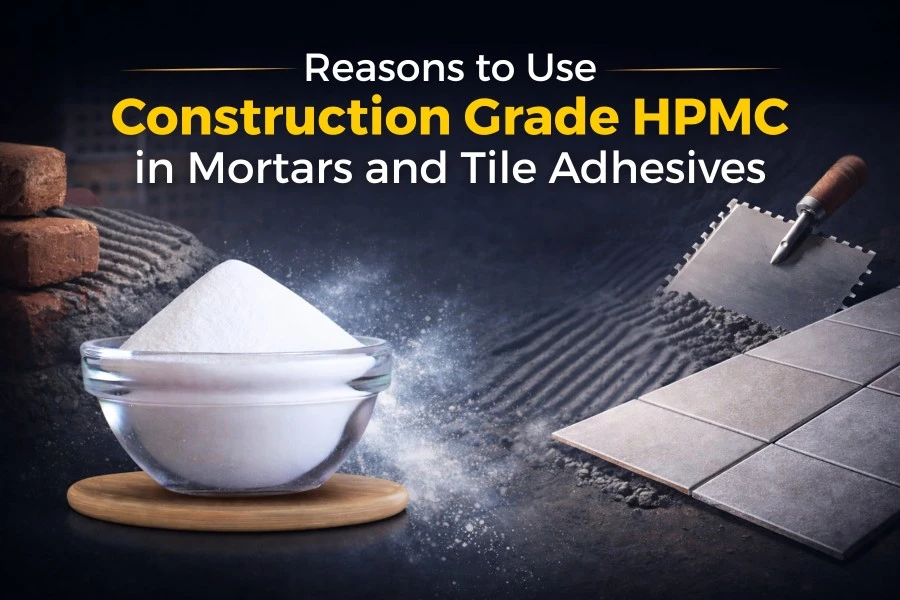
To meet the requirements of contemporary building methods, today’s materials must be resilient and simple to use. They also need to be reasonably uniform with regard to their characteristics and reliable for use across a variety of job site conditions.
A major contributor to these goals is Construction Grade HPMC in Mortars and Tile Adhesives.
These performance-enhancing additives have taken on a much wider importance, along with the increased trend toward dry-mix construction, replacing the traditional onsite mixing process with dry-mix construction.
Table of Contents
Sakshi Chem Sciences offers advanced building chemicals that improve workability, extend the life of the product, and make it easier to use.
Construction grade HPMC is one of the most significant additives that make mortars and tile adhesives perform exactly as they are intended on real job sites.
What is Construction Grade HPMC?
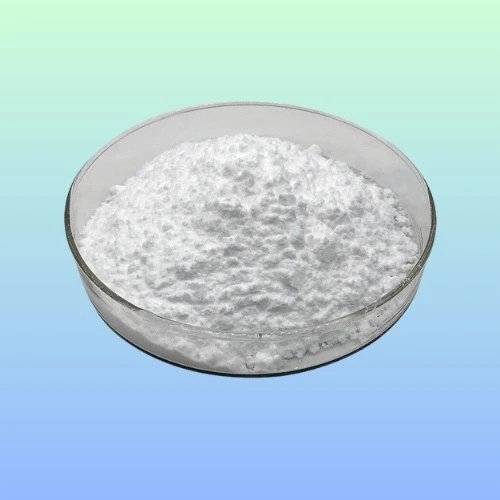
HPMC is a non-ionic cellulose ether made from the refined natural cotton fiber by controlled chemical modification. It is a white to off-white, odorless powder that dissolves readily in cold water to produce a smooth, viscous, homogeneous solution.
In construction applications, HPMC exhibits a multifaceted role as a building chemical by providing the following characteristics:
- Water Retention
- Thickening and Consistency Control
- Forming a Film
- Improved Dispersion
- Increasing the Bonding Ability
When combined, these elements are why Construction Grade HPMC is such an essential component in dry-mix formulations of Mortars and Tile Adhesives.
Key Advantages of HPMC in Construction Mortars
When added to cement-based mortars such as plaster, repair mortar, skim coats, or grouts, HPMC significantly improves performance.
1. Improved Water Retention
HPMC prevents rapid water loss, allowing cement to hydrate properly. This results in better strength development and reduced cracking.
2. Better Workability
Mortars become smoother, creamier, and easier to spread. This improves productivity and reduces physical effort for applicators.
3. Enhanced Sag Resistance
HPMC helps mortars stay in place on vertical surfaces, preventing slippage or material fall-off during application.
4. Uniform Mixing
It blends easily with cement, sand, and other additives, ensuring consistent quality across batches.
Why HPMC Is Essential in Tile Adhesives?
Tile adhesives must perform under demanding conditions, especially with larger tiles, vertical installations, and extended working times.
1. Stronger Bond Strength
HPMC improves adhesion between tiles and substrates, reducing the risk of tile debonding over time.
2. Extended Open Time
Installers get more time to position and adjust tiles without compromising bond performance.
3. Reduced Tile Slippage
On walls and vertical surfaces, HPMC minimizes tile movement, ensuring accurate alignment.
4. Improved Surface Finish
The adhesive spreads evenly, resulting in a clean finish with minimal air entrapment.
This makes Construction Grade HPMC in Mortars and Tile Adhesives indispensable for modern tiling systems.

Recommended Dosage and Technical Range
Typical dosage levels depend on formulation requirements, but generally fall within:
- Dosage: 0.2% – 0.6% (by weight of dry mix)
- Viscosity range: 10,000 – 200,000 mPa·s
- pH value: 6.0 – 8.5
- Appearance: White to light yellow powder.
Selecting the correct viscosity grade is crucial to balance water retention, open time, and workability.
Optimizing Performance with the Right HPMC
All formulations are unique regardless of the type. When selecting high-molecular-weight HPMC (hydroxypropyl methylcellulose) for your project, whether it’s a cement-based mortar or a tile adhesive, you want to make sure you are selecting the correct grade in order to achieve reliable results, better control of applications, and improved durability.
With advancements in technology, it’s now possible to create construction materials with a highly refined technical basis; Sakshi Chem Sciences produces construction chemical solutions at the highest levels of performance to support manufacturers and contractors around the globe.
In Summary
Using Construction Grade HPMC in Mortars and Tile Adhesives is not an option any longer; it must be part of creating uniform quality, ease of installation, and secure adhesion.
HPMC has helped modern construction systems continue to meet higher levels of expectation with fewer failures and building reworks; therefore, the improvement of water retention, workability, adhesion, and time of application is what makes HPMC so valuable to modern construction.
Sakshi Chem Sciences is continuing to be a leader within the industry by providing dependable, performance-based products through strong technical capabilities and a comprehensive array of construction chemical solutions.
Frequently Asked Questions
Q1. Is construction grade HPMC only used in cement systems, or can it also be used in gypsum systems?
Both cement-based and gypsum-based mortars and adhesives can utilize construction grade HPMC.
Q2. Does HPMC improve the open time of tile adhesives?
Yes, tile adhesives using HPMC will have an extended open time. This will allow the user a better position and adjustment of tiles before being set.
Q3. If the amount of HPMC used is below the dosage levels, what would happen?
Insufficient amounts of HPMC will produce low water retention, fast drying time, low bond strength, and difficulty in applying the product to substrates.

Sagar Telrandhe is a Construction Engineer with a B.Tech in Construction Engineering & Management. Passionate about infrastructure development, project planning, and sustainable construction, he specializes in modern construction techniques, project execution, and quality management, contributing to efficient and innovative building.