
Often, when we think of concrete, we think of mix ratios, strength, and durability. However, one step that is often overlooked is concrete vibrating.
Concrete vibrating can mean the difference between a solid and dependable structure and a structure with cracks, weaknesses, and premature failure.
In this article, we will define what concrete vibrating is, why it is so important, how to correctly employ it, and what happens if you leave this step out.
Table of Contents
What is Concrete Vibrating?
Concrete vibrating is defined as applying mechanical oscillations at a high, but controlled, frequency to freshly placed concrete with the intention of the concrete behaving more like a fluid for a short period of time.
This allows the new concrete to settle uniformly and denser, free of air pockets, and to allow the concrete to fill around the reinforcement bar and to all corners of the formwork.
There are some common ways to apply vibration:
Internal Vibration: The use of a vibrating needle, or poker, that is inserted directly into the concrete.
External Vibration: The vibration of the formwork from the outside.
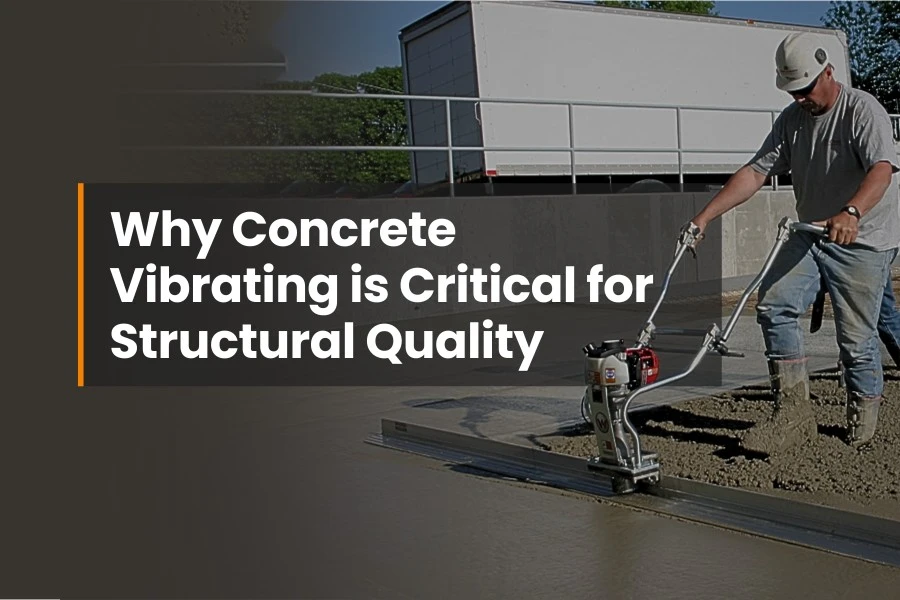
Surface Vibration: The application of a vibrating mechanical trowel across the surface of the concrete.
Depending on what type of structure you are constructing, the depth of the concrete pour and the equipment available at the site will determine which method to use.
Why is concrete vibration important?
Vibration of concrete is not just nice to have; it is vital. Here is why:
1. It Provides Air Removal
Freshly placed concrete can trap a lot of air naturally. Once the concrete has set, if this air isn’t removed, it will weaken the structure. Vibration removes air trapped and moves it to the surface.
2. It Prevents Honeycombing
Honeycombing is when voids are created when concrete has trouble settling around corners or reinforcing bars. Vibration aids in making sure every void is filled fully with concrete.
3. It Increases Density and Strength
The fewer voids present in the concrete, the denser and stronger it is. This is important for the required compressive strength in structural elements.
4. It Provides a Better Surface Finish
It is more appealing to see a surface that is smooth and mostly uniform, especially when working with exposed concrete. Vibrating the mix will help remove blemishes, bumps, and holes.
5. It Prevents Long-Term Problems
Failure to compact concrete entirely can lead to cracking, less load-bearing capacity, and moisture intrusion. Vibration helps compact the concrete so it can harden as one cohesive, heavy-duty mass.
Benefits of Proper Concrete Vibration
Here are the practical benefits of vibrated concrete. Let’s look at the detailed benefits of vibration:
Stronger – you will achieve structural-grade strength on your first attempt.
Lasts longer – vibrated concrete has reduced porosity, reducing weathering and freeze-thaw cycles;
Finish better – you will have fewer blemishes with vibrated concrete, leaving you with longer-lasting surfaces;
Place concrete faster – vibration will help the concrete fill the voids so that you don’t have to poke and tap for it to flow.
Fewer repairs – with proper vibration, you will have fewer structural inadequacies, so you will require limited rework and maintenance;
In climates subjecting the concrete mix to various temperatures, also possibly very high moisture climates (such as the UK!), they have increased resistance to cracking and moisture intrusion.
How to Vibrate Concrete?
To vibrate concrete properly, plan your installation before you start; however, you will need to pick the correct method of vibration considering the type of structure you are constructing, the depth you are pouring, and the correct concrete mix.
Internal Vibration (Needle/Poker Method):
1. Insert the vibrating needle vertically into the mix.
2. Allow the tool to vibrate in place for several seconds, while also considering the change in audible sound. Once the sound changes, you will know that the air bubbles have been displaced.
3. Remove the needle slowly to limit the size of holes left in the pour.
Surface Vibration:
Use a vibrating screed or mechanical trowel to work over the surface. and use consistent vibration for the entire area. Timing is key. Wait too long and the concrete may have already begun to set, too soon and you may not remove all of the air. Always synchronize with your pour schedule.
Typical Errors to Avoid
Even professionals can make these mistakes:
Horizontal rodding – Moving the mix side to side can segregate the aggregates from the lower viscosity paste.
Over vibration, with high slump mixes, may result in bleeding and settlement of the coarse aggregate.
Equipment used – Using an old or malfunctioning vibrator will not remove the air bubbles effectively, and you will be left with a weaker mix.
It is critical to avoid these mistakes in order to properly undertake your concrete pouring and ensure a successful, durable concrete.
The Effect of the Concrete Mix on Vibration
Not all concrete mixes are the same. The type of mix will affect how it “shakes down” after vibration. Some of the factors that are important are:
W/C ratio – Higher ratios may require less vibration.
Size of aggregate – Larger aggregates may require more vibration to settle properly.
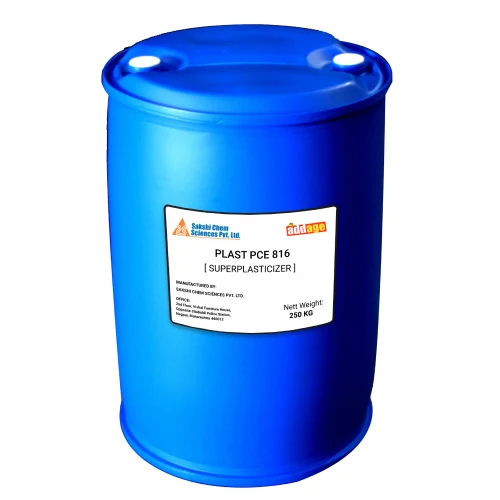
Use of admixtures – Chemical admixtures such as Addage PLAST PCE 816 Admixture can change the ability of the mix to flow and be worked with.
Addage PLAST PCE 816 is a high-performance plasticizer designed to improve concrete flow without additional water. Using this material will lessen the time and effort required on the vibrator, while allowing the concrete to be adequately compacted.
Working with your supplier on a proper mix design and using a compatible vibration method will eliminate problems on the site.
Why It Is Dangerous To Omit Vibration?
Vibration of concrete is an important step, and omitting this process can leave you with problems:
Air pockets and honeycombing will reduce the load-bearing capacity of the structure.
The presence of gaps in the concrete or poor bond with other materials may create cracks in the concrete; this is true especially when the structural element experiences load or temperature changes.
Concrete is porous and absorbs water; if this water freezes, the expansion can cause damage to the structure.
Concrete that has not been vibrated will often exhibit a rough, pitted, or uneven appearance.
Even if the surface appears fine, voids or weak areas in the concrete can lead to structural failure years down the road. With commercial construction, this failure can lead to severe safety issues that could have large costs for repairs and/or replacement.

Conclusion
Concrete vibrating is more than just a construction best practice; it is a necessity. There are many compelling reasons to vibrate concrete, including improving the strength and durability of the structure while improving aesthetics and reducing future maintenance issues.
Whether pouring a slab, foundation, or column, don’t skip the vibration step!
And when paired with the right admixture like Addage PLAST PCE 816, you get a mix that works smarter, not harder. Plan well, execute correctly, and enjoy long-lasting, high-quality concrete in every project.

Sagar Telrandhe is a Construction Engineer with a B.Tech in Construction Engineering & Management. Passionate about infrastructure development, project planning, and sustainable construction, he specializes in modern construction techniques, project execution, and quality management, contributing to efficient and innovative building.