
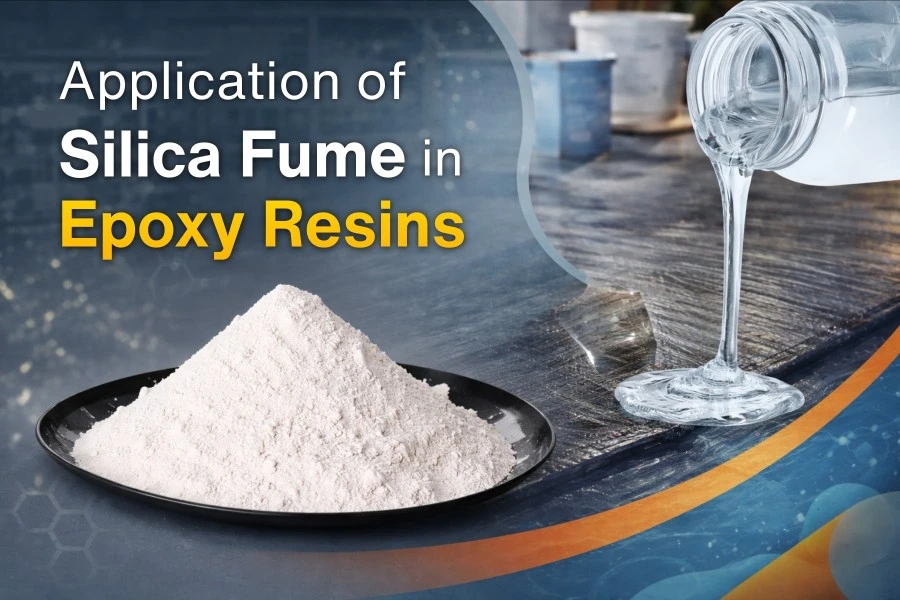
Silica fume is a highly effective filler that can improve the mechanical, thermal, and durability characteristics of epoxy resin systems.
The application of silica fume in epoxy resin systems enables manufacturers to meet performance needs while maintaining cost-effectiveness and increasing production capabilities through the use of advanced mineral fillers and epoxy resin technology.
Table of Contents
At Sakshi Chem Sciences, we develop advanced material solutions to create high-performance formulations that meet the world’s quality and durability standards.
What is Silica Fume? Why Use Silica Fume in Epoxy Resin Systems?
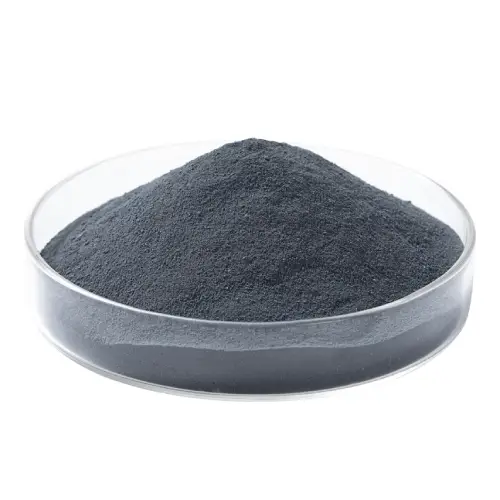
Silica fume is a very fine, amorphous silicon dioxide material created as a by-product during the production of silicon and ferrosilicon alloys.
Its nearly spherical particles are approximately 100 times smaller than cement, providing an extremely large surface area. In epoxy resin systems, silica fume is not only a filler, but also serves a number of purposes.
It actively improves resin structure through physical densification and chemical interaction, resulting in enhanced overall performance.
Synergistic Effect of Silica Fume and Epoxy Resins
The Application of Silica Fume in Epoxy Resins creates a synergistic relationship where the limitations of epoxy are effectively addressed through microstructural enhancement.
1. Reduction of Internal Curing Stress and Crack Prevention
During the curing action of epoxy resins, they create heat. This heat can result in thermal stress within the material, shrinkage, and can also lead to micro-cracking. This effect is even more pronounced as the thickness of the material increases or when high-precision applications require it.
The curing reaction of epoxy resins can be regulated using silica fume; these include:
- Reduction in the peak exothermic temperature.
- Reduction in thermal expansion coefficients.
- Minimisation of volumetric shrinkage.
By alleviating stresses caused by these factors, applications such as electronic encapsulating epoxies and precision adhesives will benefit greatly from reduced stress, improving long-term durability, crack resistance, and overall performance.
2. Improvement of Mechanical Strength and Wear Resistance
Silica fume particles have a very high level of hardness and have a controlled particle size distribution. When properly dispersed, they will:
- Increase compressive strength and tensile strength.
- Increase resistance to abrasion.
- Increase surface hardness.
Research has shown that epoxy systems modified with micro silica have a wear resistance of up to 2.5 times greater than non-modified systems, which makes them highly suited to industrial floors, tooling, and protective coatings that continually experience mechanical stress.
3. Improved Performance in Fire Resistance and Thermal Properties
Silicon type materials can dramatically improve flame resistance; when exposed to high temperatures, silica fume forms a stable, protective silica coating that:
- Limits the diffusion of oxygen.
- Slows down the propagation of flame.
- Provides better than average heat resistance.
In advanced formulations, combining silica fume with other fire retardants allows for the creation of composites that meet strict fire safety regulatory standards while having comparable electrical and mechanical properties.

Core Application Areas of Silica Fume in Epoxy Resins
1. Electronic Packaging and Semiconductor Materials
There is a need for precision, insulation stability, and thermal management when using electronics. The addition of fumed silica to electronic-grade epoxy systems provides the following benefits:
- Improved filling density.
- Reduced variation in the production process of the epoxy itself.
- Less thermal expansion so that parts made from epoxy do not warp or crack when subjected to sudden temperature changes.
- Increased reliability of the encapsulation process to protect sensitive electronic components from damage during assembly and use.
- Adds strength and stability to the epoxy adhesive bond enabling the epoxy to resist forces acting upon it due to its weight or other means.
- Ultra-pure fumed silica can protect sensitive electronic components from damage caused by thermal cycling due to environmental fluctuations, moisture intrusion, and mechanical forces.
2. High-Performance Coatings And Adhesives
The use of fumed silica in epoxy resins is essential to the application of epoxy resins in the technology of coatings.
Anti-corrosion Coatings:
Fumed silica enhances the chemical resistance of epoxy resins against acids, alkalis, and salts, therefore increasing the durability of epoxy resin coatings on marine structures, bridges, industrial facilities, and pipeline systems.
Epoxy Floor Coatings:
By strengthening the ability of the epoxy resin to resist abrasion and impact, fumed silica enables longer-lasting floor surfaces at a lower cost.
Structural Adhesives:
Fumed silica provides for improved load transfer, bond integrity, and dimensional stability under load for high-strength adhesive systems.
3. Composite Materials And Aerospace Applications
In the manufacture of composites, lightweight strength must be achieved. Notably, fumed silica-reinforced epoxy composites provide:
- High strength-to-weight ratios
- Improved resistance to fatigue
- Greater temperature stability
Consequently, fumed silica composite materials are ideal candidates for use in aerospace components, automotive components, and advanced structural systems where long-term durability and precision are critical.
Formulation Considerations When Using Silica Fume
To achieve optimal results, careful formulation is necessary:
- Dispersion control: Proper mixing prevents agglomeration.
- Dosage optimization: Typical loading ranges depend on application requirements.
- Compatibility: Resin viscosity and curing agents must be balanced.
- Processing conditions: Temperature and mixing speed influence final performance.
Sakshi Chem Sciences supports manufacturers with technically refined material solutions to ensure consistent and predictable formulation behavior.
Advantages of Using Silica Fume in Epoxy Resin Systems
- Enhanced mechanical durability
- Decreased curing stress and cracking potential
- Increased wear and abrasion resistance properties
- Improved flame retardation capability
- Greater thermal stability
- Extend the service life of the product
- Optimize costs from filler usage efficiency
Each of these benefits explains why we are seeing an increasing trend of using Silica Fume in our epoxy Resin applications throughout many advanced industries today.
In Closing
The usage of Silica Fume in Epoxy Resin is an established method of improving resin performance without compromising production efficiency.
Improved mechanical strength, thermal stability and dimensional stability resulting from using Silica Fume allow epoxy systems to fulfill the expectations placed upon them by modern construction, electronics, coatings, and composite manufacturing processes.
Sakshi Chem Sciences provides the industry with world-class materials with durable, efficient, high-performance solutions built with strong research and development capabilities, stringent quality control measures, and globally sourced raw materials.

Sagar Telrandhe is a Construction Engineer with a B.Tech in Construction Engineering & Management. Passionate about infrastructure development, project planning, and sustainable construction, he specializes in modern construction techniques, project execution, and quality management, contributing to efficient and innovative building.