

Sustainability is currently a requirement, rather than simply a passing trend, in the construction industry. Urban development is moving forward at a tremendous rate, and along with this, the demand for construction materials that are not only more sustainable, but also more long-lasting and durable is increasing.
As much as cement is one of the most essential ingredients in the production of concrete, it is the cause of roughly 7-8% of total carbon dioxide emissions. The realization of this situation has spurred engineers, manufacturers, and contractors to look for a new combination of concrete-producing means.
Table of Contents
Experts agree that one of the effective ways to diminish the environmental impact of concrete manufacturing is to use the latest types of concrete admixtures. One of the most common and popular types of concrete admixtures used nowadays is High-range Water Reducing Admixtures (HRWRs), also known as Superplasticizers. Due to the use of Superplasticizers, it is possible to produce workable concrete with decreased water and cement content.
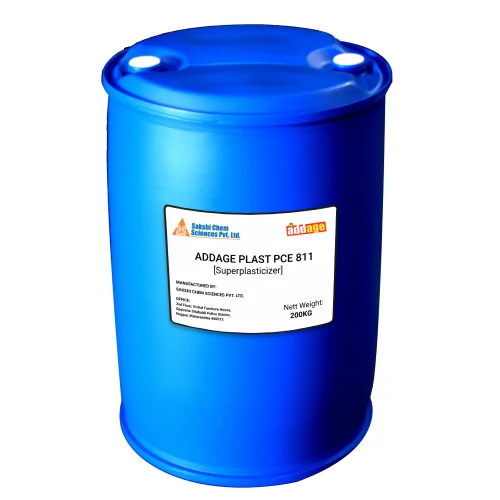
In particular, Polycarboxylate Ether (PCE) based superplasticizers have become the preferred choice for high-performance and sustainable concrete. Their advanced molecular structure allows for superior cement particle dispersion, making concrete easier to place, stronger, and more durable with reduced resource consumption.
This article explores the Role of High-Range Water Reducing Admixtures in sustainable construction and how they are helping the construction industry move toward greener, more efficient building practices.
Understanding High-Range Water Reducing Admixtures
High-range water-reducing admixtures are innovative chemical products that reduce water consumption for concrete manufacturing by 20 to 40 percent while achieving high workability. Unlike traditional water-reducing agents, modern PCE water-reducing admixtures operate on the principles of steric hindrance and electrostatic repulsion.
The comb-shaped structure of the polymer helps to disperse cement particles evenly in the mix and prevent them from sticking to each other. This much better way of dispersing cement provides a number of benefits:
- Lower amount of water
- Improved flowability
- Better slump
- Higher compressive strength
- Better surface quality
- Higher durability
Less water used means an intensive internal structure with fewer pores and capillaries. Thus, the performance of concrete improves, and less cement is needed.
Today, PCE superplasticizers are applied in:
- Ready-mixed concrete
- Self-compacting concrete
- High-rise construction
- Bridges
- Infrastructure
- Precast concrete
- Industrial floors
Their versatility makes them one of the most significant innovations in the concrete industry today.
The Sustainability Case for Water Reduction
The significance of the role played by water in the manufacture of concrete cannot be denied, but excess water results in reduced strengths, increased porosity, and reduced durability of structures.
This is where high-range water-reducing admixtures come into play, allowing for a reduction in the water-cement ratio without impacting the workability of concrete, and as a result, producing stronger and more sustainable concrete.
The reduction of water usage has several beneficial effects from an environmental point of view.
Reducing the cement consumption
A lower water-cement ratio allows engineers to achieve desired strength with less cement. The manufacturing of cement causes the biggest carbon footprint of concrete; thus, lower cement consumption leads to lower emissions.
Less consumption of resources
Optimized concrete mixtures enable the achievement of better structural results with lower material consumption.
Lower carbon footprint
Every ton of cement that is not used prevents 0.8- 0.9 tons of CO2 emissions, which makes water reduction a beneficial step from the standpoint of sustainability.
New mix designs make use of modern admixtures instead of increasing cement consumption.
Water Conservation: A Hidden Sustainability Advantage
The reality of carbon emissions and especially their harm is widely acknowledged in sustainable development, which has become increasingly important nowadays. A crucial environmental perspective is that of water conservation because water becomes a scarce resource in many areas of our planet.
The concrete industry consumes large amounts of fresh water annually. Concrete production can cut down on water usage by means of advanced concrete chemicals based on Polycarboxylate Ether (PCE) technology.
This will not only allow manufacturers to save water.
Tighter Concrete Structure
Lower usage of water in concrete mix results in fewer capillary voids and a stronger concrete structure.
Better Water Resistance
Concrete with high density will not let water, substances and harmful ions penetrate through.
Thus, concrete with less permeability will be resistant to:
- Chloride stress
- Sulphate stress
- Carbonation
- Freeze-thaw cycles
- Reinforcement corrosion
Superplasticizers help to save water and improve structural quality.

Enhancing Durability and Service Life
Durability is one of the least considered features of sustainable building practices.
With a life span of 80-100 years, a building has far less impact on the environment than one that needs to be repaired after just a couple of decades.
Repair activities involve:
- Building materials needed for the repair.
- Increased transport requirement.
- More energy consumed.
- More workers required.
- Increased waste produced.
Long-range water-reducing admixtures go well beyond enhancing fresh concrete properties. They also help create durable concrete that can stand harsh environmental conditions for years.
Brought to life by PCE superplasticizers, such as PCE, concrete has:
Higher compressive strength
Water-to-cement ratio is a major factor in achieving good strength.
Reduced risk of corrosion
Barrier to chloride movement due to concrete’s low permeability
Better resistance to chemicals
Dense concrete’s improved ability to deal with sulphates or aggressive water.
Lower risk of shrinkage
Reducing the amount of water used minimizes drying shrinkage.
Workability and Construction Efficiency
Sustainability is not limited to resource preservation. It also includes effective building practices that aid the reduction of environmental footprints.
The use of highly fluid concrete is advantageous because it guarantees a quicker, simpler, and more accurate construction process.
Thanks to the advances in Polycarboxylate Ether technology, the building material is flowing even with a very low ratio of water and cement.
There are many advantages to this:
- Ability to pump over long distances.
- Speedy installation.
- Better filling of crowded rebar.
- Improved finishing of the surface.
- Elimination of segregation.
- Lower bleeding.
One of the major benefits is the reduced need for mechanical vibrations.
Highly fluid concrete means lesser amount of vibration during compaction:
- Less energy consumption of the equipment.
- Less noise at the construction site.
- Simplified and faster construction.
- Increased safety of workers.
Moreover, increasing the fluidity of concrete reduces rejects and waste, making the construction process more cost-effective and eco-friendly.
Supporting Low-Carbon Mix Design with SCM Integration
Sustainability is not limited to resource preservation. It also includes effective building practices that aid the reduction of environmental footprints.
The use of highly fluid concrete is advantageous because it guarantees a quicker, simpler, and more accurate construction process.
Thanks to the advances in Polycarboxylate Ether technology, the building material is flowing even with a very low ratio of water and cement.
There are many advantages to this:
- Ability to pump over long distances.
- Speedy installation.
- Better filling of crowded rebar.
- Improved finishing of the surface.
- Elimination of segregation.
- Lower bleeding.
One of the major benefits is the reduced need for mechanical vibrations.
Highly fluid concrete means lesser amount of vibration during compaction:
- Less energy consumption of the equipment.
- Less noise at the construction site.
- Simplified and faster construction.
- Increased safety of workers.
Moreover, increasing the fluidity of concrete reduces rejects and waste, making the construction process more cost-effective and eco-friendly.
Thermal Management and Performance in Mass Concrete
Massive concrete structures (e.g., dams, bridges, raft foundations) produce a considerable amount of heat during cement hydration. The generation of excessive heat can create thermal cracks that compromise the long-term structural durability of the concrete structure.
High-range water-reducing admixture (HRWRA) is particularly useful in this regard. HRWRA helps reduce the amount of cement required and minimizes heat generation due to cement hydration. This reduces the risk of thermal cracking, minimizes the necessity for cooling and enhances the operation of mass concrete.
Economic and Lifecycle Benefits
Sustainable construction is concerned with the provision of long-lasting value. Even though high-performance admixtures may lead to an increase in initial costs, they offer considerable savings during the entire lifecycle of the structure.
Below are several of the main advantages:
- Lower cement and water consumption.
- Lower costs for materials and transport.
- Faster construction process thanks to easier working with the concrete.
- Lower costs for maintenance and repair.
- Longer lifespan of buildings.
One of the reasons Polycarboxylate Ether (PCE)-based admixtures have proven to be a beneficial investment in construction projects.

Quality Assurance and Verification
For consistent quality performance. All construction additives must pass strict tests to make sure they satisfy the criteria for durability, strength, workability, and compatibility with various cement types.
At Sakshi Chem Sciences Pvt. Ltd., every product is made according to strict manufacturing and quality control standards, backed by cutting-edge testing equipment. Our R&D team works hard to offer innovative products that meet global safety and durability standards.
The Sakshi Chem Sciences Approach to Sustainable Innovation
Sakshi Chem Sciences Pvt. Ltd. has more than 20 years of experience in the construction chemicals industry, and has become one of the most reputed manufacturers, suppliers, and exporters of premium quality construction chemicals.
Our list of products includes 50 plus construction chemicals for various applications like concrete admixtures, waterproofing solutions, grouts, repair materials, and mould release agents.
We are committed to sustainability and our endeavor is powered by:
- Advanced research and development.
- Modern manufacturing facilities.
- Strict quality assurance.
- Affordable and reliable products.
- Technical support from expert professionals.
Globally connected supply chain covering the Middle East, Africa, Europe, and South East Asia.
Through our ongoing innovations in technology for admixtures, we help our clients produce high-quality concrete with reduced environmental impact.
Conclusion
As the construction industry moves toward greener infrastructure, the role of high-range water-reducing admixtures has become more important than ever. By reducing water and cement consumption, improving durability, enhancing workability, and supporting the use of supplementary cementitious materials, these admixtures contribute to both sustainable construction and long-term structural performance.
Modern Superplasticizer solutions, especially those based on Polycarboxylate Ether (PCE) technology, enable concrete producers to achieve superior results with fewer natural resources and lower carbon emissions.
At Sakshi Chem Sciences Pvt. Ltd., we are committed to supporting this transformation through innovative, high-quality construction chemical solutions. Backed by decades of expertise, advanced manufacturing, and continuous research, we help customers build stronger, more durable, and more sustainable structures for the future.

Sagar Telrandhe is a Construction Engineer with a B.Tech in Construction Engineering & Management. Passionate about infrastructure development, project planning, and sustainable construction, he specializes in modern construction techniques, project execution, and quality management, contributing to efficient and innovative building.