
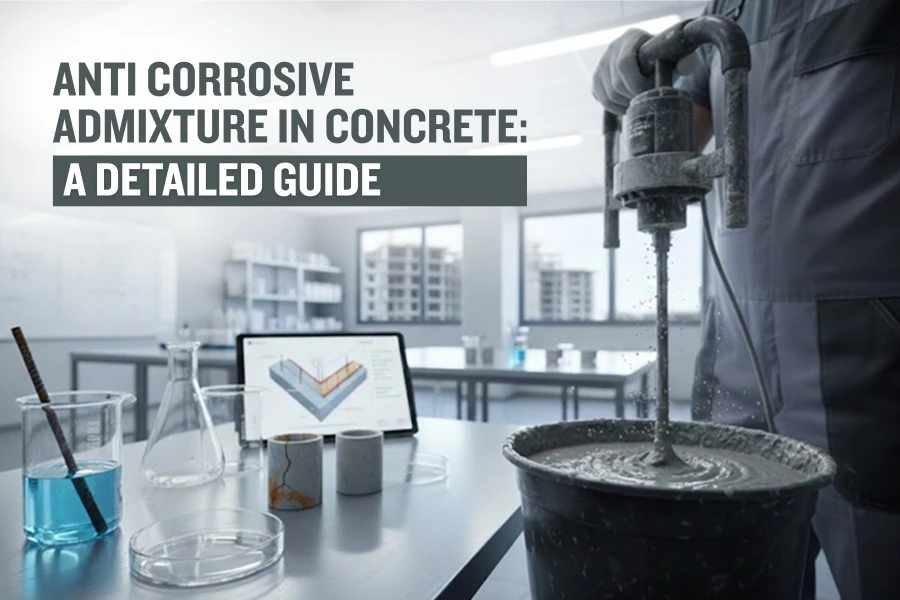
Even though concrete seems to be unbreakable, it is a slow killer, the corrosion of the steel reinforcements. When moisture, chlorides, or the environment contact the rebars inside the concrete and begin to rust, the concrete also will expand and crack, losing load-bearing capacity.
Table of Contents
The solution to this challenge has been to use a product called Anti-Corrosive Admixture in Concrete. anti corrosive admixture in concrete was developed to increase the durability of concrete, extending the life of the structure, and therefore will reduce the cost for repairs over the long term.
Sakshi Chem Sciences manufactures a range of high-quality construction chemicals, including anticorrosive admixtures for high performance, that can protect reinforcement steel from corrosion in harsh weather and hostile environments.
So What Is Anticorrosive Admixture in Concrete?
An anti corrosive admixture in concrete is a specific chemical additive that is used to protect reinforcement bars or rebar from corrosion. anti corrosive admixtures are added to concrete at the time of mixing and form a protective barrier around the steel.
In addition to providing protection for the rebar, it reduces the ability of water and/or chlorides to penetrate the concrete, thereby reducing the risk of damage due to the penetration of chlorides and carbonation.
In summary, anticorrosive admixtures will make concrete stronger for a longer period of time.
Why Do Reinforced Concrete Structures Corrode?
Moisture, chlorides from seawater and de-icing salts, carbon dioxide exposure, cracks, and industrial pollutants adversely affect how much protection concrete affords.
Each of these causes degradation on the protective capacity of concrete and allows for the corrosion of steel to occur; thus creating cracks, spalling of the concrete, reduced structural strength, and resulting in costly rehabilitation of the structure to re-encapsulate the corroded steel.
Anti-corrosive admixtures are a tremendously effective way of preventing the above events and maintaining the safety of the structure long-term.
How Does The Anti Corrosive admixture Work?
The anti corrosive admixture acts through several different ways:
1. It Produces a Protective Film
The anti corrosive admixture provide a protective film at the molecular level, thus blocking the steel from moisture and chlorides.
2. Will Increase the Density of the Concrete
By increasing the density of the concrete, the anti corrosive admixture will decrease the permeability of water and other harsh ions entering the Concrete.
3. Maintain High Alkalinity
By keeping the pH of the Concrete high; the steel is protected from corrosion.
4. Passivating Existing Rust
Some Anti Corrosive Admixtures stabilize early-stage corrosion and stop it from spreading.
By all four of these actions, the use of anti corrosive admixtures will provide a significant increase in the overall durability of the concrete structure.
Types of Anti Corrosive Admixtures
The different structures will require different levels of protection; therefore, there are three types of anti corrosive admixtures.
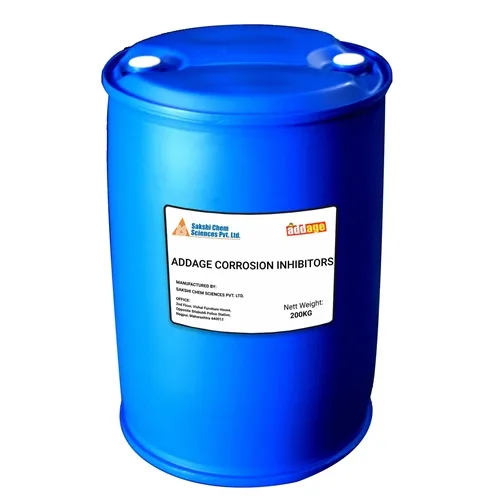
1. Corrosion Inhibitors
Corrosion Inhibitors slow down the rate of the reaction of corrosion. They are ideal for use in marine and industrial environments.

2. Permeability-Reducing Admixtures
Lower water absorption and minimize chloride ingress, strengthening concrete defenses.
3. Rust-Passivating Chemicals
Neutralize existing corrosion and stabilize steel surfaces.
Benefits of Using Anticorrosive Admixtures in Concrete:
1. Increase in the Life of the Structure:
Due to the elimination of corrosion, the lifecycle of a concrete structure is extended significantly.
2. Reduced Costs:
The cost of repairs due to corrosion will probably always exceed the cost of taking preventive measures against corrosion.
3. Increased Safety:
Reinforcing steel that does not corrode retains its full capacity of strength, which will guarantee the long-term integrity of the structure.
4. Improved Resistance in the Most Aggressive Environments:
Anticorrosive admixtures are particularly useful in coastal regions, industrial zones, chemical manufacturing locations, and flooded regions.
5. Sustainability:
Concrete structures that can be utilized for a longer period of time reduce the effects of environmental stress resulting from demolition or extensive reconstruction, and therefore contribute to sustainability.
Typical Applications of Anticorrosive Admixtures:
Anticorrosive admixtures are needed for structures located in wet, saline or reactive chemical environments:
- Marine structures such as wharves, piers, and seawalls.
- Bridges, flyovers, and highways.
- Industrial facilities including chemical manufacturing and oil refining.
- Wastewater and sewage treatment systems.
- High-water table regions (i.e. cellar, basement).
- Coastal residences and commercial buildings.
Contractors, builders and infrastructure developers trust the products of Sakshi Chem Sciences, to provide reliable anticorrosive protection in these applications.
How to Use Anti Corrosive Admixture in Concrete Effectively?
To ensure maximum protection, follow these steps:
1. Evaluate Environmental Conditions
Identify exposure levels, saline, industrial, or general atmospheric.
2. Select the Right Admixture
Choose based on project needs, expected lifespan, and type of reinforcement used.
3. Add Correct Dosage
Follow manufacturer guidelines; overdose or underdose can affect concrete performance.
4. Ensure Proper Mixing
Uniform distribution in the concrete matrix is essential for effective protection.
5. Maintain Quality Control
Test concrete permeability, compressive strength, and uniformity for best results.
Sakshi Chem Sciences provides complete technical support to guide teams throughout the process.
Future of Anti Corrosive Technologies
The construction industry is moving toward smart materials and sustainable solutions. In the coming years, admixtures may:
- Offer self-healing capabilities.
- Include nanotechnology-based corrosion inhibitors.
- Provide multi-functional protection against chemicals, abrasion, and temperature variations.
Sakshi Chem Sciences is heavily involved in developing modern materials, with advanced materials being their main investment area to keep pace with developments in these areas.
Conclusion
Corrosion is one of the biggest threats to reinforced concrete structures, but with the right approach, it is entirely preventable. Incorporating anti corrosive admixture in Concrete is a proactive and cost-effective step toward building long-lasting, durable, and sustainable structures.
With Sakshi Chem Sciences advanced anti corrosive admixture solutions, you can strengthen your project’s lifespan, reduce maintenance, and safeguard your investment for decades.
FAQs Regarding Anti-Corrosive Admixtures
1) What is a corrosion-inhibitor additive to concrete?
An anti-corrosive admixture is a chemical that is added to concrete to stop or reduce the rate of corrosion of embedded steel supporting members by creating a protective film and barrier, thereby decreasing the permeability of concrete.
2) What can be done to prevent corrosion in concrete?
The most effective ways to prevent corrosion include:
1) using anti-corrosive admixture(s);
2) using a lower water/cementitious material ratio;
3) using appropriate covering on embedded steel/concrete;
4) improving compaction and curing of concrete;
5) using waterproofing membranes.
3) What are the four types of chemicals that are commonly added to concrete?
The primary categories of chemical admixtures include:
1) Plasticizers/Superplasticizers
2) Accelerators
3) Retarders
4) Air entrained admixtures
Many times, Anti-Corrosive Admixtures are used for projects that have a focus on durability.
4) How can concrete be made to resist corrosion?
Concrete can be made more resistant to corrosion by:
1) Using corrosion inhibitors.
2) Adding permeability reducers.
3) Preventing excessive compaction.
4) Applying a protective coating to exterior surfaces.
5) Ensuring proper curing of concrete.
5) What is corrosion control treatment?
Corrosion control treatment refers to the application of various techniques or methods, including a variety of chemical admixtures, coating products, cathodic protection, and various repair methods, that are intended to prevent or mitigate deterioration of embedded steel within an existing or a constructed building.

Sagar Telrandhe is a Construction Engineer with a B.Tech in Construction Engineering & Management. Passionate about infrastructure development, project planning, and sustainable construction, he specializes in modern construction techniques, project execution, and quality management, contributing to efficient and innovative building.