
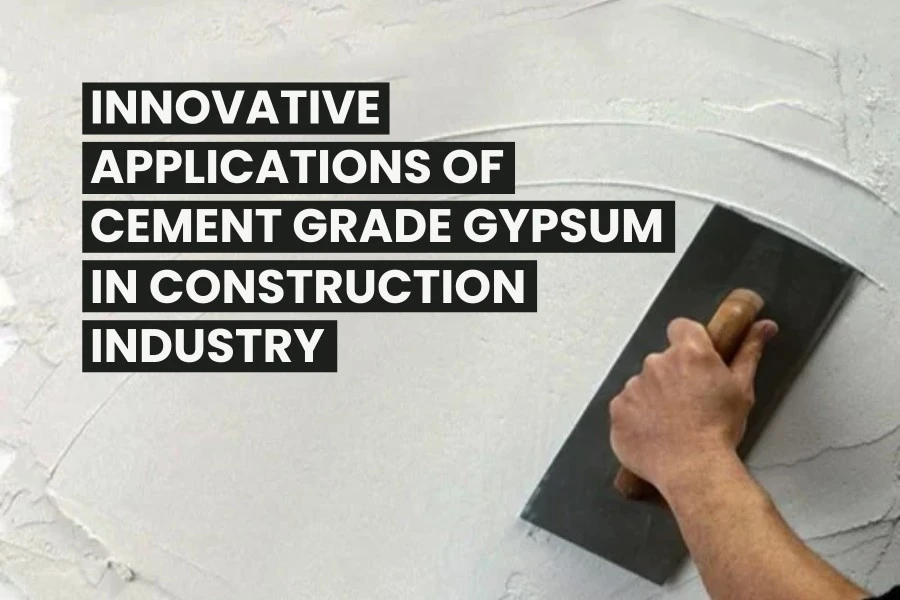
The construction sector is advancing at an unprecedented rate. As demand for sustainable, durable, and economical building solutions increases, materials that were once primarily thought of for limited applications are being reimagined for new uses.
Cement-grade gypsum, traditionally just a chemical set regulator for cement, has transformed into an adaptable material for applications far beyond solely cement.
In this blog, we will highlight how cement-grade gypsum is changing construction and how products like Gypsum Eco White are transforming this industry towards sustainable and efficient building solutions.
Table of Contents
The Basics of Cement Grade Gypsum
Cement-grade gypsum is primarily composed of calcium sulfate dihydrate (CaSO₄·2H₂O). Historically, gypsum has been commonly used as a chemical set regulator for cement so that the cement does not set too quickly through the hydration process. Without gypsum, cement would set at a rapid pace, making it impossible to work with cement.
Through research, development, and processing of gypsum, it is no longer just a set regulator. The unique chemical and physical properties of gypsum have allowed us to unlock its use in multiple applications in today’s construction sector.
Key Innovative Applications of Cement Grade Gypsum
1. Lightweight Concrete Production
Lightweight concrete is becoming more popular for construction applications that necessitate a reduction in structural load. Any project where less structural material is desirable will likely benefit from lightweight concrete.
High-rise construction, bridges, prefabricated concrete structures, and other similar structural components may rely on implementing lightweight concrete.
Cement-grade gypsum is designed to be effective as a partial replacement for natural sand in a lightweight concrete mix. The benefits of using gypsum in lightweight concrete include the following:
- It reduces the overall density of concrete.
- Structures are lighter without decreasing concrete strength.
- Use of gypsum can offset reliance on natural resources (river sand) extraction.
This innovative practice also enhances efficiency in construction and promotes sustainability, an important element for the future.
2. Gypsum Boards and Drywall Systems
One of the largest applications of cement-grade gypsum is in gypsum boards, also known as drywall, plasterboards, etc. Gypsum board is an essential building material for all modern building interiors (walls, ceilings, partition walls, etc.
Historically, gypsum boards were manufactured using synthetic gypsum, most often generated from production by-products. Natural cement-grade gypsum gets around this positively:
- It has very little processing.
- It develops little or no greenhouse gases in its production.
- It uses gypsum to form a board with uniform strength and finish.
Products such as Gypsum Eco White are sought after for their purity in whiteness, and aesthetic and functional properties for interior enclosures.
3. Self-Leveling Floor Screeds
Uneven floors are the bane of construction.
Self-leveling floor screeds solve this issue, creating smooth and even surfaces for final finishes like tiles, carpets, or laminates.
In this case, cement-grade gypsum acts as a filler and a binder to create a blend that is both cohesive and can easily flow and cure together. With success comes:
- Faster application times.
- Stronger, crack-resistant avenues.
- Better durability for residential and commercial projects.
This applied example proves this trending method is gaining popularity for its efficiency as it can be used and applied quickly within a short timeline in a fast-paced construction environment where quality and precision are as important as timeline.
4. Soil Conditioner in Agriculture
It might seem strange to consider gypsum as a soil conditioner, as it’s mainly associated with construction.
However, there continues to be manufactured land and soil conditioners in agriculture with made or constructed gypsum material. Gypsum aids water retention, reduces erosion from our soils, and improves soil composition and structure.
Using gypsum improves yield potential for farmers by incorporating gypsum to:
- Improve aeration in soils.
- Balance pH levels.
- Add calcium and sulfur nutrients.
This broader manufacturing use of gypsum lends to our understanding of how versatile and sustainable gypsum can be.
5. Decorative and Finishing Applications
Gypsum has both a functional role as well as an aesthetic role. Products like Gypsum Eco White are now being utilized in plaster of Paris (POP) applications, which provide many value amenities such as:
- Smooth wall finishes.
- Decorative elegance of moldings.
- Bright white wall surfaces are optimal interior design contracts.
Therefore, not only is gypsum beneficial in a structural manner, it also has an element of art, as it combines durable and beautiful materials.
Sustainability Benefits of Cement Grade Gypsum
Not only are the uses for cement-grade gypsum varied, but they are also sustainable. One of the largest challenges that the construction industry faces is the need to reduce its carbon footprint and gypsum whiteness. Gypsum Eco white developed by Sakshi Chem Sciences Pvt. Ltd., is a specially formulated chemical solution designed to address these challenges.
Gypsum contributes to sustainability in the following ways:
Minimising the use of virgin natural resources such as sand.
Reducing energy consumption because gypsum products can be used without using too much energy in processing.
Reducing emissions because gypsum products are made from natural materials that use minimal chemicals.
Increasing durability, thus the need for maintenance is reduced, no repairs or replacement of panels.
At Sakshi Chem Sciences, sustainability is in our DNA in terms of product innovation. We provide innovative, environmentally responsible products that allow our clients to meet the modern environmental standards without costing too much.
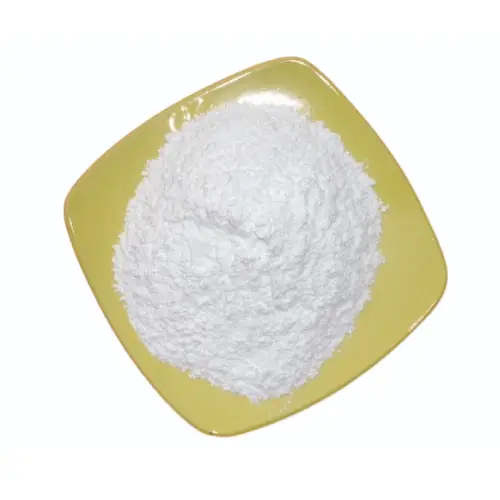

Why Use Sakshi Chem Sciences for Gypsum Eco White?
There are many suppliers of cement-grade gypsum additives. Why would you trust us? We will answer these questions based on our experience and ability to adapt and innovate to be a reliable supplier.
We have been manufacturing and exporting construction chemicals for over 20 years.
We have developed an R&D lab to develop inclusive products (sustainable products).
We have the largest product range in India, including cement admixtures, waterproofing, grouts, mould release agents, and other construction chemicals.
We export and can provide our services in the Middle East, Africa, Europe, and Southeast Asia.
We are tested, value for money, conform to international standards, true professionals, value, reputable, and knowledgeable products.
When you choose Sakshi Chem Sciences, you aren’t just buying a product; you are partnering with a company that understands your project requirements from the bottom to the top.
Cement-grade gypsum eco white has bright prospects in production of gypsum products. From 3D printing of building components to new-age, eco-friendly composites, the uses of gypsum continue to grow.
Technological advancements and R&D are going to ensure that gypsum continues to have a central role in sustainable building practices. Sakshi Chem Sciences is proud to be part of this future by developing and providing innovative gypsum-based solutions such as Gypsum Eco White.
Conclusion
The versatility and significance of cement-grade gypsum in the construction sector are underscored by its diverse range of applications in the construction industry.
From significantly stronger (and/or fireproof) structures, architectural elegance, and sustainable solutions, gypsum can continue to promote its value in so many different areas.
At Sakshi Chem Sciences Pvt. Ltd., we strive to provide high-quality construction chemicals while offering innovative solutions such as Gypsum Eco White, which we are pleased to provide to every one of our clients on their projects.
With its two decades of experience and a focus on research, Sakshi Chem Sciences is ready to re-imagine what the future of construction could be: stronger, smarter, and more sustainable.

Sandip Agrawal, Polymer Engineer and MD of Sakshi Chem Sciences Pvt. Ltd., leads innovation in construction chemicals, shuttering oils, and industrial lubricants. With expertise in polymer science and eco-friendly solutions, he drives R&D and sustainable advancements, ensuring high-performance products for India and global markets.