
In the highly competitive cleaning products industry, efficiency is critical. Whether it’s a laundry detergent, a dishwashing liquid, or a multi-purpose cleaner, consumers expect products that perform efficiently, fast, and effortlessly.
Table of Contents
This expectation for performance has driven manufacturers to begin searching for superior ingredients to deliver products that not only clean better, but also improve products overall.
One ingredient that has garnered a lot of attention is Hydroxypropyl Methylcellulose (HPMC). In this article, we will examine HPMC’s role in improving detergent performance.
We’ll look at HPMC’s properties, the mechanisms of action, and the advantages it brings to cleaning products today.
What is HPMC?
HPMC or Hydroxypropyl Methylcellulose is a non-ionic, cellulose-derived polymer that provides multifunctional properties across many industries.
Being derived from natural materials such as cotton linter or wood pulp, HPMC can be used as a thickener, binder, emulsifier, stabilizer, and film former.
With regards to detergents, HPMC provides beneficial properties that enhance consistency, produce more foam, help remove dirt, and maintain product stability.
The Role of HPMC in Improving Detergent Efficiency
1. Increased Thickening and Rheology Modification
One of the most important functions of HPMC in detergents is as a rheology modifier. HPMC will help maintain product viscosity to ensure that the product does not pour out of the container too quickly or too slowly.
By controlling viscosity and other rheological properties, the user’s perceived quality of the product increases and allows for consistent/controlled application, which is especially important in dishwashing liquids and liquid laundry detergents.
- Prevents the product from becoming runny in formulation
- Allows for easy squeeze/application
- Smooth texture and satisfactory aesthetic appeal
2. Improved Soil Suspension and Dirt Removal
In cleaning formulations, it is essential to suspend dirt and prevent the soil from being resettled onto clothes or surfaces.
HPMC develops a colloidal network in liquid solutions that suspends particles/disperses soils better – assisting in removing greasy soils and particulate soils, because they do not settle back as quickly as they might. HPMC forms a bond with dirt particles, making them easier to rinse.
- Slows dirt re-deposition on fabrics
- Improves overall cleanliness
3. Foam Stabilization
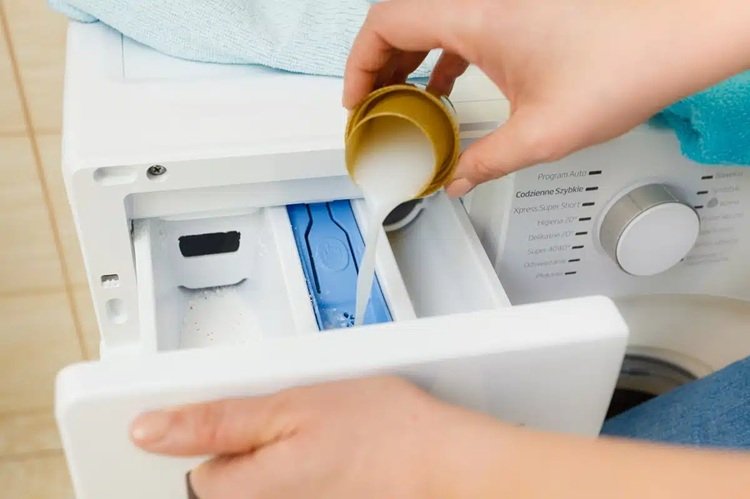
Foam does not clean, but it improves user perception. Consumers perceive foams as better; more foamy is viewed as better. HPMC contributes to foam stabilization so that products have nice, rich long-lasting foam during use.
HPMC provides foam stabilization in liquid soaps and detergents.
HPMC is effective in preventing foam collapse in aqueous solutions with higher hardness levels (high mineral/metal content).
4. Film Forming
HPMC’s film-forming phase is remarkable as well. HPMC has the ability to form transparent flexible films, which in detergent formulations can allow ideal conditions for any subsequent cleaning, since HPMC forms a layer of protection on whatever surface it is applied.
This can include such things as:
- Leaves a polished appearance on glass or tiles.
- Hinders dirt attachment to surface treated.
- Improves rinsability- HPMC’s film forming allows for better rinsability.
5. pH Stability and Compatibility
HPMC is non-ionic, and does not interact with other charged ingredients found in many detergents such as surfactants, builders, or enzymes. This gives other components of the formulation more freedom.
- Stable at high and low pH (3 to 11)
- Compatible with both anionic and non-ionic surfactants
- Safe for use in enzyme products
6. Extend Shelf Life and Stability of the Product
Detergents need to be effective and stable over time. HPMC prevents phase separation and keeps ingredients mixed, extending the product’s shelf life.
- Less sedimentation
- Better viscosity for a longer time
- Better aesthetics with clarity and uniform mixture
7. Temperature Resistance and Thermal Gelling
HPMC has thermal gelling, meaning that when heated, it thickens and when cooled, turns back to a solution. This feature is valuable for industrial cleaning formulations when using hot water.
- Works better at elevated temperatures
- Keeps liquid from running off vertical surfaces
- Improves the performance of the product in various storage situations
8. Eco-Friendly and Biodegradable
Sustainability is expanding its focus for manufacturers and consumers. HPMC is derived from a plant source and is biodegradable to provide a more sustainable option than synthetic polymers typically used in detergents.
- Environmentally safe
- Contributes to eco-label claims
- Low toxicity, skin safe
Types of Detergents Where HPMC is Used
HPMC is a multi-purpose polymer known for many systems of cleaning products. Here are some of the product types where HPMC excels:
a. Liquid Laundry Detergents
HPMC is an important polymer in detergent systems, as it helps control the detergent to get the most and best performance and cleaning from each wash. HPMC controls the pour, helps suspend dirt from soils, and aids in foaming properties to allow the consumer to provide the cleanest and freshest laundry on every wash.
b. Dishwashing Liquids
In dishwashing liquids, HPMC can increase foam formation, which allows for a good lather to help lift grease. HPMC can help keep surfactant blends clear, stable, in a formula that works, and looks good.
c. Surface Cleaners
HPMC can help improve surface conditioners by increasing the spreadability across a surface. HPMC can also aid in anti-resoiling benefits, and make the surfaces cleaner for a longer time during use compared to other products.
d. Car Wash Products
HPMC can help improve surface clingability which allows the solution to stay in contact longer with the cars surfaces to loosen dirt without streaking. HPMC will provide a superior shine for vehicles overall.
e. Bathroom and Glass Cleaners
HPMC creates a thin protective film that has a brilliant shine, repels dust, and prevents watermarks on the surface. This feature makes for clean-looking and maintained bathrooms and glass with less effort.
By including HPMC in their products, manufacturers can be more effective and receive better results, which gives HPMC great value in the cleaning industry.
For Manufacturers:
Simplified Formulations: HPMC creates better compatibility for a variety of ingredients, therefore there are simple formulations that allows manufacturers to improve their efficiencies and create products that works.
Reduced need for Additives: Different formulations might require 4 or more additives. This can be reduced with HPMC, it also makes the manufacturing process easier and lower costs in the process.
Cost effective (versatility): HPMC may represent several services in one ingredient. This can lead to cost efficiency improvements in the product development process.
Longevity and aesthetics: HPMC improves longevity in products and improves the esthetic appearance of packaging which will be more attractive to the consumer.
For Consumers:
User-Friendly Products: Products made using HPMC provide a smooth and desirable texture to enhance the user experience and product application.
Visible Cleanliness: Consumers can see a greater visible performance improvement in cleaning which is likely to contribute to their trust and satisfaction with the product.
Foam Stability: The stability of the foam created by the use of HPMC helps create consumer perception of efficacy, as consumers often associate rich and stable foam with superior cleaning.
Less Product Waste: HPMC products have similar flow characteristics which allow them to dispense easily and consistently causing less product waste and more value for the consumer.
Choosing the Right Type of HPMC
Hydroxypropyl Methylcellulose (HPMC) comes in many viscosity and substitution grades designed to purposefully suit detergent formulations that fit your needs. Important considerations when choosing an HPMC grade are:
Viscosity Need: A thick gel formulation needs a high viscosity grade for a desirable texture and stability. A low viscosity grade is appropriate for spray formulations as you want it to be dispersed as they apply the product.
Dispersion: In addition to viscosity, premium grades of HPMC that are cold-water dispersible will largely minimize the complexity of production and make their incorporation easier into formulations, which aids the efficacy of the end product.
Purity Levels: Purity levels of HPMC, in particular, are important to be aware of when creating products that could be considered for sensitive purposes (such as cosmetics and food grade detergents). These purity levels are intended specifically for products that could contact with skin or food to ensure safety and regulatory compliance.
Working closely with a reliable supplier that provides complete technical support options has a significant impact on your integration of HPMC into your detergent formulations, reaching the expected product performance and product quality.
Challenges and Considerations
Hydroxypropyl Methylcellulose (HPMC) has many benefits for formulators, but there are a few notable challenges that need to be managed accordingly.
The first challenge is that hydration/dispersal needs to be done very carefully for the formulations to perform appropriately.
Furthermore, a good quality preservative is usually needed to deter microbial growth in aqueous systems, so you may also need to include those in your formulations.
The price of HPMC could also fluctuate greatly, and this is usually based on the amount of raw material available in the marketplace.
Once you can manage these problems, it becomes increasingly evident that HPMC provides more advantages for formulations than problems that it can bring, and it is incredibly valuable in developing products.
Future Outlook: Detergents and Green Chemistry
As the cleaning sector emphasizes eco-friendly chemistry and sustainable product design, biodegradable, plant-based polymers like HPMC will be increasingly utilized. HPMC can operate in various eco-friendly, phosphate-free, and low-chemical-load formulations, reflecting changing trends in market demand.
There are also new technology innovations such as microencapsulation, controlled-release detergents, and enzyme stabilization where there are also opportunities for the effective application of HPMC and derivatives.

Conclusions
The usefulness of HPMC as a way to improve the use-phase efficiencies associated with detergents is evident. By providing viscosity, foam, stability to formulations, and overall enhanced cleaning ability, HPMC provides a multidimensional value proposition for detergent manufacturers.
HPMC is from a natural source, is compatible, and performs well under a wide range of conditions, which makes it a very useful ingredient for both use today with the existing portfolio of Eco-friendly cleaning products, and in the future with to-be-developed products.
HPMC has all it takes for formulators looking for a safe, reliable thickening agent and also brand that would like to develop a cleaner, greener, better appliance for consumers.
HPMC will continue to be at the epicenter of developing the next generation of eco-conscious, high-efficiency detergents, and the cleaning products industry is progressively moving in this direction.

Sagar Telrandhe is a Construction Engineer with a B.Tech in Construction Engineering & Management. Passionate about infrastructure development, project planning, and sustainable construction, he specializes in modern construction techniques, project execution, and quality management, contributing to efficient and innovative building.